Tabletop
The Proficiency Protocol: A New Tabletop Audit
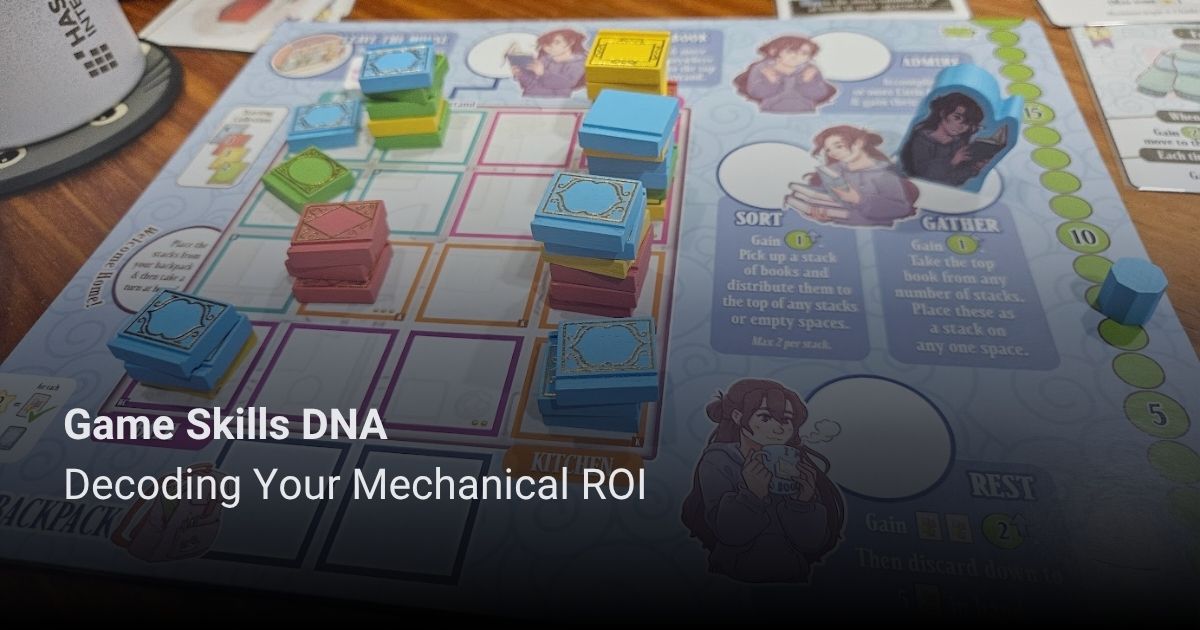
Moving beyond the ambiguity of "heavy" and "light" labels to identify the true strategic ROI of your favorite titles.
Most gamers know that play is a form of practice, but we don’t always have the vocabulary (Grace, need word!) to measure the specific dividends of that effort. In the process of revamping the Geeky Guide, one of the early challenges was figuring out categories for the different games we’ve played. When I checked Board Game Geek, their approach was more focused on breaking down games into their mechanics and certain tags or themes. The only other categories we see on the site are limited to things like the Strategy and Family ranking lists, but that seemed to be it. I eventually settled on four broad, yet distinct enough categories - Casual & Filler, Social & Party, Tactical & Strategy, and Thematic & Narrative.
But then I got into a conversation with one of our regular players about the educational value of games. She suggested that I find a way to label games based on what people could learn, and that got me thinking. The categories I defined don’t have a direct relationship with skills that people can develop while gaming, so that wasn’t the answer. But listing game mechanics didn’t feel like the right method either, since mechanics aren’t really informative in that manner.
But any gamer will agree with the notion that the board game hobby makes you think, and you’re bound to exercise different parts of your brain while playing. So after several experiments, I ended up with six Proficiency Perks that represent the skills that one could potentially develop while playing a specific game. The labels have been part of the board game reviews on the site for a few weeks now, and I think they work well enough. These skill areas aren’t mutually exclusive, and every board game probably touches on all of them to different degrees. So I’ve focused on identifying 1-2 (but sometimes 3) perks per game to highlight the main areas of focus for the game. But let’s dive deeper into the six categories as this week’s Geek Dive.
I wanted to start with the Social Meta and the Memory & Focus Proficiency Perks first, given that most players get started in the hobby with more social/party games, many of which fall in this area. And if we can convince more casual players that they’re learning stuff while playing board games, then we address a bigger segment of the market right there. I initially tagged Social Media as Social Logic as a way to capture how a lot of games push players to use their social skills to win. This includes bluffing games. And the Memory & Focus perk is pretty straightforward - it talks about any game where players can benefit from keeping a better track of things going on, any hidden information they’ve discovered in the course of the game, and other fun things.
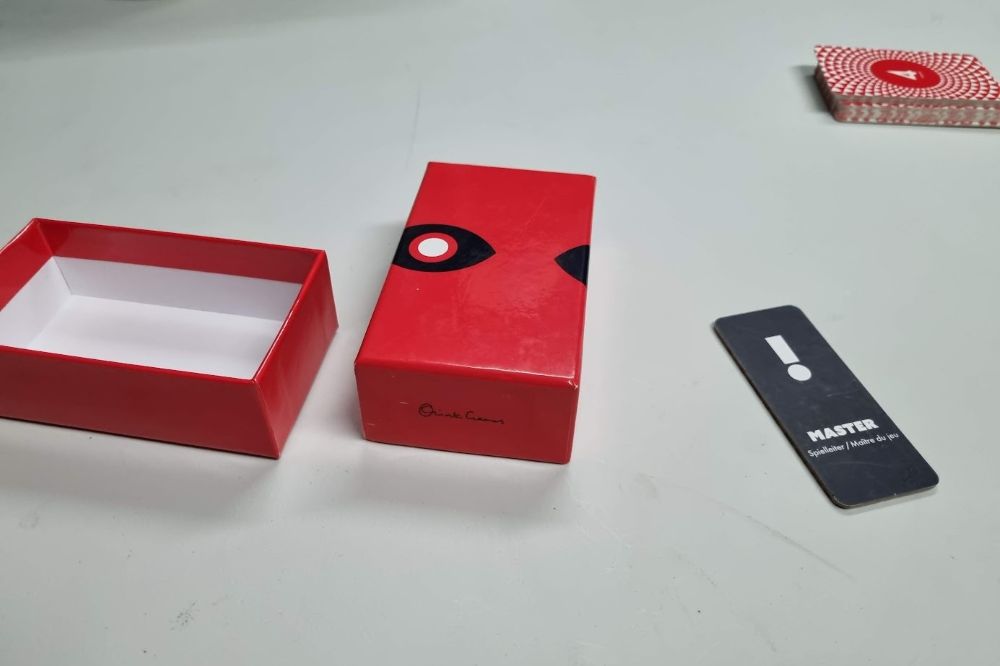
These two perks work rather closely together; using your social skills to find things out is useless if you can’t remember them. And we see this time and again with gateway games like Love Letter (AEG 2012), where you’re trying to figure out what card all the other players are holding. Even bigger party games like Insider (Oink Games 2016) need you to level both perks, as you not only need to work together as a group to figure out a word, but then you need to go over the questions players asked after in order to find the titular insider. Even Startups (Oink Games 2017) benefits from keeping tabs on which stocks the different players have been buying or even throwing back into the market, all while using table banter to sniff out clues as to what they actually have.
Lumping these two together can feel like a bit of a stretch, but they both touch on having a good understanding of the physical relationship of things - even if part of it involves getting your hand slapped as all players race to put their hand on a particular card. Spatial Reasoning is just that - a lot of games involve figuring out how to place tiles for maximum benefit, plus so many others rely on polyomino-shaped tiles or other bits of cardboard that you need to rotate into the “best”, yet also legal, placement. And Reflex & Speed refers to those games that force players to actually move more to get things done.
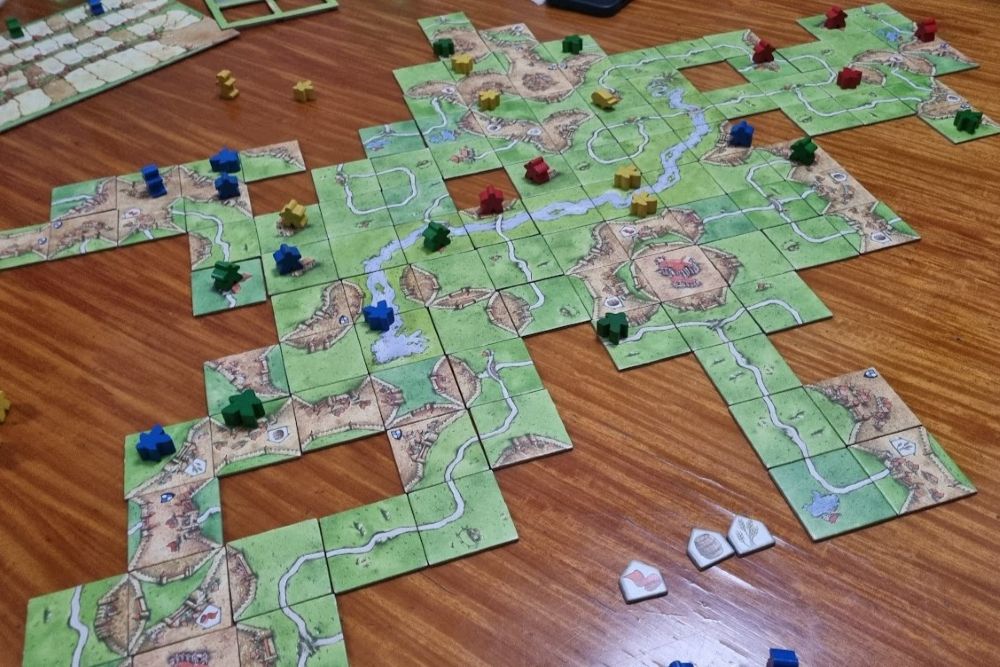
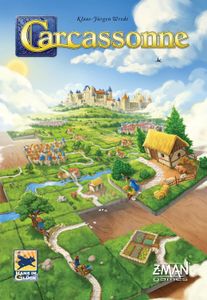
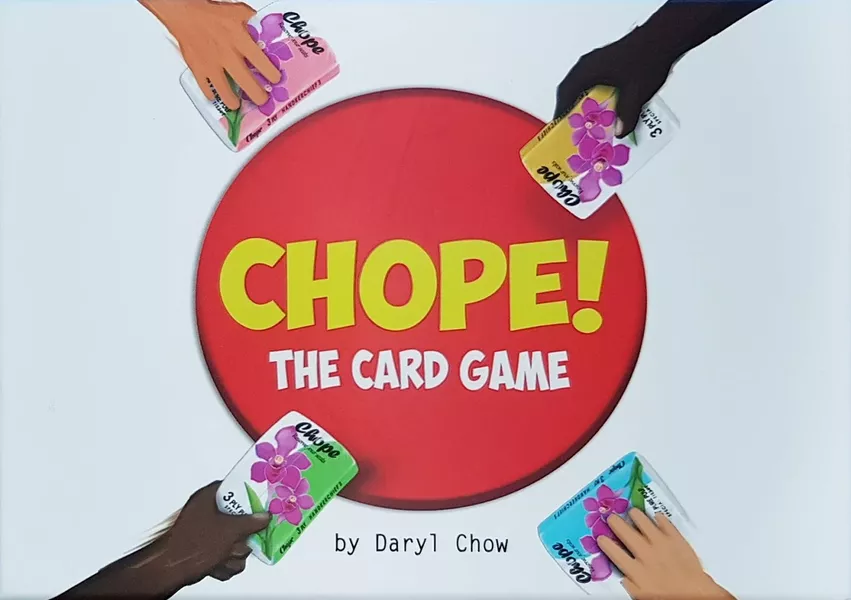
The whole Carcassonne (Hans im Glück 2000) line got me started on modern board games, but it also forced me to learn how to outthink my partner when it comes to conquering farms. I still can’t beat him at this game to any consistent degree, but I know I’ve gotten a lot better at navigating tile placement to be a bit more aggressive. A more recent spatial reasoning (and engine-building) game that I really love is Project L, because who doesn’t love Tetris-style tiles, right? And while we don’t have as many Reflex & Speed games, we do have a few silly ones like Chope! (Origame 2019) or a test of both areas like Fold-it (Happy Baobab 2016). The prior game is all about speed, but Fold-it is uniquely devilish as you “cook” by folding a double-sided cloth with different dishes printed on it in order to match the “order” for the round. This game can make players’ heads ache because of the need to navigate how to fold the cloth in a way that only shows the right dishes while dealing with some serious time pressure.
These two Proficiency Perks are probably the most gamer-focused - or at least they capture how most people view more “serious” board games in the market. Strategic Planning sounds broad, but it’s best illustrated by very gamer things like proper sequencing of card plays, evaluating how to use a card, whether for short-term benefits or long-term gains, and putting together a plan of attack based on that assessment. Meanwhile, Systems & Logic is all about running the numbers, building your engines or whatever table tableau you have set up, and all that good stuff.
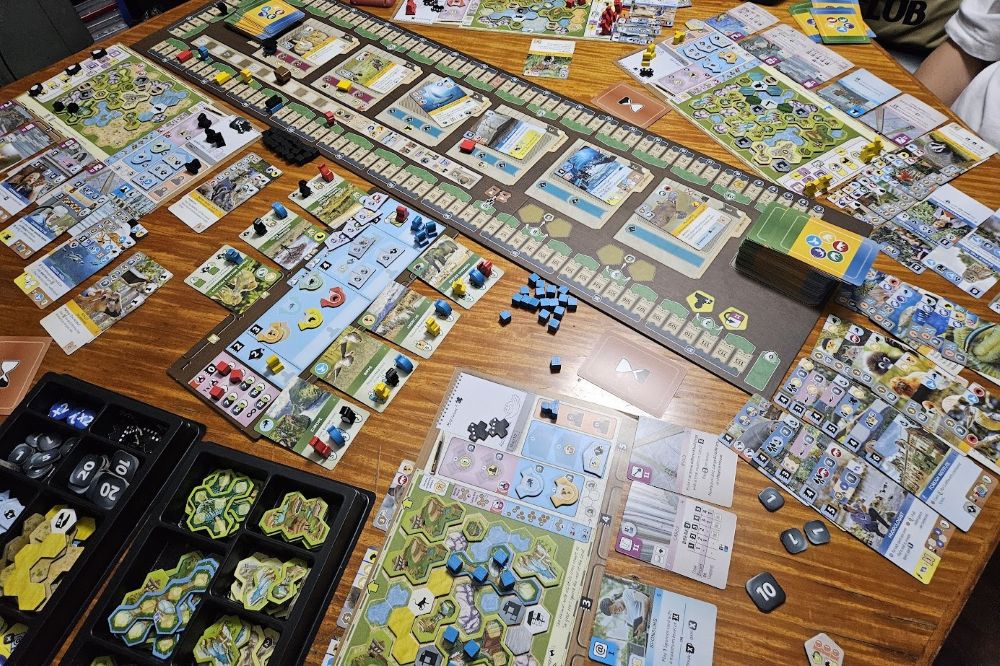
It’s no surprise that most of our collection (and games reviewed on the site thus far) fall under the shadow of these two proficiency perks. Big favorites like Ark Nova (Feuerland Spiele 2022), SETI (CGE 2024), and Dune: Imperium (Dire Wolf 2020) all sit squarely in this area. Throwing out the names of those three games barely scratches the surface of things, admittedly. I guess it’s enough to stress that when you play a board game that takes an hour or two to resolve, there’s a LOT of thinking that is going on at the table. But these are some of the best mental puzzles out there and you'll really come out of the experience feeling like a better person because of whatever you accomplish in the game, even if you don't win.
I almost called Proficiency Perks Skill Upgrades, but that felt like overpromising since not everyone necessarily gets better just by playing one game. My takeaway for everyone reading this post is that the perks are there, but they’re not guarantees. The Geeky Guide reviews index can only highlight how a game might work better for you, but it’s up to the individual to take a more deliberate approach to view the game as a learning opportunity. So even when you don't get to win the game that night, at least you can walk away with the understanding that at least you gave your brain one heck of a workout.
If you choose to learn more, then your board game collection will feel a little less frivolous and more like a whole portfolio of skills for you to take on during your next game night. And if all your games are more casual social games, it wouldn’t hurt to find games that touch on the different Proficiency Perks so you can start working on those areas of development as well. Run a quick check on your games and see how your collection (and potentially your skills development) is leaning. It might nudge you to make more informed choices moving forward.