
SETI: Search for Extraterrestrial Intelligence
Official Description:
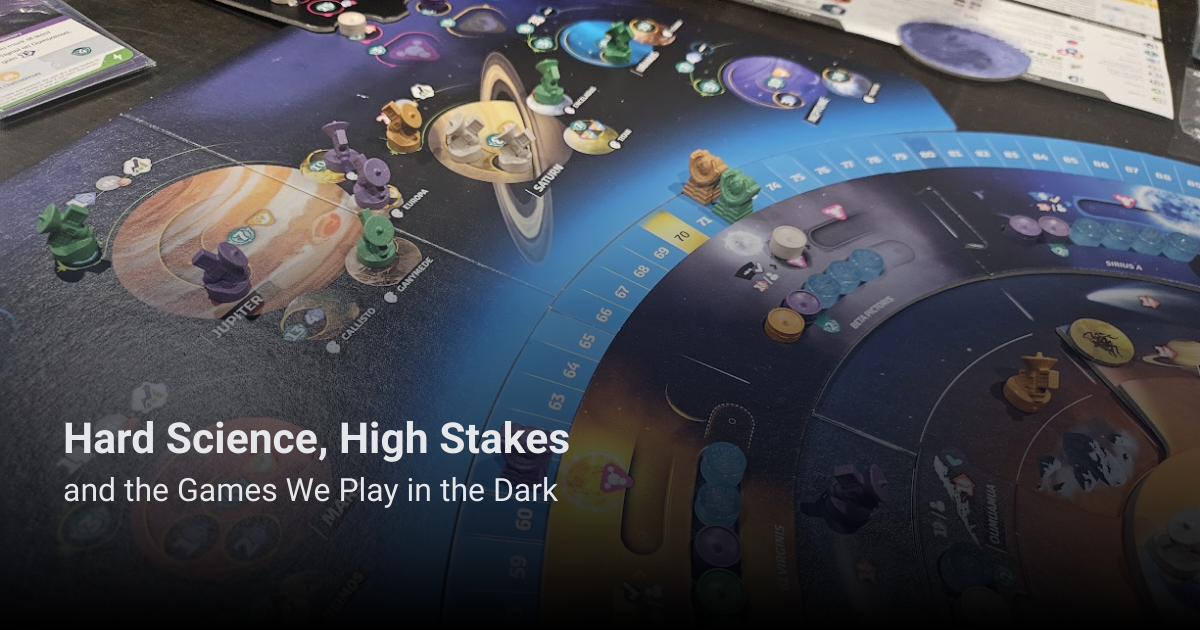
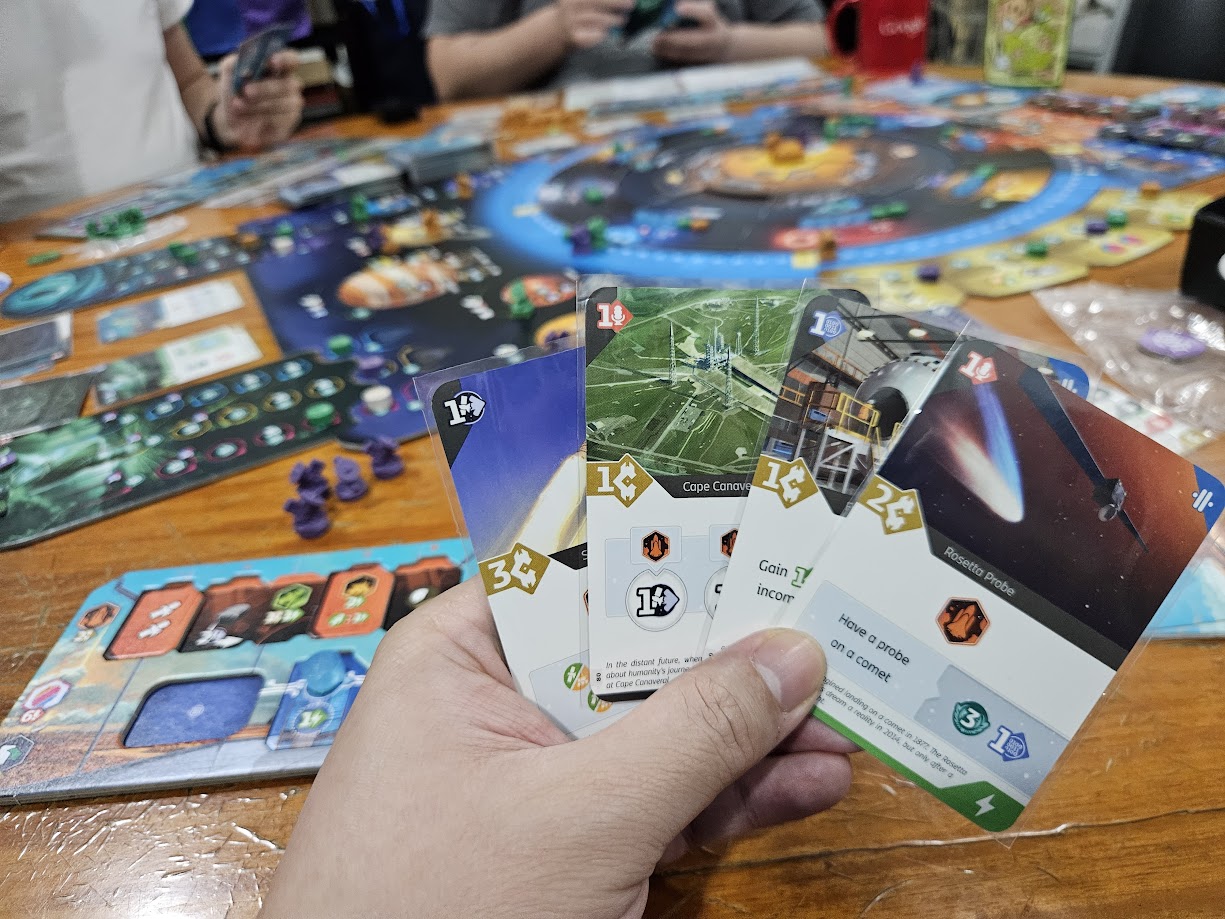
In SETI: Search for Extraterrestrial Intelligence, players take on the role of leading scientific institutions dedicated to the search for life beyond Earth. The game challenges participants to launch probes, analyze distant signals, and explore nearby planets and their moons, all while navigating the complexities of shifting planetary positions and limited resources.
Throughout the game, players must strategically allocate their resources to maximize their chances of discovering extraterrestrial signals. The gameplay emphasizes scientific research, technological advancement, and the management of competing priorities as players race to be the first to make contact with alien life.
SETI: Search for Extraterrestrial Intelligence offers a thematic experience rooted in real-world scientific endeavors. The game combines elements of exploration, deduction, and resource management, providing an engaging simulation of humanity’s quest to answer the age-old question: Are we alone in the universe?
SETI: Search for Extraterrestrial Intelligence stands as a modern benchmark for deep-space, engine-driven strategy, echoing the legacy of heavyweight Euro designs while pushing thematic immersion to the forefront. The modular dynamic board and high component density create a tactile simulation of scientific exploration, where every decision—launching probes, analyzing signals, or advancing technology—demands careful sequencing and resource allocation. Its punishing scoring and limited catch-up mechanics mean that early missteps are rarely forgiven, rewarding those who can maintain focus and adapt to shifting planetary conditions. This is a title with high operational reliability; its presence on the table signals a session where strategic dividends are earned through sustained mental engagement. Its current momentum is no accident: for veteran curators, SETI’s shelf retention is significant, as it consistently delivers a rewarding, high-stakes experience that justifies its frequent return to the table.
From a logistics standpoint, SETI is unapologetically a main event. The big-box footprint and extensive setup time—driven by a modular board and a wealth of components—demand a dedicated table and a patient group. This is not a game to slot between lighter fare; expect a full evening, with 160 minutes easily consumed by the core loop and the necessary pre-game organization. The physical system is dense, and the setup alone can test even experienced hosts, but the payoff is a tactile, immersive environment that supports the game’s scientific narrative. For those managing multi-table events, SETI is best reserved for groups seeking a focused, centerpiece experience rather than a casual rotation.
Teaching SETI requires a steady hand and a willingness to guide players through a complex, layered system. The learning curve is steep—first plays are tutorials, and mastery is a prerequisite for competitive play. With parallel play at its core, the room’s energy is contemplative rather than confrontational; players are locked into their own scientific puzzles, with minimal direct interference. The mental friction here is substantial: the board demands rigorous planning, adaptive logic, and a keen sense of timing. Hosts should expect to remain available for rules clarifications throughout, but the payoff is a genuine skill dividend—players leave with sharpened resource management instincts and a deeper appreciation for the intricacies of scientific discovery.
Category
Tactical & Strategy
My score
9
Our Total Plays
9
Last PLayed
23 Jan 26
🔥 In Rotation
Player Count
1-4
Playtime
160 mins
Proficiency Perks
Strategic Planning
Systems & Logic
Check Amazon
As an Amazon Associate, I earn from qualifying purchases.
← ALL BOARD GAMe REVIEWS