Dune: Imperium
Official Description:
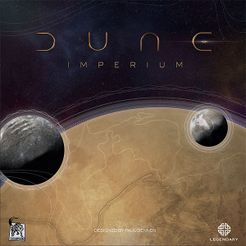
Dune: Imperium is a game that blends deck-building with worker placement, set in the universe of Frank Herbert’s Dune. Players take on the roles of leaders of Great Houses vying for power and influence on the desert planet Arrakis. The game draws inspiration from both the new film adaptation and the classic novels, immersing players in a world of political intrigue, resource management, and strategic conflict.
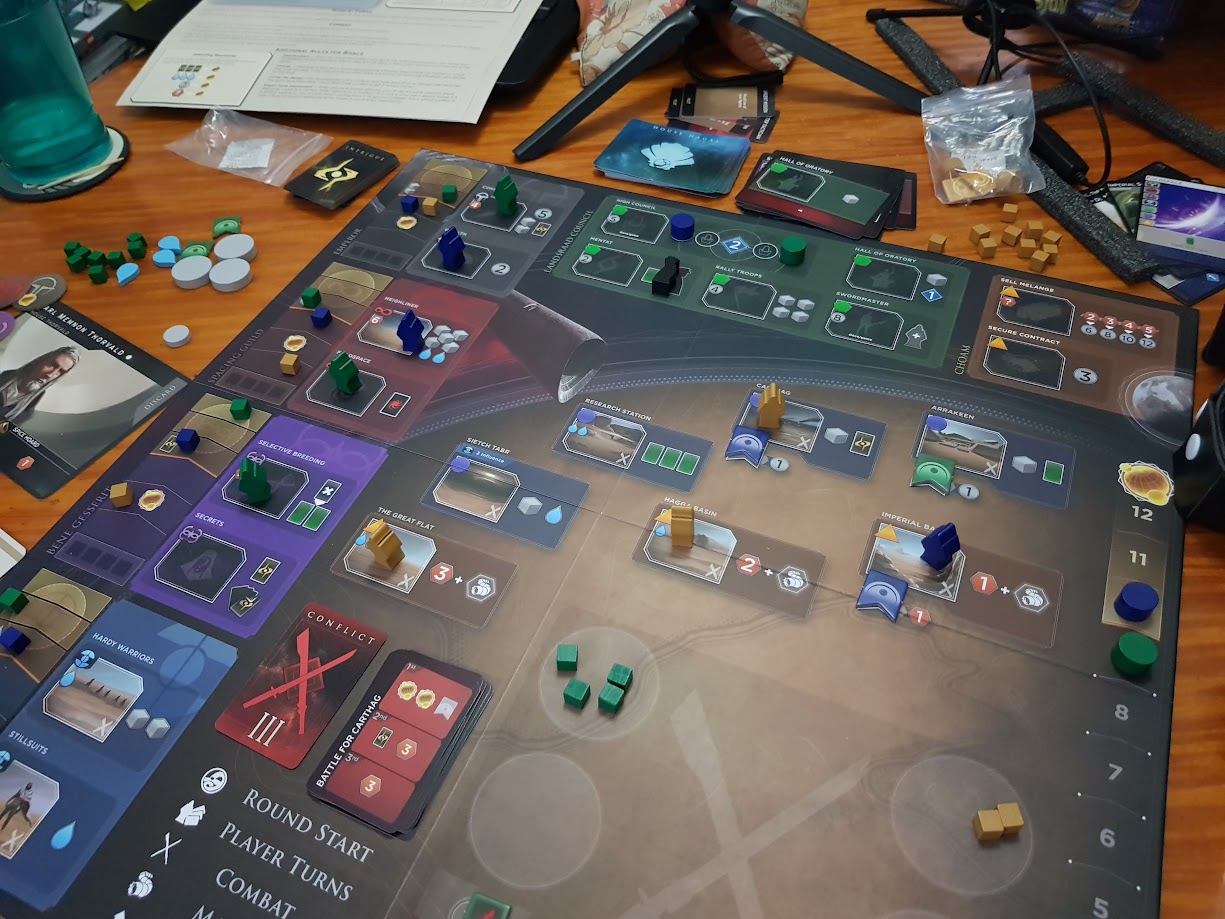
Each player builds a unique deck of cards that determines their available actions and strategies. These cards are used to send agents to various locations on the board, representing different factions and opportunities on Arrakis. Players must balance the acquisition of resources such as spice, water, and Solari, while also engaging in combat and forming alliances with powerful factions like the Fremen, Spacing Guild, and Bene Gesserit.
Victory is achieved by accumulating victory points through a combination of military strength, political alliances, and economic control. The interplay between hidden information from deck-building and open competition for board spaces creates a dynamic and challenging experience, where every decision can shift the balance of power in the struggle for control of Dune.
Dune: Imperium operates at the intersection of deck-building and worker placement, but its real distinction lies in the way these systems are fused—every card play and agent placement is a calculated move in a high-stakes contest for control. The game’s tactical DNA draws from the Euro tradition of resource contention, but overlays it with a sharp, political edge reminiscent of classic negotiation-driven titles. The constant tension between public board positions and private hand management creates a dynamic where every reveal can upend the table’s balance. This is not a system that rewards rote optimization; instead, it demands adaptive thinking and a willingness to pivot strategies mid-session. Its high operational reliability is evident in how often it resurfaces for play—this is a title with significant long-term shelf retention, earning its place as a current favorite among veteran collections.
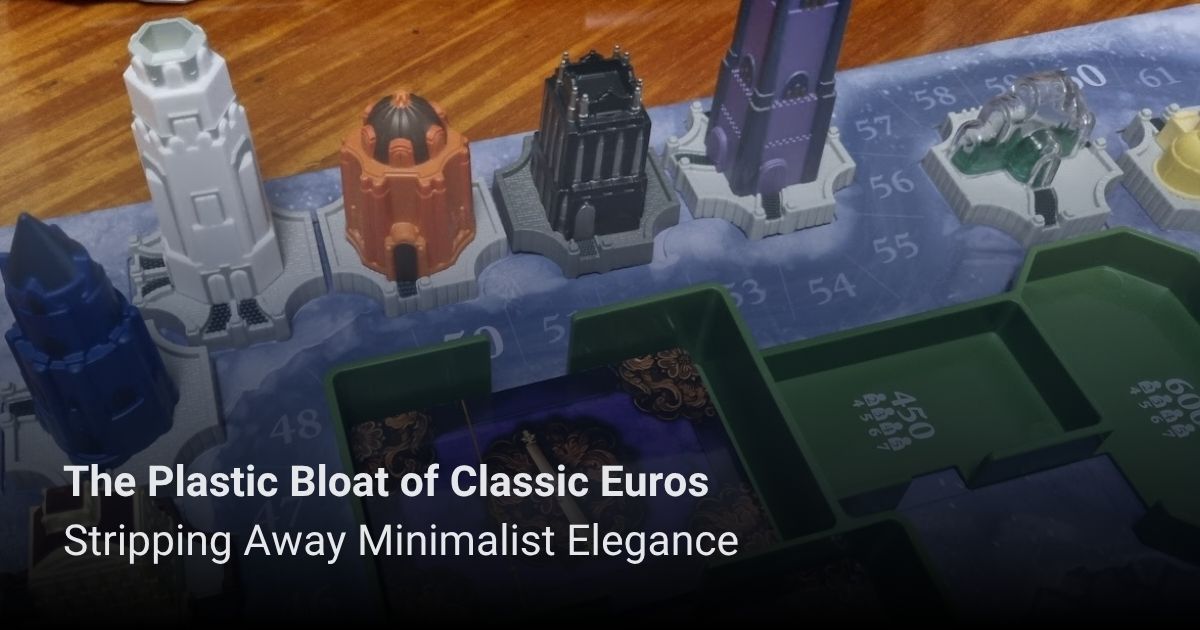
From a logistics standpoint, Dune: Imperium is built for efficiency. The base components are functional and straightforward, making setup and teardown manageable within a 15-minute window. For those who invest in the deluxe miniatures, the tactile upgrade is substantial, especially for groups who appreciate a more immersive table presence over standard wooden cubes. With a session time clocking in at around two hours, this is a main event game—best reserved for nights when the group is ready to commit to a full arc of tension and negotiation. It’s not a filler or a warm-up; it’s the centerpiece that justifies its table space and time investment.
Teaching Dune: Imperium requires a procedural approach—expect a 20-minute rules brief, with particular emphasis on the interplay between agent icons and the timing of card reveals. The system’s mental friction is substantial: players must constantly audit both their own deck composition and the evolving board state, rewarding those who can synthesize multiple information streams under pressure. The high friction of direct competition and political maneuvering keeps the room engaged and vocal; this is not a game where the facilitator can step away after the teach. Instead, expect to field questions and referee edge cases, especially in early rounds. The skill dividend is clear: players leave with a sharpened sense of timing, adaptive planning, and the ability to read both the board and their opponents—a combination that elevates the experience well above standard resource management fare.
Category
Tactical & Strategy
My score
9
Our Total Plays
35
Last PLayed
11 Sep 26
🚀 High Velocity
Player Count
1-4
Playtime
120 mins
Proficiency Perks
Strategic Planning
Check Amazon
As an Amazon Associate, I earn from qualifying purchases.
← ALL BOARD GAMe REVIEWS