Tabletop
Destroying Board Games for Fun
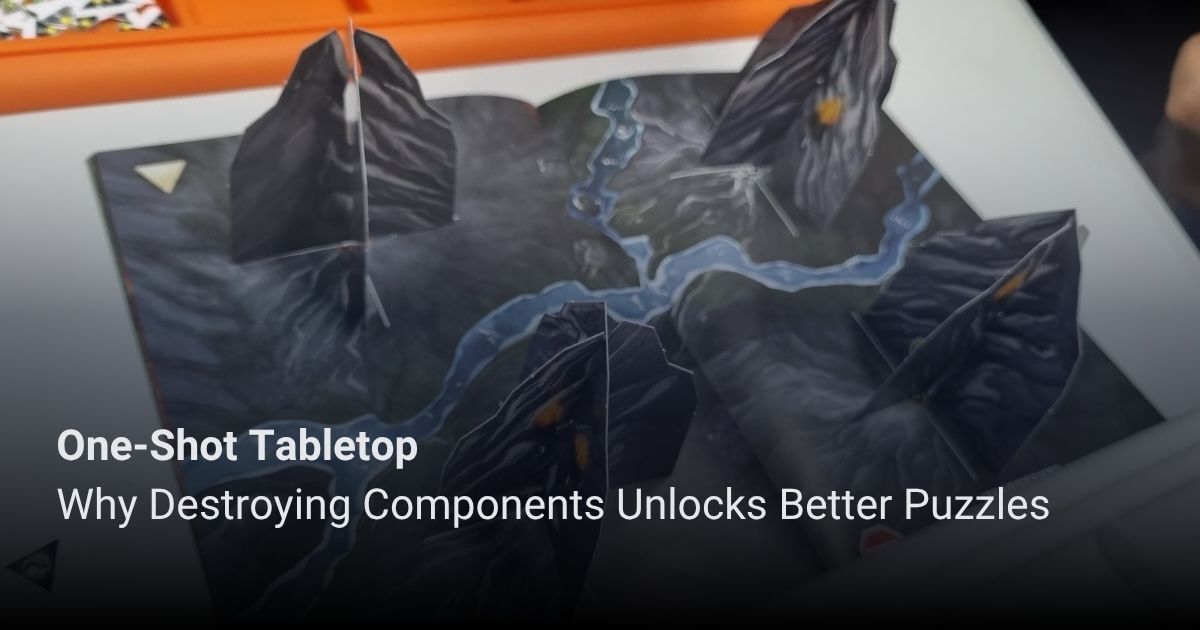
Moving past the guilt of tearing up cards and tossing out boxes is the secret to unlocking the most immersive puzzle games in the tabletop hobby.
My partner and I are pretty big on escape room board games - perhaps even more so than actual escape rooms. But they provide a unique puzzle experience that can be quite fulfilling - and you don’t even need to leave home to do so.
But as I discussed in Tabletop Escape Room Hits and Misses, there are very different approaches to capturing that experience as a board game. Some games just feature a set of cards. Others require an app. And others still pretty much require players to be ready to destroy game components in order to solve specific puzzles.
So we’re back to the same question many players experience when considering purchasing a legacy game - how comfortable are we with truly single-play games? Or should all board games retain that supposed infinite replayability factor that many associate with board games? It’s a bit of a debate among fellow puzzle game aficionados that I want to explore a bit further.
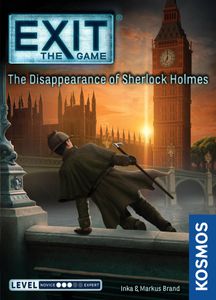
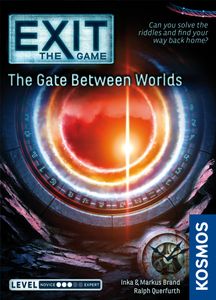
The EXIT: The Game line was our first escape room game experience, and it had a major impact on us as players. The very first wave of EXIT games already included the need to cut things up, fold cards, and explore every single aspect of the box, trying to find clues that will lead to the needed solutions. Puzzle quality can be a bit mixed at times, but since the game design embraces some pretty crazy possibilities, it leads to some amazing table moments. You have not lived until you’ve contemplated immersing game components in water to see what it might reveal.
On the flip side, other replayable escape room-style games try different things to achieve the same effect. We’ve had the most success with the Unlock! Games, as their mix of cards working with a proprietary app that has gotten so much better over time. That still limits the bulk of the game experience to how quickly you can find the right card and maybe how clever some of their app-based minigames are. And many escape room games that don’t have an app (think Deckscape, Undo, or Decktective) really just become riddle games without really feeling like a full tabletop escape room experience. Strictly card-based games are severely limited in how far their puzzles can go since they don’t have as many options. So they’re probably not the best example of the replayable side of this segment of the hobby.
I get it; it’s never easy to buy a game that has been designed to be destroyed to some degree. That moment when we first had to rip up a card while playing Pandemic Legacy: Season 1 was practically traumatic. There’s a notion that replayability is a defining feature of board games, but that’s really not the case. These one-time escape room games are all about the experience, and the more the players are committed to it, the more they’ll get out of it.
You need to lean into the experience in order to get the true value of the game out of your purchase (if we’re going to sound all utilitarian). Sure, there are people who resort to scanning game elements and manipulating them digitally in order to avoid cutting the actual cards. But does that really give you the full experience as was intended when the game was put together? You might be keeping the game alive for potential resale, but you might just be shortchanging yourself out of the full experience of the game.
When it comes to the monetary costs, the same argument in support of Legacy games applies to these one-time escape room games. You’re paying $20 for a more involved game session where the gathered players (ideally) all get to participate in solving the game together for a good 90 minutes (at least!). That’s cheaper than the cost of your entire group going to a proper escape room venue. Instead of thinking that this is a game that doesn’t have as much value, you should compare the cost to other one-time experiences like watching a play or a movie at a cinema. The cost-per-person still works out, even if there are just two of you playing.
Compare that to the bigger $50 or even $100 games that do promise near-infinite replayability, but don’t get to the table as often. As someone who diligently tracks all board game plays, I know very well the challenge of trying to get full ROI for every single game in the collection. Pretty games with high-quality components are only as good as your ability to get people to play them.
And even the non-destructive games still have future value beyond just resale. You might decide to bring the game out and have other friends try it as a side experience - something that applies more to the card-based games that are pretty portable. And given enough time, you might decide to revisit the game in the future and try it again, as it’s unlikely you’ll fully remember every single puzzle.
My partner always likes to argue that if you really like a particular game and want to support the creators, then it’s not terrible to consider buying the game again when components break down due to use, or you want to repeat a one-time experience.
The big difference between one-time escape room games and the repeatable ones boils down to the post-game experience. At its simplest, the one-time games with element destruction as part of the mechanics don’t have much of a life once you’ve finished the game. For many years, we tried keeping all of our “spent” EXIT games to sort of mark all the puzzles we had solved, but in truth we never went back to them and eventually had to let them go in order to make space for more games. You could get a little sentimental about it and maybe create some sort of scrapbook-style keepsake. Or there’s the little nugget in more recent EXIT games that include elements designed to act as replayable mini-games or just little mementos you’d want to keep.
The replayable games are literally that - designed to be reset to their initial state and played by another group of players. This theoretical value, though, is hard to fully utilise unless you host a lot of game nights with different players. If you don’t have an opportunity to get other people to play the game once you’re done, then you’re kidding yourself about them having more value than the one-time games. That leads to the last option of gifting or selling the game to pass it on, but finding buyers can feel like too much effort at times.
Ultimately, the best tabletop escape room games work not because they make for good board games, but because they are embraced as experiences. And this applies to both the replayable games with their apps, ciphers, and other solutions, and the one-time games that end up a mangled mass of cardboard once all of their secrets have been ferreted out. Some may work better for your group than others, and the fun is in exploring the options out there and seeing what works best for your players.