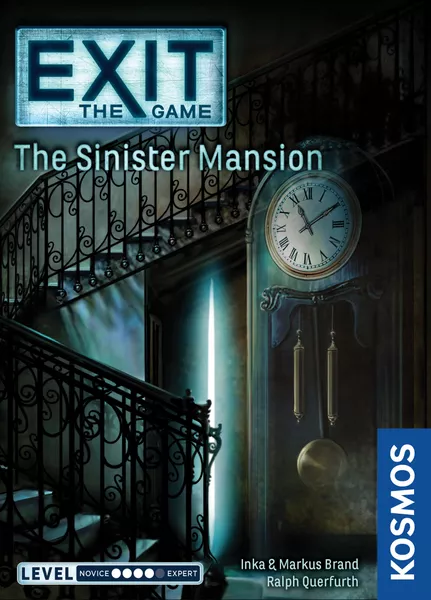
EXIT: The Game – The Sinister Mansion
Official Description:
"EXIT: The Game – The Sinister Mansion" is a cooperative puzzle game inspired by real escape rooms. Players find themselves invited to a mysterious mansion, only to discover that the doors have locked behind them. The group must work together to solve a series of riddles and puzzles, uncover hidden clues, and escape the mansion before time runs out.
The game is designed for one-time use, as players will mark, fold, and tear components during play to solve the challenges presented. Each puzzle solved brings the group closer to escaping, with the narrative unfolding as players progress through the game. The experience is immersive, with a strong emphasis on teamwork, logical thinking, and creative problem-solving.
Part of the EXIT series, "The Sinister Mansion" offers a unique escape room experience at home, with a difficulty level suitable for both newcomers and experienced players. The game provides a compelling story, atmospheric setting, and a variety of puzzles that require keen observation and collaboration to overcome.
EXIT: The Game – The Sinister Mansion sits firmly within the tradition of single-use escape room experiences, leveraging the familiar haunted house motif as a backdrop for a sequence of mechanical puzzles. The narrative is serviceable, providing just enough context to justify the locked-door premise, but the real focus is on the logic challenges rather than immersive storytelling. For curators and hosts, its solid table-time value comes from consistent mechanical performance—puzzles are generally fair, though early non-intuitive leaps can stall momentum for less experienced groups. As a solved title, its shelf presence is now archival; it serves as a reference point for teaching or comparing EXIT series logic flows, but offers little replay incentive once completed.
Physically, the game arrives in the standard EXIT box, with a mix of consumable components and a few extra items to support the puzzle structure. Setup is minimal—open the box, distribute the materials, and you’re ready to brief the group. The 90-minute session time makes it a practical main event for a focused evening, especially when you want a collaborative challenge that doesn’t require extensive prep or cleanup. The single-play format means it’s best deployed for a group that hasn’t seen it before; after that, it’s either a trade candidate or a teaching tool for puzzle design discussions.
From a teaching perspective, the system is approachable—most groups will be comfortable by the second puzzle, though a veteran lead should flag the early abstract logic jumps to avoid unnecessary frustration. The collaborative structure keeps everyone engaged, with the room’s energy rising as players pool observations and test solutions. The main skill dividend here is in group deduction and creative problem-solving under mild time pressure; the game’s mental friction comes from interpreting clues that sometimes stretch logic, but rarely feel unfair. For hosts, it’s a reliable secondary option when you want a cooperative, low-prep experience that still delivers a sense of accomplishment.
Category
Thematic & Narrative
My score
7
Our Total Plays
1
Last PLayed
31 Mar 19
🔍 Solved
Player Count
1-4
Playtime
90 mins
Proficiency Perks
Systems & Logic
Check Amazon
As an Amazon Associate, I earn from qualifying purchases.
← ALL BOARD GAMe REVIEWS