Tabletop
Designing Cities That Actually Move

From sprawling countrysides in Carcassonne to interconnected streetscapes in Tenby, the best tabletop city-builders succeed when every tile placement ripples across the entire board.
As much as Carcassonne was one of the first modern board games that really captured my attention and scratched a unique itch in my brain, it was really with games like Suburbia that my mind was blown with how the city-building experience could be so well captured in a board game. Carcassonne introduced the joy of tile-laying and the satisfaction of creating a shared board state with its connected tiles with matching features. But other true city-focused games appeal to the SimCity/Cities Skylines player that I am. This has led to a continuing exploration of various games that touch on some degree of city-buidling. It’s still one of my favorite game themes and there are so many ways this has been interpreted over the years.
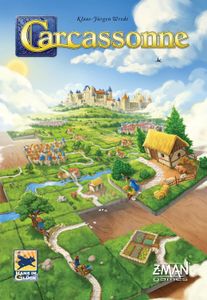
In Carcassonne, players take turns playing tiles that feature a variety of features, including roads, cities, and fields. Players score based on particular features they complete and the by the end of the game you’ll have a unique countryside of sorts. So the interplay isn’t that direct apart from cases when more than one player has a meeple on a feature and may ultimately share the points for it. But it does have that sense of satisfaction when you find exactly the right tile to complete a feature of fill up a gap in the board.
We’ve played this game a lot and it’s one of the favorites in our collection. We have older editions of the base game and many of the early expansions, thus separating them back into their respective sets has become a near impossibility. It’s a small blessing that the new edition includes a small set symbol on each tile to minimize confusion.
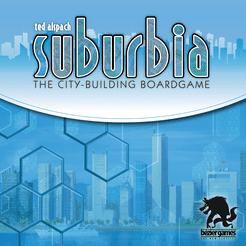
Suburbia has players developing their respective towns or boroughs that grow into a larger metropolis. While this game doesn’t involve creating a single shared tile tableau, the actions of each player can affect one another because of shared goals and tile triggers that can look at all types of a specific type, or all tiles of that type controlled by opponents, and so on. This goes beyond just scoring things independently, but also trying to keep tabs on everyone’s boards since it may trigger your tiles or at the very least your ranking for different objectives.
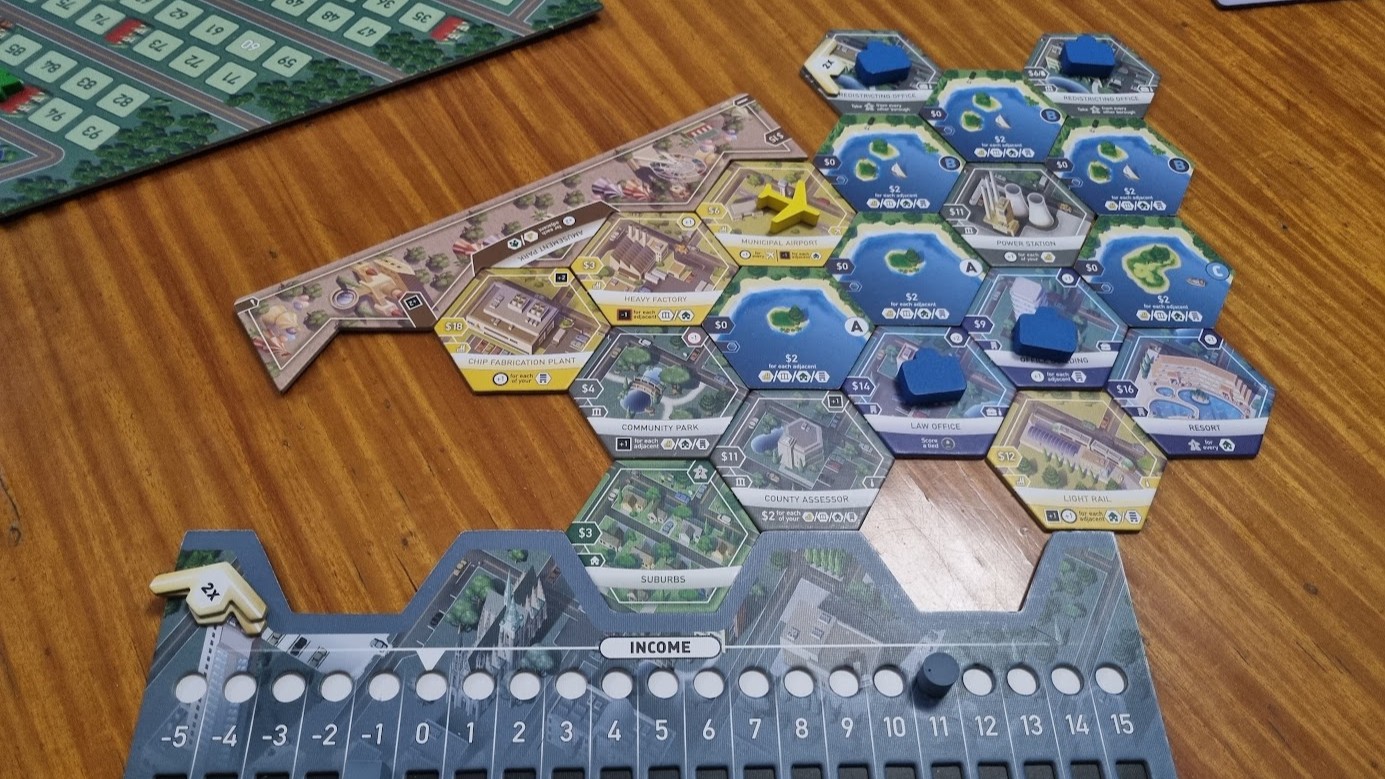
The game has a lot of subtle touches that are clever interpretations of how things work in real life. I love how any airport benefits from all other airports, which stresses the importance of the network and having more viable destinations. Or you have very meta tiles of the Office of Bureacracy whose benefit is tied to other civic buildings. This game is still a favorite, which led us to getting the Collector’s Edition, even if I have strong opinions on the changes to the tile art.
Bezier Game’s quasi-followup to Suburbia was pretty surprising, this being Castles of Mad King Ludwig. Instead of standard hexagonal tiles, the game used tiles of different shapes and sizes that players need to use to build their respective castles. This adds a whole other layer of challenge on top of the usual hurdles of trying to hit shared goals and maining some degree of income. The addition of players taking turns as the Master Builder adds a great layer of strategy as being able to control the market becomes a source of income and a means to try to control what tiles players are going to get.
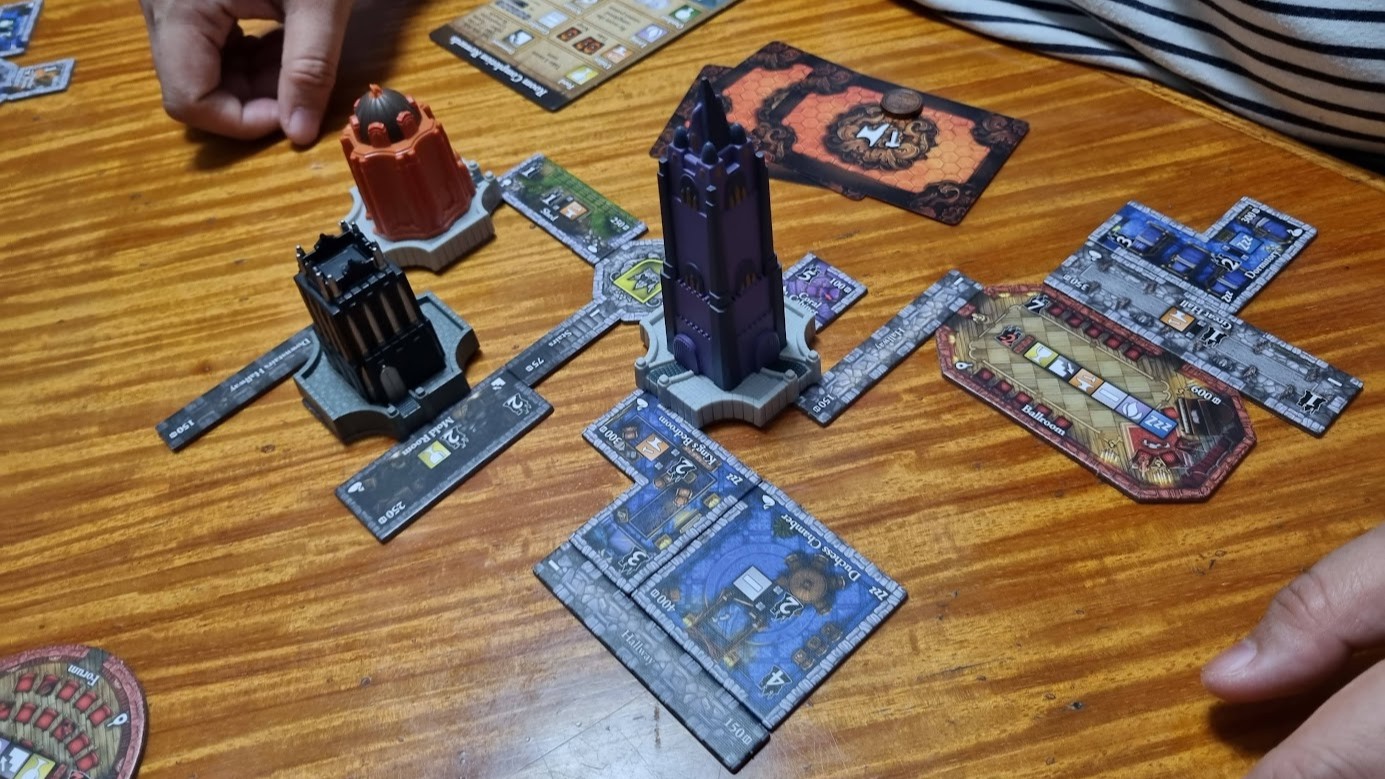
Going from city-level layouts to individual castles makes for quite the perspective shift, but there still some satisfaction from being smart about the rooms you get with respect to the shared goals. I’m still more of a city guy, but I can’t ignore the joys of this game and its rather unique theme.
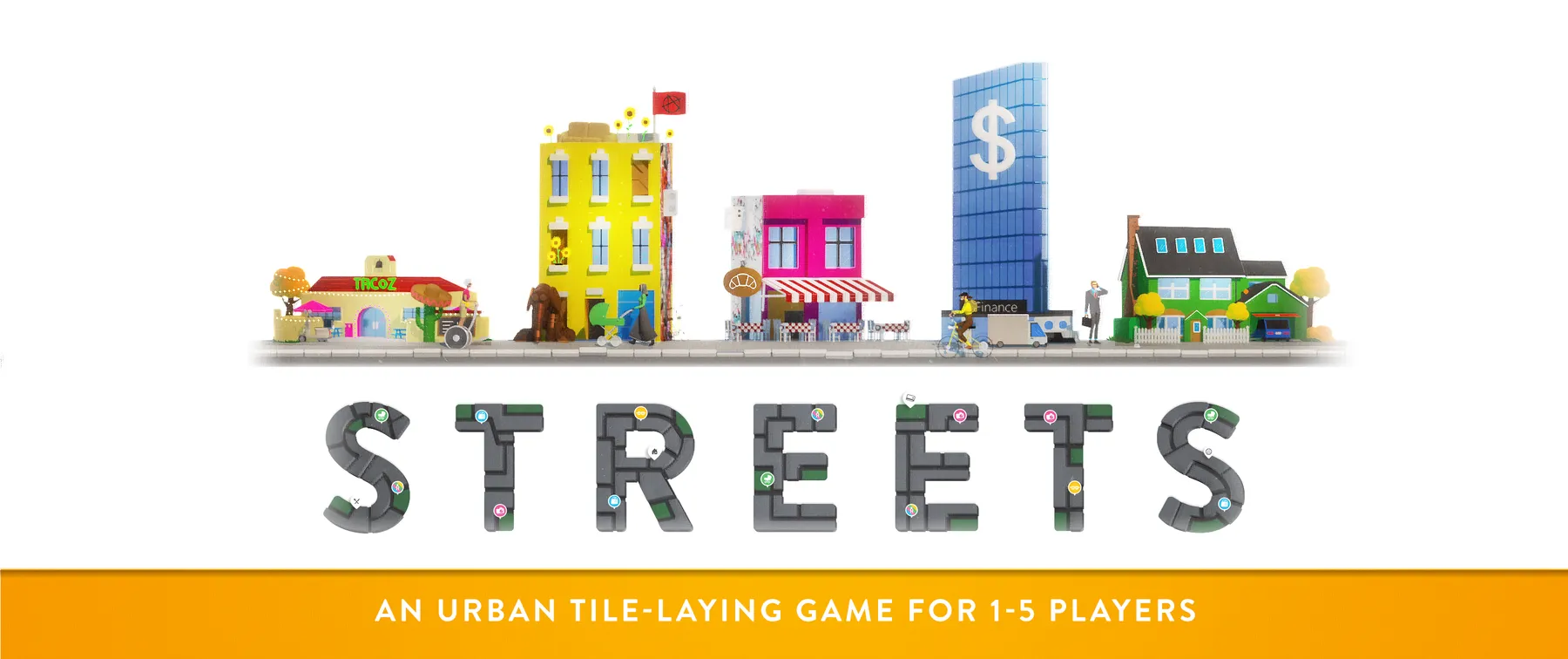
Streets by Sinister Fish Games takes things to the titular street level, although you’re still technically building a city together. It’s a shared environment again, but players still own buildings, albeit limited by ownership markers. And while this game is still enjoyable in its own right. It just gets a little tricky to keep track of where the people are expected to jump to as new tiles are places. It’s really more of a people-focused game instead of just a city/street-building game, in the same way that the old SimTower computer game is really an elevator management game.

For a similar theme but with radically different gameplay, there’s the newer Tenby that just his the table for us recetntly. You’re once again building city streets, but this time for a Welsh town, but the focus is solely on how cards score based on what’s adjacent and such. In that sense, the scoring mechanic feels a lot closer to Suburbia. We’ve only played this game a few times, but I love the charm of the game as a whole both interms of its aesthethics and how the gameplay drives some rather quaint streetscapes. Our first few plays of this have rather blown us away, and I’m rather excited to see how player strategies will evolve as we all become more familiar with the game.
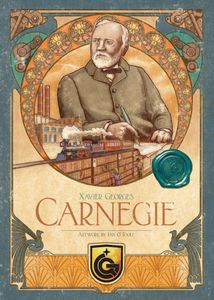
To continue this narrative of going from a landscape to increasingly smaller slices of civilization, special mention needs to go out to Carnegie, at least for one aspect of the game. We can all get distracted by the need to vy for positioning across the America map, there’s also the challenge of figuring out your individual office layout. It’s not enough to get you office tiles that give you interesting powers, but you also have to position things such that you have sufficient moves for your office workers to travel and eventually activate these tiles. It’s a seemingly smaller aspect of a rather complex game, but figuring out how to position things for maximum efficient really plays a role in how your engine will run.
So what have we all learned from this experience? I don’t know about you, but I recognize that my love for city games doesn’t come from just having city- or street-scapes at the end of everything, but it’s really about the interconnection of the buildings and tiles with one another. There’s something about that sense of satisfaction you get as card or tile effects start to chain once you add the new element to your city. And that’s really how it should go, right? The urban experience is about how we all affected one another as we’re brought into closer contact due to how the city is mapped our or how streets connect to one another. It’s the community pulled from proximity that makes the city experience unique. Games that capture that well are a treasure in their own right.