
Castles of Mad King Ludwig
Official Description:
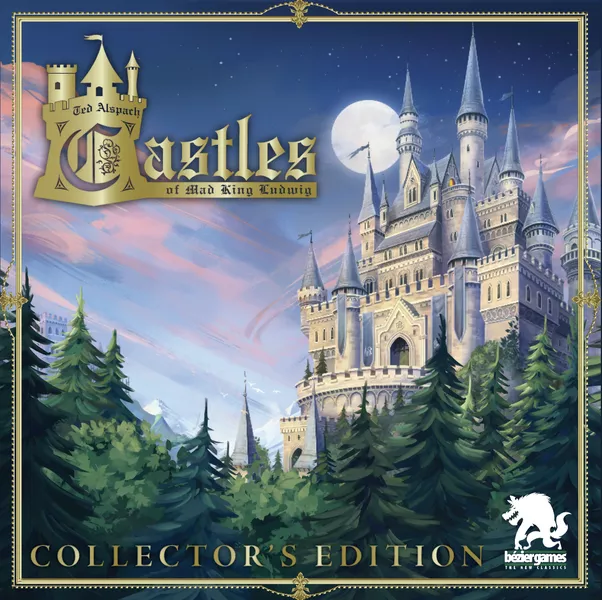
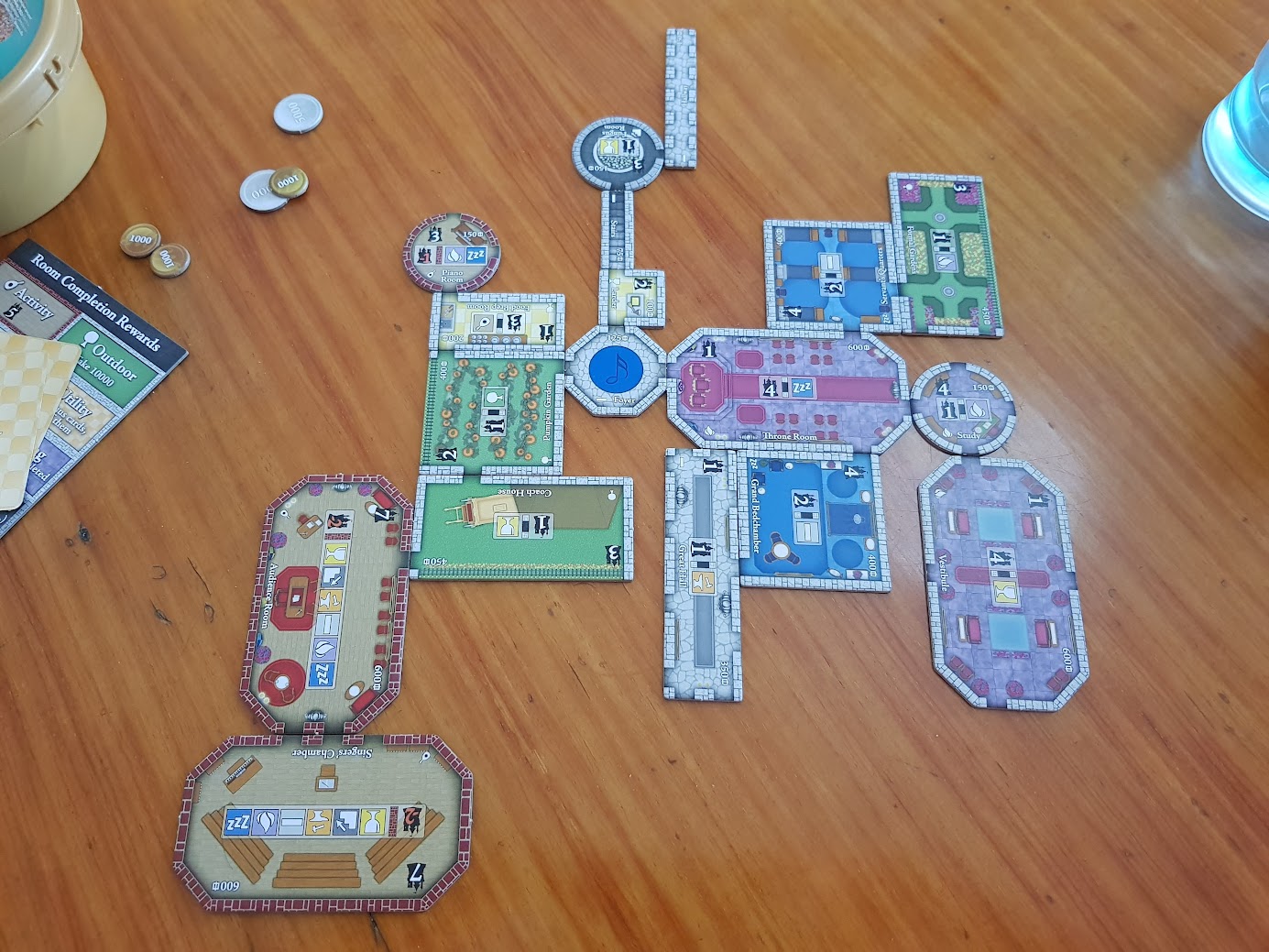
In Castles of Mad King Ludwig, players take on the role of builders tasked with constructing extravagant castles for King Ludwig II of Bavaria. Each player builds their own castle, one room at a time, by purchasing uniquely shaped and themed room tiles. The game features a dynamic market system where one player, acting as the Master Builder, sets the prices for the available rooms, adding a layer of strategy and player interaction as others decide which rooms to buy and where to place them.
As the game progresses, players aim to fulfill specific building requirements and personal objectives, earning points for completing rooms, connecting certain types of rooms, and achieving bonus goals. The variety of room shapes and types, along with the ever-changing market, ensures that each castle is unique and that no two games are the same. Strategic placement and careful planning are essential to maximize points and create the most impressive castle.
The game concludes when all rooms have been purchased and placed. Final scores are tallied based on completed rooms, achieved objectives, and special bonuses. The player with the highest score is declared the winner, having built the most magnificent and whimsical castle to satisfy the eccentric desires of Mad King Ludwig.
Castles of Mad King Ludwig stands as a modern benchmark in modular tile-laying, drawing from the Euro tradition of spatial optimization while injecting a sharp layer of market-driven negotiation. The system’s core—drafting and pricing uniquely shaped room tiles—demands a constant audit of both your own castle’s evolving geometry and the shifting incentives of your rivals. The Master Builder role, with its power to set prices, ensures that every round is a live negotiation, not just a puzzle. This blend of spatial challenge and economic brinkmanship delivers high operational reliability, which is why it remains a regular fixture in collections that see frequent play. Its significant long-term shelf retention is anchored by the way it rewards both tactical calculation and opportunistic play, keeping it relevant for groups who want more than just a solitary puzzle.
From a logistics standpoint, the game is engineered for efficiency: bagged tiles and minimalist, legible graphics keep setup and teardown within the 15-minute window, making it a practical choice for a main event on a game night. The box contents are functional rather than flashy, prioritizing clarity over ornamentation—a decision that pays off when you’re managing multiple tables or introducing new players. With a 90-minute session time, it fills the anchor slot in an evening, offering enough depth to satisfy planners without overstaying its welcome. The physical footprint is reasonable, and the component design supports smooth flow even as the table fills with an expanding sprawl of rooms.
Teaching Castles of Mad King Ludwig is a procedural affair—expect a 20-minute rules brief, especially if you want to avoid missteps around completion bonuses and the nuances of underground room placement. The system’s mental friction is substantial: players must visualize spatial fits, anticipate adjacency bonuses, and read the intentions of the Master Builder. This delivers a strong skill dividend, as participants sharpen both their spatial visualization and their ability to read and manipulate a dynamic market. The competitive interaction keeps the table engaged, with pricing decisions and room selection fueling a steady current of table talk and tactical pivots. Once the first round is underway, the structure is robust enough for a host to step back and let the table run, making it a reliable choice for groups that thrive on both autonomy and interaction.
Category
Tactical & Strategy
My score
8
Our Total Plays
15
Last PLayed
24 Aug 25
🔥 In Rotation
Player Count
1-4
Playtime
90 mins
Proficiency Perks
Strategic Planning
Spatial Reasoning
👑 PREMIUM
Play on BGA
Check Amazon
As an Amazon Associate, I earn from qualifying purchases.
← ALL BOARD GAMe REVIEWS