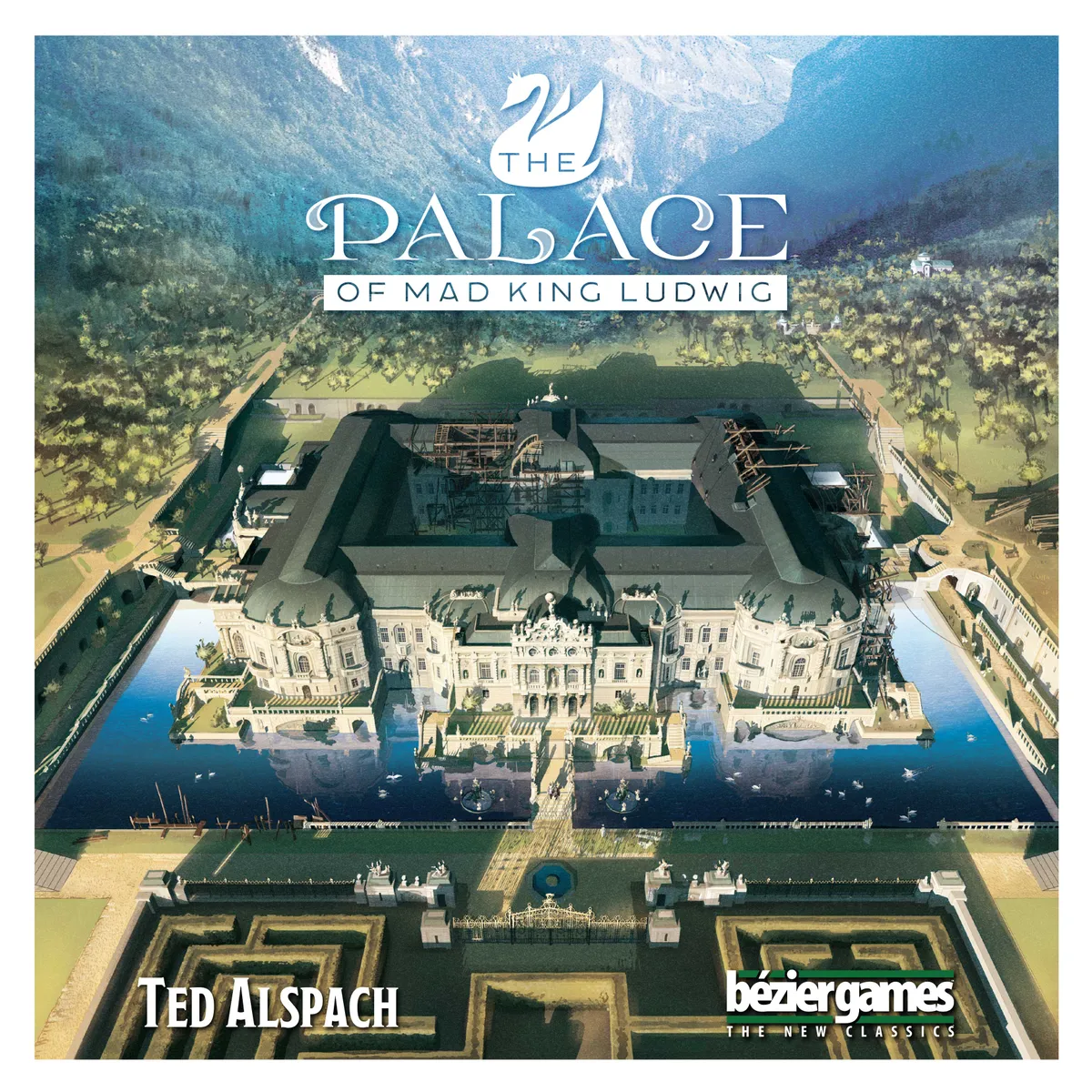
The Palace of Mad King Ludwig
Official Description:
In The Palace of Mad King Ludwig, players take on the roles of architects tasked with building a single, grand palace for King Ludwig II of Bavaria. Each player adds rooms one at a time to the shared palace, carefully arranging and completing different room types. As rooms are finished, a moat gradually forms around the palace, and the game ends when the moat is fully connected.
Throughout the game, players must strategically place rooms to maximize their points, leveraging the clever placement of swans and fulfilling various objectives. The collaborative construction means that every decision can impact all players, requiring careful planning and adaptation as the palace grows.
The game combines tile-laying mechanics with strategic choices, offering a unique experience where players work together to create an elaborate and fantastical palace, while still competing to be the most successful architect in the eyes of the Mad King.
The Palace of Mad King Ludwig stands as a procedural evolution within the modular tile-laying tradition, pivoting familiar mechanics toward a collective construction challenge. Here, the shared palace board transforms every placement into a negotiation of space and timing, with each architect’s move subtly shifting the landscape for all. The system’s mental friction is sharpened by the need to anticipate both immediate scoring and the long-term moat closure, while the swan bonuses inject a layer of tactical foresight. As a descendant of the Castles formula, it delivers consistent mechanical performance—its shelf retention is anchored by the way it refreshes a proven lineage with a communal twist. For a veteran curator, its legacy status is earned: it’s a reliable secondary option that rewards repeat play without overstaying its welcome.
From a logistics standpoint, the box contents are streamlined—minimalist insert, square tiles, and a straightforward component layout keep setup and teardown within the 15-minute window. The physical footprint is manageable, and the aesthetic is functional rather than flashy, making it easy to integrate into a standard game night rotation. With a 75-minute session time, it’s best positioned as a main event for groups who appreciate a focused, interactive puzzle. The shared board ensures everyone remains engaged, but the system avoids the sprawl or fiddliness that can bog down similar titles.
Teaching The Palace of Mad King Ludwig is a procedural affair: expect a 20-minute rules brief, with particular attention needed for room scoring, swan bonuses, and the moat’s role in triggering the endgame. The competitive dynamic keeps the table alert—players must adapt to shifting opportunities as the palace grows, and the shared construction means no one can coast on autopilot. The skill dividend here is substantial: players leave with sharper spatial visualization and a keener sense of adaptive planning. The interaction level keeps the energy high, as every decision has ripple effects, making it a strong fit for groups who thrive on tactical interplay and shared tension.
Category
Tactical & Strategy
My score
7
Our Total Plays
3
Last PLayed
31 Mar 19
🏛️ Legacy
Player Count
2-4
Playtime
75 mins
Proficiency Perks
Strategic Planning
Spatial Reasoning
Check Amazon
As an Amazon Associate, I earn from qualifying purchases.
← ALL BOARD GAMe REVIEWS