Cascadia is one of modern tabletop gaming’s greatest gateway achievements, but even the coziest Pacific Northwest ecosystem eventually runs out of surprises. If your table has exhausted its wildlife scoring cards, here are five games that elevate your favorite parts of the puzzle without sacrificing what made it click in the first place.
Cascadia (Flatout Games 2021) hits a rare sweet spot: effortless rules, tactile drafting, and a satisfying spatial puzzle that never feels punitive. It’s also why I featured the publisher as part of the article on Making Shorter Game Nights Count. But once your group masters optimal tile layouts and animal pairings, the hunt begins for follow-up games. The key to choosing the right successor is not just finding another game with wildlife artwork - it is identifying which specific mechanic your group fell in love with and leveling it up.
And that’s one of the trickier aspects of the hobby, whether you’re just considering your home table or you regularly host game nights as we do. It would be overly simplistic to just try another game from the same publisher or by the same designer, as you’ll see how even those games aren’t necessarily all related. One of the pillars of any game experience centers around the mechanics that make the game work and the theme that brings things all together.
This little guide presents five games that feel like logical next steps based on different aspects of Cascadia while still playing in the same mid-weight complexity range that keeps them more accessible.
1. The Isle of Cats: The Complex Spatial Puzzle
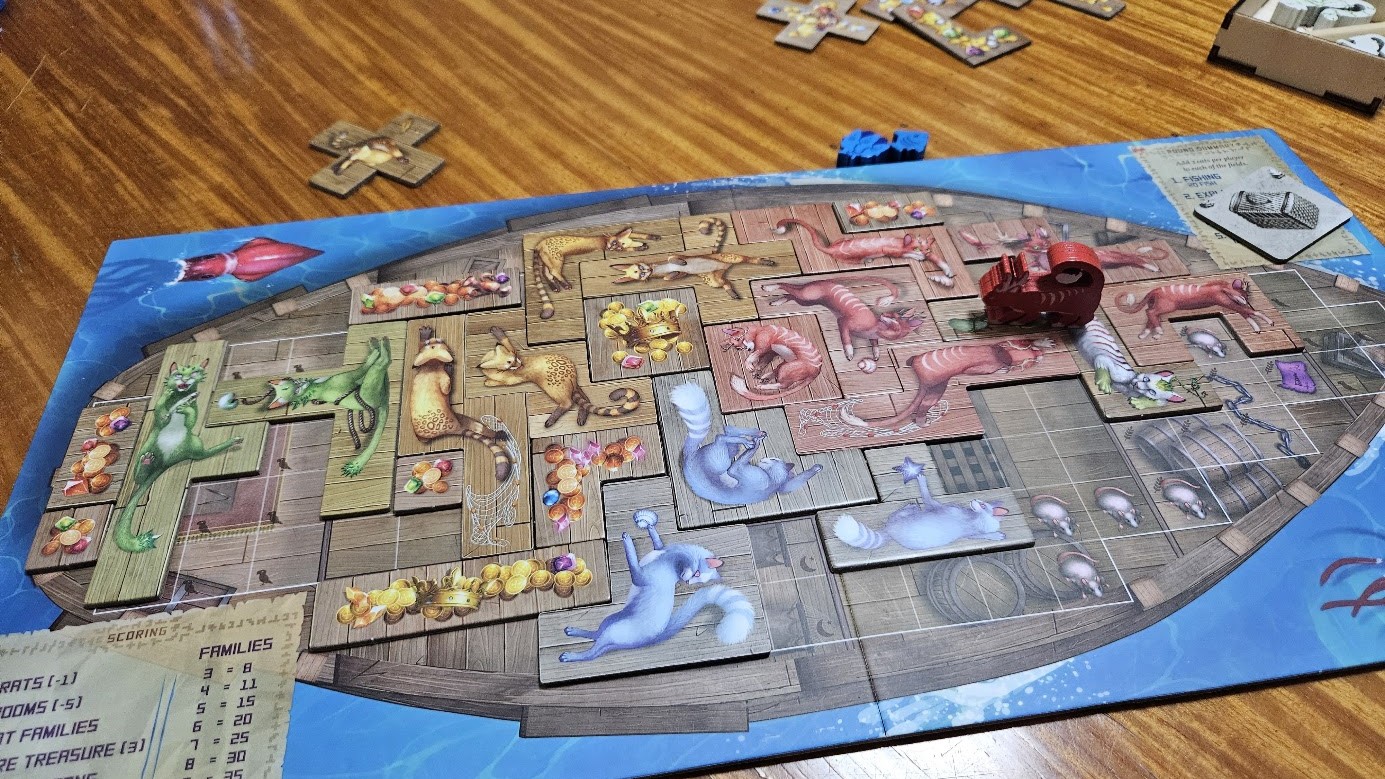
If your favorite part of Cascadia is quietly optimizing your grid of hexagonal tiles, The Isle of Cats (The City of Games 2019) dials that spatial challenge up to eleven. Instead of open-ended landscapes, you must fit awkward, Tetris-style polyomino shapes into the strict boundaries of a rescue boat. Throw in the need to completely cover the boat as best as possible, and you’ll find that the awkwardly shaped cat tiles lose some of their cuteness factor.
Card drafting replaces the gentle open market, creating a much tighter economy where you have to pay for the right to rescue cats and even bid for initiative.
Family mode is included in the box, giving you a simplified ruleset that perfectly matches Cascadia's weight before you tackle the full game if needed.
Picking up tiles and tokens in Cascadia is completely free, but here, everything costs fish. You will constantly agonize over whether to spend your limited currency on drafting scoring cards or saving it to actually lure cats onto your boat.
Groups prone to severe analysis paralysis might want to steer clear, as the Tetris-style placement combined with card drafting creates a much heavier cognitive load than Cascadia’s breezy turns.
2. Kavango: The Deep Habitat Engine
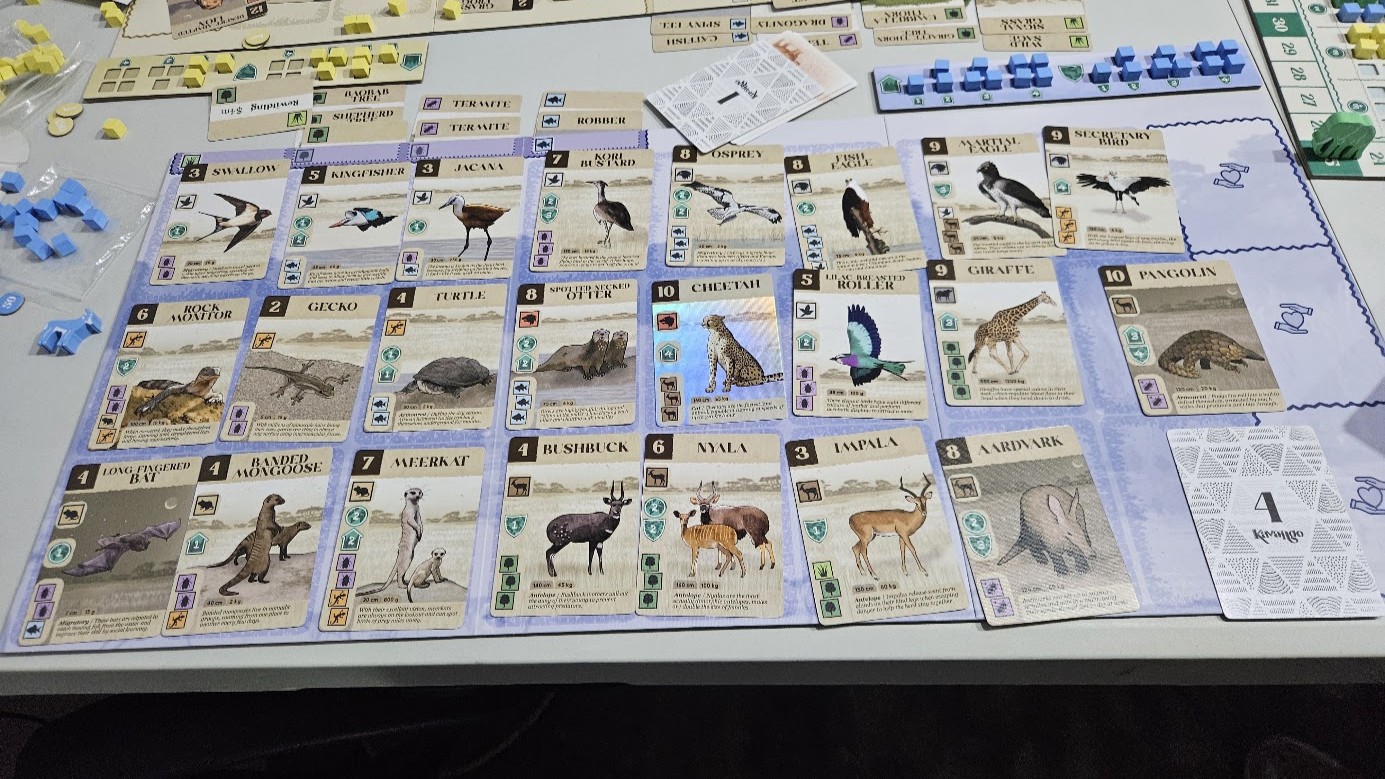
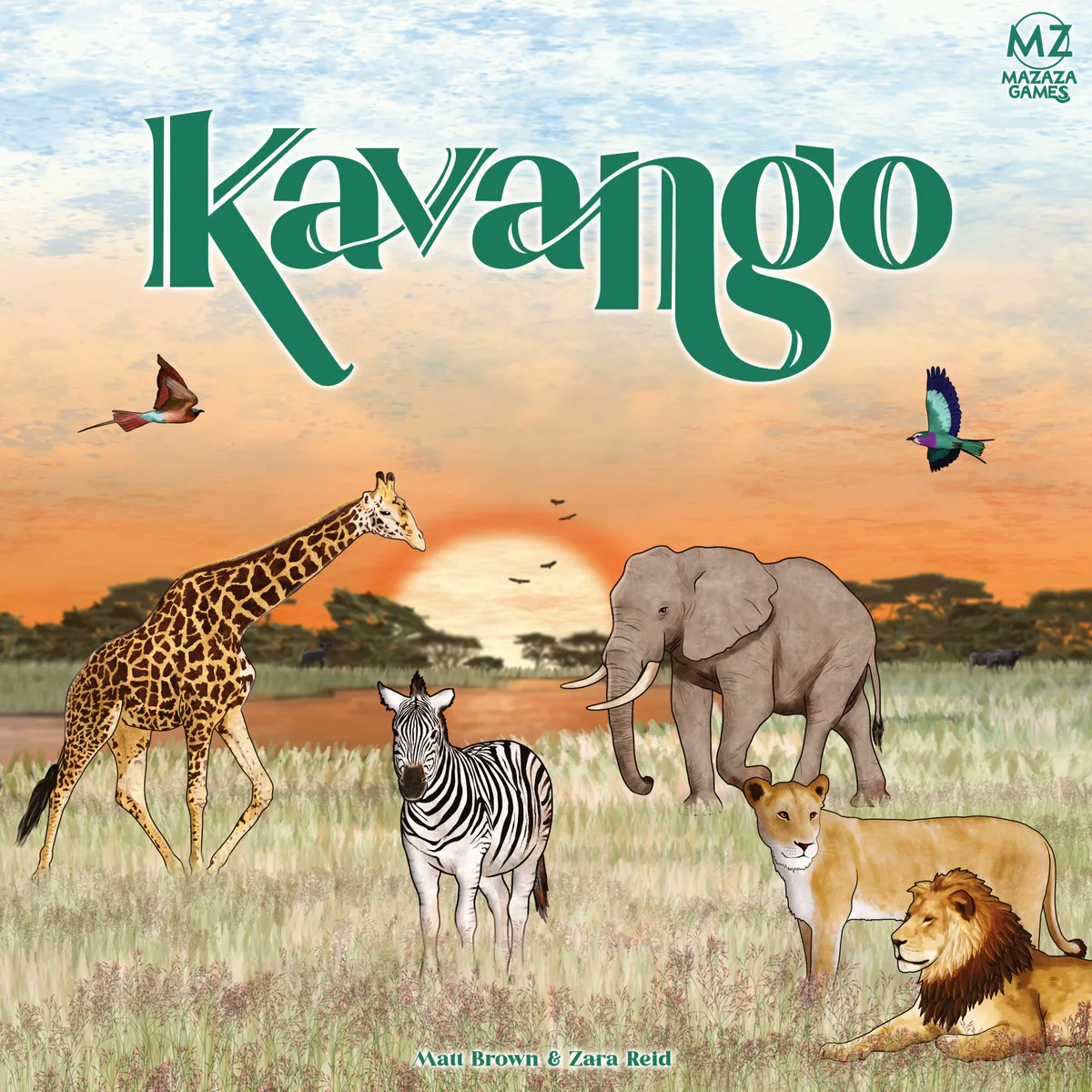
Players drawn to Cascadia's wildlife context will find a much richer thematic payoff in the Kalahari basin. Kavango (Mazaza Games 2024) moves beyond simply matching an animal token to a geographic tile; it demands you build a functioning, self-sustaining ecosystem. Thus, you need to think about having the right plants, insects, and animals to develop a thriving nature reserve while keeping the poachers away. And the soon-to-ship Lodges Expansion promises to add a bit more complexity to deepen the game.
Drafting animal species and landscape cards forces you to manage more variables with a need to develop a proper food web.
Conservation stakes feel authentic without burying your table in the overwhelming spreadsheet complexity of heavier games like Ark Nova.
Managing a living food web replaces simple shape-matching. Drafting a predator means you must ensure your habitat actually has the prey to support it, all while reacting to shifting game variables that can throw your perfectly planned sanctuary into chaos.
Anyone looking for a fast, thirty-minute filler game should look elsewhere, because this is a richer, longer commitment that requires players to genuinely engage with the interconnected biology of their tableaus.
3. Hanami: The High-Stakes Shared Board
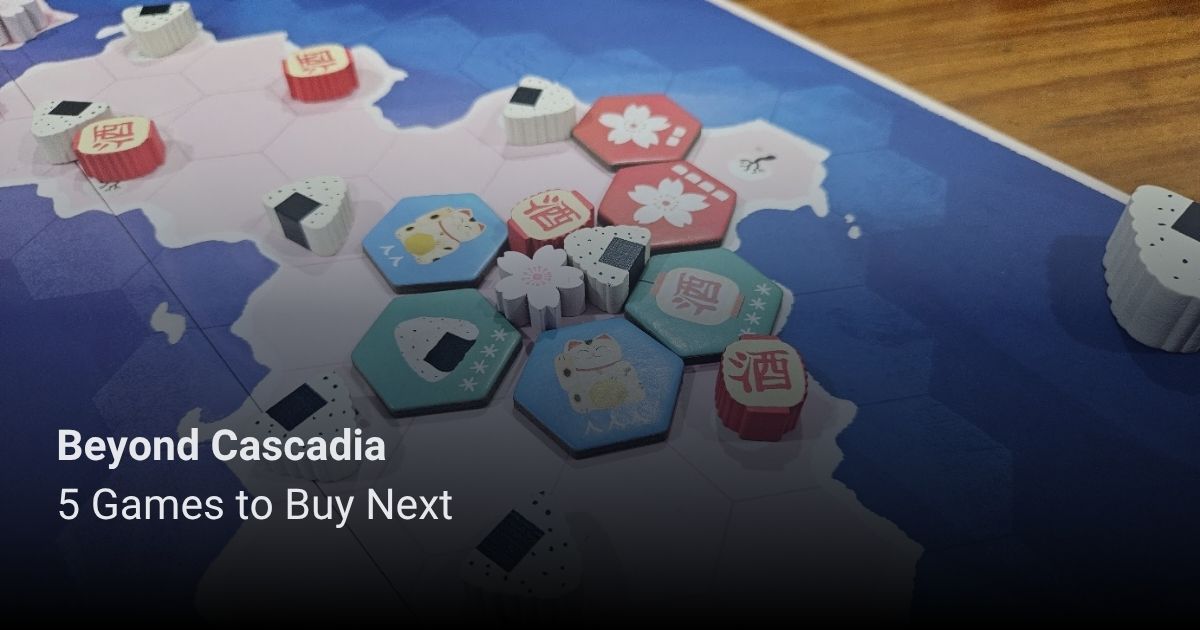
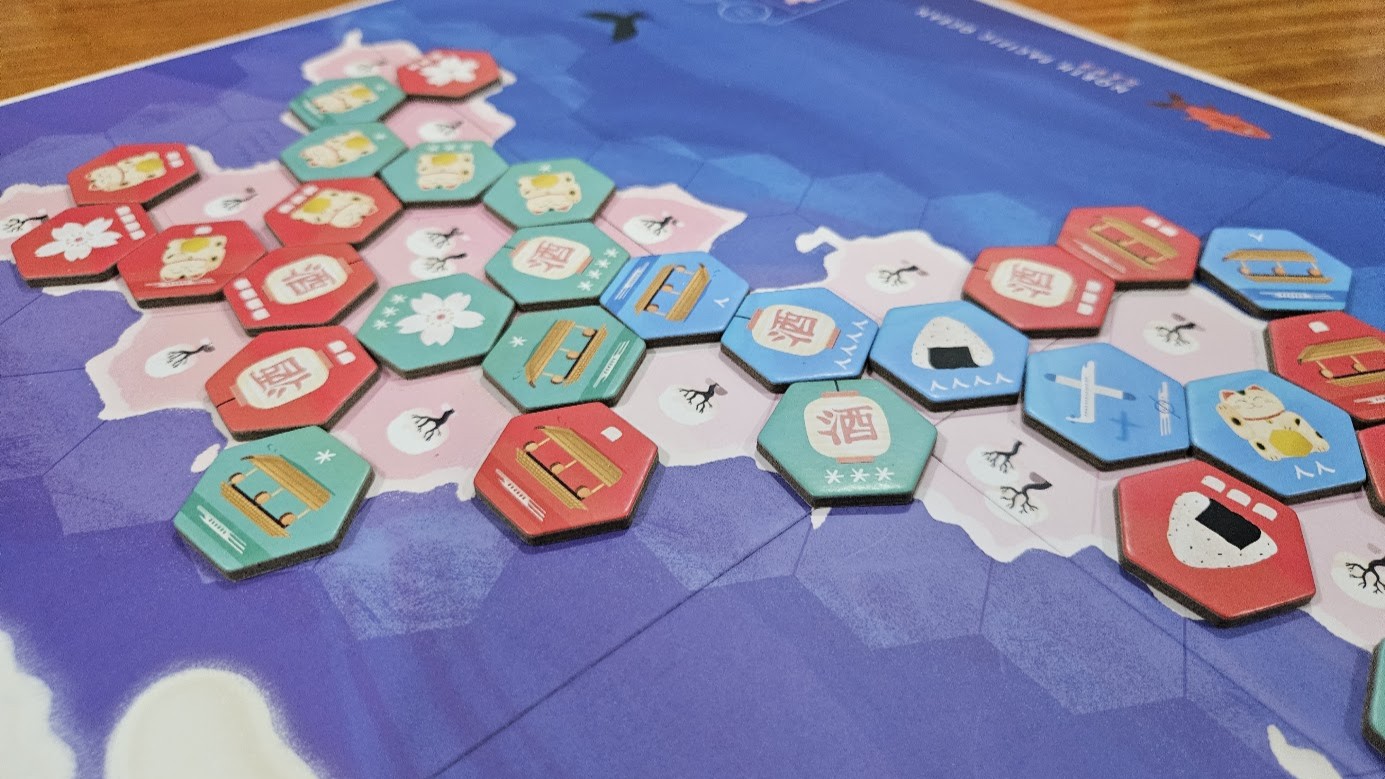
Four-player Cascadia (or any player count, really) often feels like multiplayer solitaire, with everyone staring silently at their own isolated habitats. Hanami(Keymaster Games 2026) forces all players onto a single, highly contested map.
Reiner Knizia's classic Samurai framework hides beneath the peaceful cherry blossom aesthetic yet still delivers a great game experience.
Every tile placement directly pressures your opponents, turning tranquil drafting into a sharp battle for territory and control of particular features.
Timing becomes everything when everyone plays on the same map. You have to decide whether to play your best tiles early to secure a contested cherry blossom feature, or hold them back to swoop in and steal a location right before the round ends.
Tables that dislike aggressive confrontation might find this frustrating, as the cutthroat area-majority mechanics will inevitably cause friction if you prefer building peaceful engines in isolation.
4. Azul: The Pure Tactile Classic
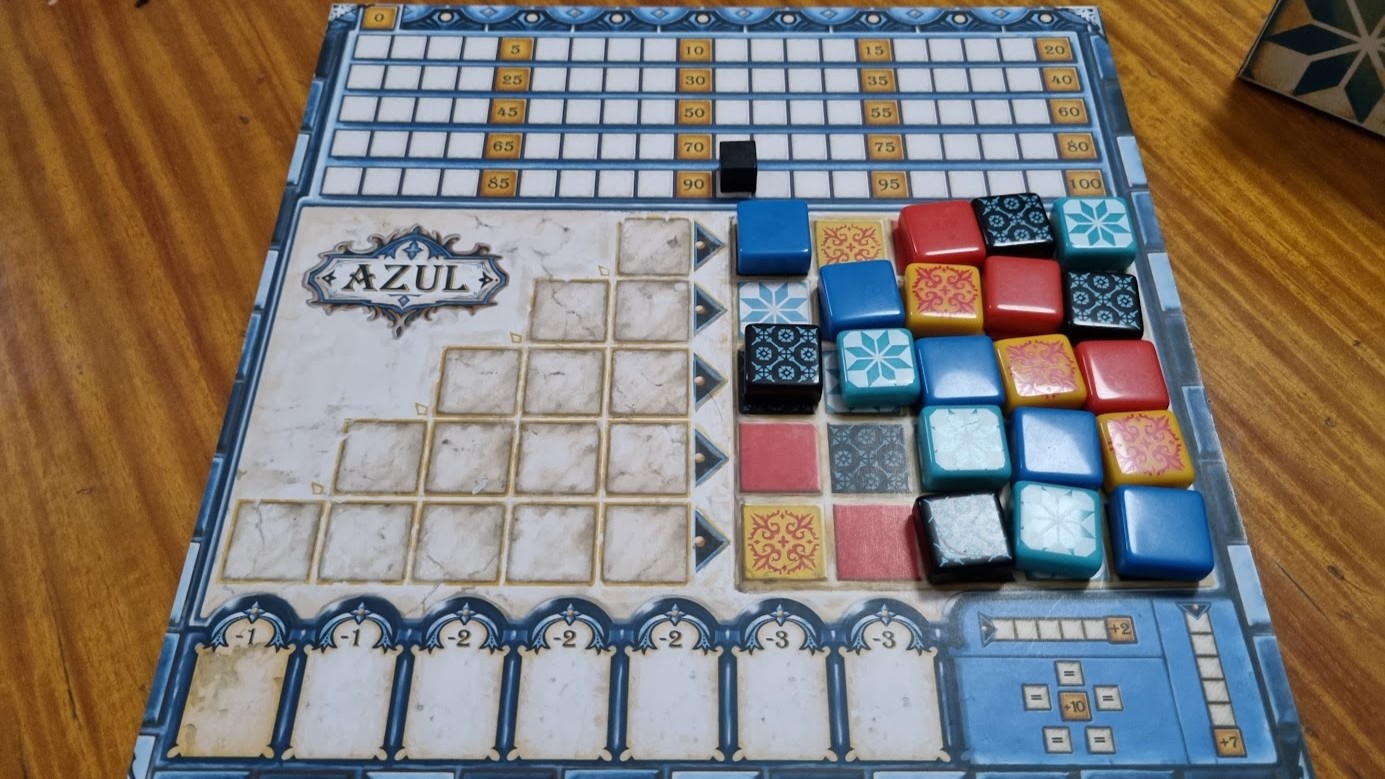
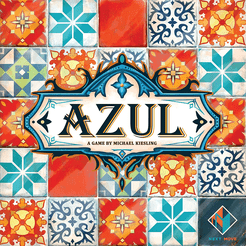
Sometimes you just want to pull thick, satisfying components out of a cloth bag. Azul (Plan B Games 2017) strips away the nature theme entirely to focus on pure, abstract tile drafting and pattern building. And the tiles that come with the original base game alone are some of the most satisfying plastic tiles I’ve ever held.
Strict placement rules mean a single greedy pick can shatter your mosaic and force negative points onto your floor line.
Hate-drafting becomes a viable and necessary strategy, offering a more aggressive interaction style for competitive groups.
Factory drafting displays create a brilliant, scaling sense of dread. While choices are plentiful early in the round, the end of the phase turns into a desperate bid to avoid taking a massive pile of tiles that will shatter on your floor line and cost you the game.
Thematic gamers craving a strong narrative will not find it here, since this beautiful, tactile experience is fundamentally an abstract math and pattern puzzle at its core.
5. Three Sisters: The Cascading Score Salad
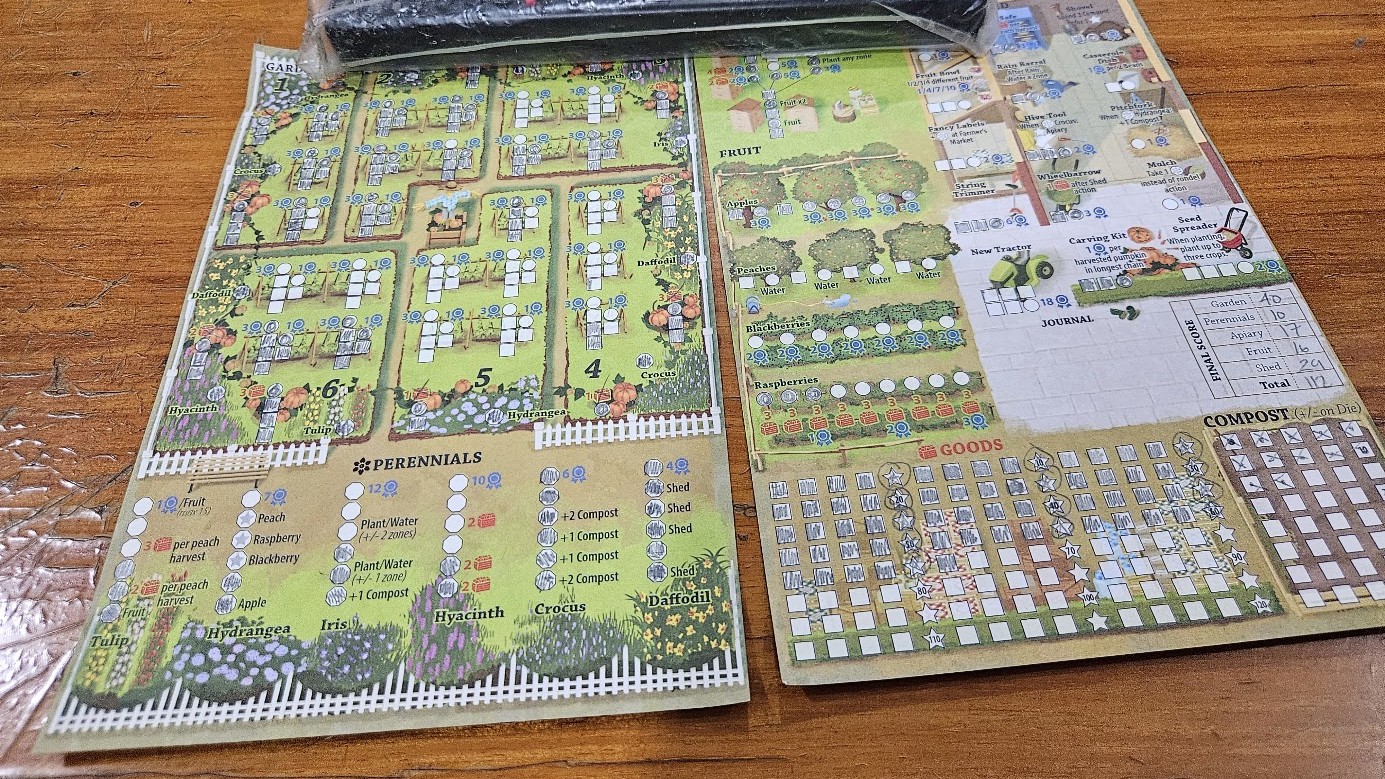
Cascadia holds back its point-scoring gratification until the final tally. Three Sisters (25th Century Games 2022) hands out chain-reaction combos on almost every single turn, all in a compact package. I consider this game to be the best-in-class roll-and-write farming game out there that puts larger games like Tend to shame. And the new Harvest Edition offers players a bit more challenge with a proper campaign.
Backyard companion-planting (corn, beans, and squash) provides a surprisingly authentic agricultural puzzle.
Roll-and-write mechanics allow you to cross off boxes that immediately trigger other boxes, delivering massive point combinations in a highly portable footprint yet with a variety of paths to victory.
Relying on a dice-driven action selection system puts you at the mercy of your opponents' drafts. Your goal is to build a resilient enough garden engine so that even when someone takes the exact die you wanted, you still trigger a cascade of secondary actions in your apiary or tool shed.
Highly interactive gameplay is completely absent, keeping this in the same "multiplayer solitaire" space as Cascadia, where you are primarily competing against your own high score.
The Final Verdict: How to Build Your Next Game Night
Building a great board game collection does not mean buying ten versions of the exact same puzzle. It means providing your gaming group/s with a variety of mechanical experiences that all share the same welcoming, accessible weight.
Buy The Isle of Cats if your brain craves deep, spatial Tetris puzzles.
Buy Kavango if you want authentic wildlife conservation and rich engine building.
Buy Hanami if your group is ready for sharp, interactive tactical duels.
Buy Azul if you want a tactile, abstract classic that rewards hate-drafting.
Buy Three Sisters if you love the dopamine hit of massive, cascading combo-scoring.
Cascadia will always have a permanent place on many game shelves for a relaxed Sunday morning coffee, but any of these five games will successfully step your table up to the next tier of modern tabletop gaming.