Tabletop
Cognitive Compression
Condensing heavyweight mechanics into portable experiences that respect your shelf space and your cognitive load.
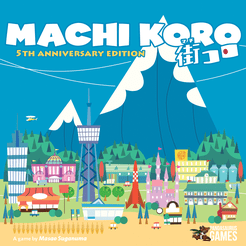
The Asian board game market is mostly represented by a lot of independent publishers selling their products directly to consumers, mostly through online web stores. Oink Games opened its first official store on 20 March 2026 in Tokyo, Japan, which is a unique effort, but still a move that has them focusing on not going through traditional retailers. On the same day, Asmodee announced the acquisition of Japon Group and the formation of a new publishing studio, Nekuma. Japon Group has been responsible for getting many Japanese games out into the world, including the likes of Love Letter and Machi Koro.
This just reinforces the unique design space that many Asian board game publishers work within, one that players around the world are coming to appreciate more and more. Due to the many constraints of independent publishing, a lot of Asian designers had to make more out of less. Thus, we get small games with limited components (and thus lower production costs), but with novel game mechanics that make the game feel even bigger than it is. And you have a player base that may not always have the space for big war games or overly complicated campaign games, so they’ll favor experiences that fit into their bags as they commute on the train and such. The largest Asian board games that we won are Come Sail Away (Saashi & Saashi 2023) and Overparked (Origame 2025), and they remain the exception and not the rule. The Asian Board Games Festival (ABGF) is a celebration of many of these distinctly Asian board games from across the region. The ABGF is coming to the Philippines for the first time this May, and events like these continue to remind everyone that these small but impactful games are out there. I can only describe these games as the product of a Cognitive Compression where designers play with big game mechanics and condense them into small-box board game experiences. Let’s explore how some games
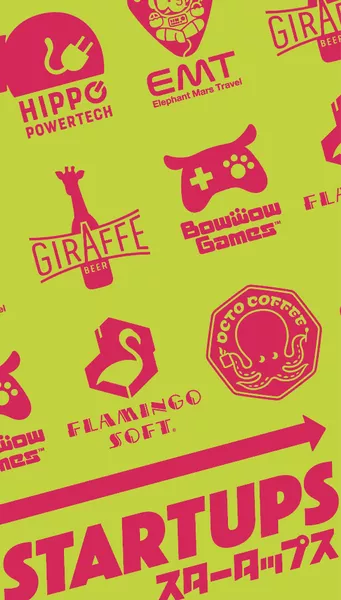
A lot of these small games leverage table dynamics and the social meta as a replacement for more game components. Instead of manipulating tokens on a board, you’re trying to read your opponents and nudge other players in the direction you want them to go. Love Letter (AEG 2012) is still one of the best in-class games in this space, and the game only involves 16 cards. The nature of Insider’s (Oink Games 2016) design makes it quite an intense and socially stressful game, especially when you take on the role of the Insider. And Startups (Oink Games 2017) has players trying to read the virtual market in play with access to about half the information needed to make projections of overwhelming accuracy.
It’s why games like these are very popular with the pub crowd. The literal small size of the games (especially those in calling card boxes) makes them ultra portable, but that’s not why they keep hitting the game table over and over again. It’s the solid gameplay and the fun interactions that these games foster that make them standouts in this area.
We all like our engine-building games and tweaking our personal tabeaus to be as efficient as possible. And there are many small games that have players juggling a lot of different things in order to score those essential victory points.
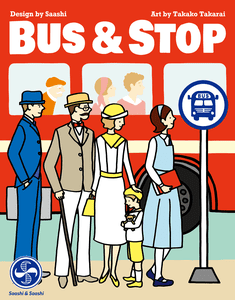
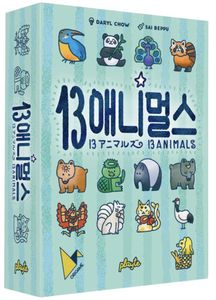
Bus & Stop (Saashi & Saashi 2024) is a more recent favorite game that has players figuring out which passengers to collect in order to make the most of their 10-card capacity buses. The fact that you collect cards based on their colors instead of their passenger types is the maddening core of this game. Moon Adventure (Oink Games 2021) demonstrates a similar elegance, even if it doesn’t have a traditional engine to build. This cooperative game has players juggling a dwindling oxygen supply, a unique movement system that moves faster if you space your characters right, all while trying to collect essential supplies. Oink had to make this box a little bigger than normal, but it’s still smaller than your average Western release. And Daryl Chow's love letter to mahjong, 13 Animals (Origame 2024), is another great example of abstracting a big game like mahjong into a smaller box experience while still satisfying a lot of the same cognitive itch. You're still working with your hand of cards in a a rummy-adjacent game without the need for a big square table and literal tiles. It's brilliant.
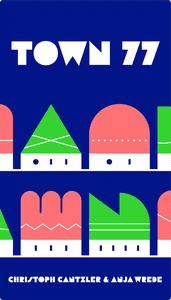
Not everyone loves a good spatial reasoning puzzle, and some of my most stressful game moments have come from tiny games out of Japan. Town 77 (Oink Games 2023) is a great example of this, as it subjects players to a Sudoku-style puzzle that gets increasingly intense the longer you stay in the game. Your hand gives you options to work with, but even those options feel more and more limited as the turns drag on. Nine Tiles (Oink Games 2015) tests your ability to work with a fixed set of tiles to match a pattern as quickly as possible, but that’s pretty basic. Nine Tiles Panic (Oink Games 2019) takes things to a whole other level, where players now have to work their tiles to score the most points based on shifting scoring conditions. The game gets your head twisted in knots so much that you don’t even question what possible relationship burgers and aliens should have.
These “micro-heavy” games really show that big things come in small packages. And with the many global events that have affected the board game industry over the past few years, there’s a lot to be said about celebrating these smaller, punchier games that give you a lot more back for your buck. Whether it’s the US trade war affecting games mass-produced in China or the more recent Iran conflict driving up the global price of oil, which leads to higher prices for everything, players and collectors are being a lot more careful with where their money goes. And a lot of these independently produced small games are really winning the spotlight because of local availability in the region, and by delivering truly fun experiences.
And when time is a commodity, these smaller games help scratch the gaming itch even during a lunch break or while on the go. You can have a massive board game collection at home, but the games that will leave the house more are the more portable ones and the ones with a lower barrier to entry for a wider range of players.
All the more I’m excited for the upcoming ABGF Philippines and other events celebrating the uniqueness of regional board game design. We know that these games are amazing at capturing cultural experiences in their game mechanics, but we also reinforce that the many constraints such designers faced in making these games have clearly pushed their creativity even further.