
Nine Tiles Panic
Official Description:
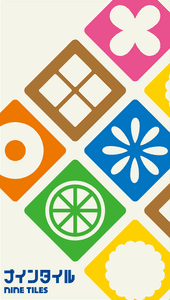
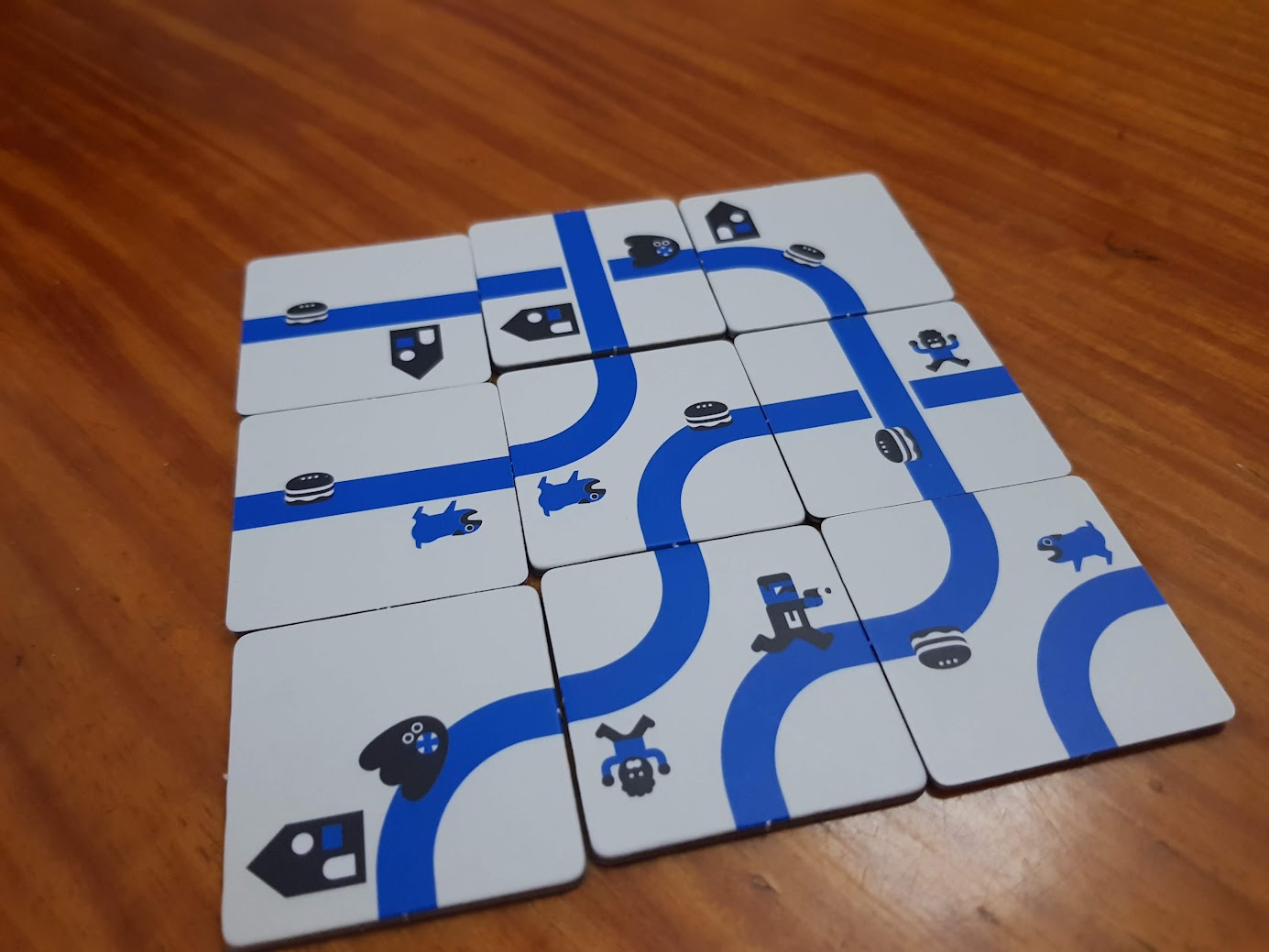
In Nine Tiles Panic, each player receives a set of nine double-sided town tiles. At the start of each round, three scoring cards are revealed, each showing a different way to score points. Players race to arrange their nine tiles into a 3x3 grid, aiming to meet as many of the scoring conditions as possible before time runs out.
The game is played in real time, with all players simultaneously flipping and arranging their tiles. The challenge lies in quickly creating a layout that satisfies the current scoring cards, which may require connecting roads, placing certain characters, or fulfilling other spatial requirements. Once a player completes their grid, they grab a timer to signal the end of the round for the other players.
After all players have finished, grids are checked for compliance with the scoring cards, and points are awarded accordingly. The game continues for several rounds, with new scoring cards each time, and the player with the most points at the end is declared the winner.
Nine Tiles Panic operates as a kinetic, time-pressured puzzle rooted in the tradition of fast-play, spatial fillers. Each session is a sprint: players flip and arrange their nine double-sided tiles, racing to satisfy shifting objectives dictated by a rotating set of scoring cards. The system’s core is a blend of frantic pattern recognition and tactical improvisation, with the cityscape theme adding a playful layer of chaos—aliens, burgers, and urban grids all vying for attention. Its status as a proven classic is earned through consistent table presence over the years, but its current value is best described as niche ROI: it delivers a burst of energy and engagement, but its long-term shelf retention is selective, often overshadowed by newer, more nuanced spatial games.
From a logistics standpoint, the oversized vertical Oink box is a practical asset, easily accommodating the game’s tiles and cards while remaining compact enough for travel. Setup is minimal—open the box, distribute tiles, reveal scoring cards—making it a reliable option for filling gaps between heavier games or as a quick opener. The physical components are robust and the box’s design supports repeated, high-frequency use, but the real-time nature means the table can get loud and scattered, especially with larger groups. For hosts, it’s a dependable filler that won’t overstay its welcome, ideal for energizing a room or bridging sessions during a longer game night.
Teaching Nine Tiles Panic is a procedural affair: the rules are straightforward, but the variable scoring cards require a clear explanation up front. Once the first round is underway, most players are self-sufficient, allowing the host to step back and observe. The system’s mental friction is moderate—players are challenged to rapidly visualize spatial solutions under pressure, sharpening both reflexes and pattern recognition. With parallel play and minimal direct interaction, the energy in the room is competitive but not confrontational; the focus is inward, with each player locked in their own race against the clock. The main skill dividend is a sharpened ability to process spatial information quickly, making it a satisfying, if specialized, addition to any veteran’s collection.
Category
Casual & Filler
My score
6
Our Total Plays
2
Last PLayed
21 May 22
🏛️ Legacy
Player Count
2-5
Playtime
20 mins
Proficiency Perks
Reflex & Speed
Spatial Reasoning
Check Amazon
As an Amazon Associate, I earn from qualifying purchases.
← ALL BOARD GAMe REVIEWS