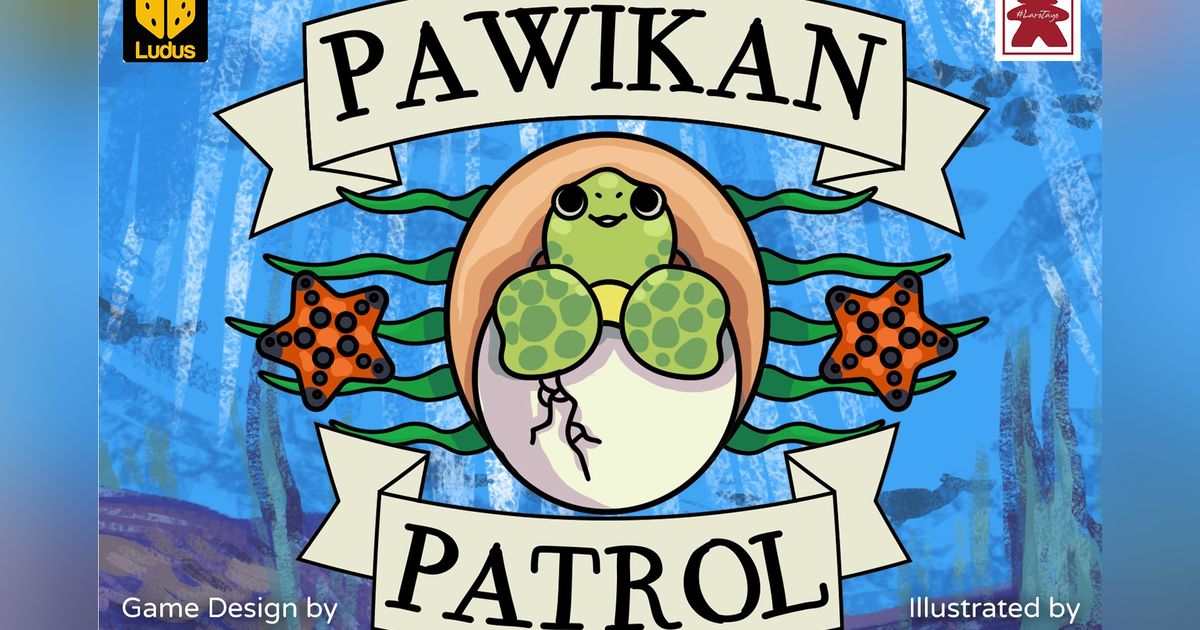
Pawikan Patrol
Official Description:
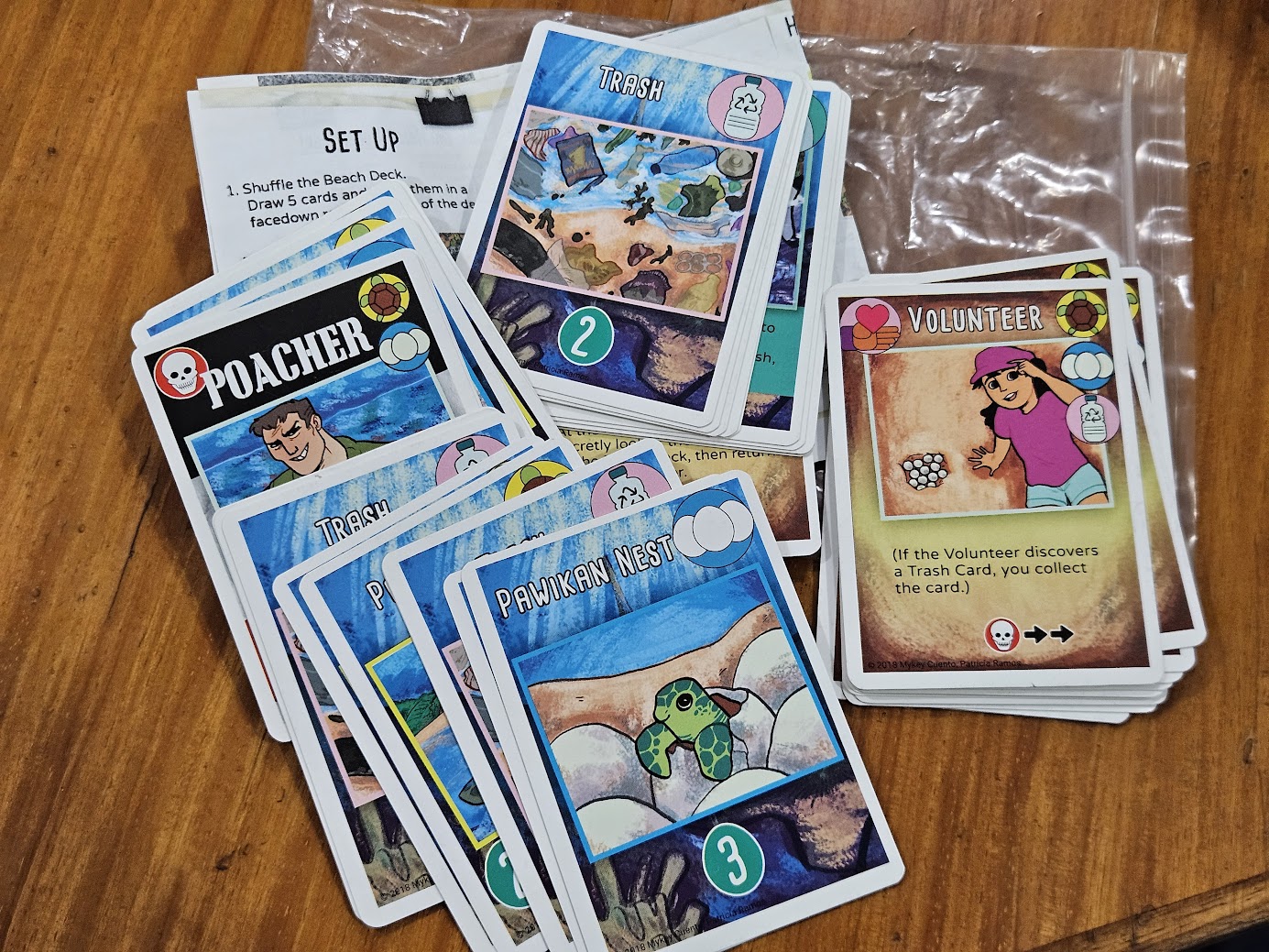
Pawikan Patrol is a cooperative board game where players take on the roles of volunteers working together to protect sea turtle nests and hatchlings from various threats. The game is set on a beach, and players must coordinate their actions to patrol the area, rescue eggs, and ensure the safe journey of hatchlings to the sea. Each round presents new challenges, such as poachers, predators, and environmental hazards, requiring strategic planning and teamwork.
Players use action points to move, collect eggs, and respond to emergencies, all while managing limited resources. The game introduces educational elements about sea turtle conservation, highlighting the importance of community involvement and environmental stewardship. Success depends on the group's ability to communicate, prioritize tasks, and adapt to changing situations on the beach.
Pawikan Patrol is designed for 1 to 5 players and offers a variable setup for replayability. The game aims to raise awareness about the plight of sea turtles and the efforts needed to protect them, making it suitable for families, classrooms, and conservation groups.
Pawikan Patrol sits comfortably within the casual, family-friendly tradition—compact, approachable, and visually inviting, but with a surprising layer of tactical depth beneath its conservation theme. Its shelf presence is defined by selective deployment only; it’s not a perennial favorite, but it earns its keep as a reliable educational tool and a conversation starter about environmental stewardship. The game’s legacy status in the collection is less about constant table time and more about its role as a thematic bridge for new players and younger audiences, especially when the goal is to introduce cooperative play with a local flavor.
The box’s small footprint and clear component design make setup and teardown straightforward, aligning well with a 20-minute session. It’s best positioned as a warm-up or cooldown title—something to open or close a game night, or to fill a gap between heavier games. The family-friendly artwork and compact edition mean it travels well and doesn’t demand much table space, making it a practical choice for classrooms, outreach events, or casual gatherings where time and attention are limited.
From a teaching perspective, Pawikan Patrol requires a procedural approach: the rules are accessible, but the action selection and poacher mechanics need careful explanation up front. Once the group is underway, the system’s mental friction comes from coordinating limited resources and adapting to shifting threats, rewarding players who communicate and plan ahead. The competitive interaction—players racing to optimize their actions against the game’s challenges—keeps the table engaged, but the energy remains collaborative and positive. The skill dividend here is clear: players leave with sharper group coordination instincts and a better grasp of strategic prioritization under pressure, all within a thematic context that’s easy to rally around.
Category
Casual & Filler
My score
6
Our Total Plays
2
Last PLayed
01 Dec 18
🏛️ Legacy
Player Count
1-4
Playtime
20 mins
Proficiency Perks
Strategic Planning
Check Amazon
As an Amazon Associate, I earn from qualifying purchases.