Espionage: the card game
Official Description:
Espionage: the card game is a strategic game where players assume the roles of Spymasters, directing highly skilled agents to accomplish missions or disrupt the objectives of their opponents. The gameplay centers on deploying spies, assassins, and other operatives, requiring players to make tactical decisions to outmaneuver their rivals.
Players must carefully manage their resources and agents, balancing offensive and defensive strategies. The game involves a mix of bluffing, deduction, and calculated risk-taking, as each move can shift the balance of power between competing Spymasters.
Victory is achieved by successfully completing missions or thwarting the plans of opponents, making Espionage: the card game a dynamic contest of wits and strategy.
Espionage: the card game operates in the tradition of tactical deduction titles, where player-reading and calculated card play drive the core experience. The system’s focus on unique mission targets and agent deployment creates a steady stream of mental friction, rewarding those who can anticipate and disrupt rival plans. Its consistent mechanical performance—reflected in its solid table-time value—explains why it has maintained a presence in collections with years of managing tables. While it doesn’t deliver the flash of high-strategy epics, its longevity comes from a reliable blend of bluffing, deduction, and quick tactical pivots, making it a dependable secondary option for groups that appreciate portable social contests.
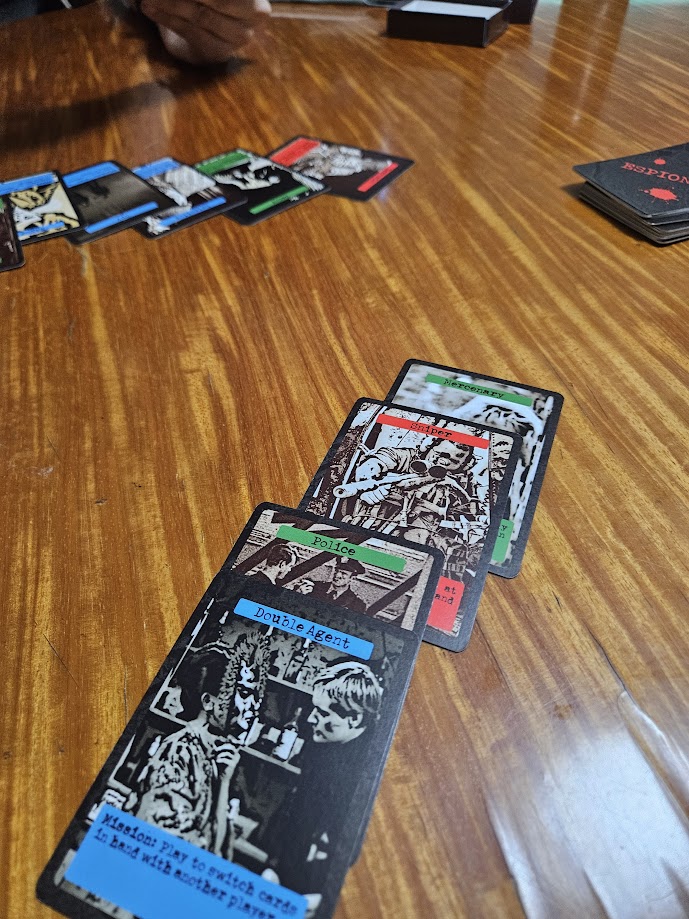
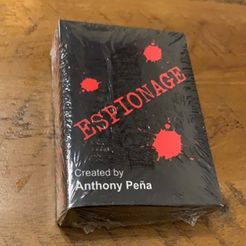
Physically, Espionage is a compact indie release—its tiny box and straightforward card components make it a practical choice for hosts who need a filler or a quick reset between heavier games. The art is functional rather than evocative, but the minimal footprint means setup is nearly instantaneous and teardown is painless. This makes it a strong candidate for spontaneous play, travel, or as a backup when time is tight. It’s not designed to anchor a full evening, but it excels as a portable, easy-to-teach option that keeps the table engaged without logistical overhead.
From a teaching perspective, the rules are light enough that most players are comfortable by the second round, and the competitive structure ensures everyone is invested from the outset. The main teaching hurdle is clarifying the specific mission targets and the constraints on agent actions, but once those are established, the system largely runs itself. The game’s skill dividend lies in sharpening players’ ability to read intentions and manage risk under pressure, with the direct interaction keeping the room’s energy high and conversations lively. For facilitators, it’s a low-maintenance addition that encourages quick thinking and social maneuvering without requiring constant oversight.
Category
Tactical & Strategy
My score
7
Our Total Plays
9
Last PLayed
03 Nov 24
🏛️ Legacy
Player Count
2-4
Playtime
30 mins
Proficiency Perks
Strategic Planning
Social Meta
Check Amazon
As an Amazon Associate, I earn from qualifying purchases.