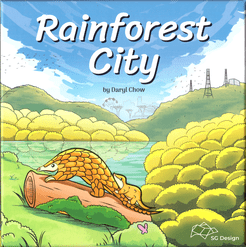
Rainforest City
Official Description:
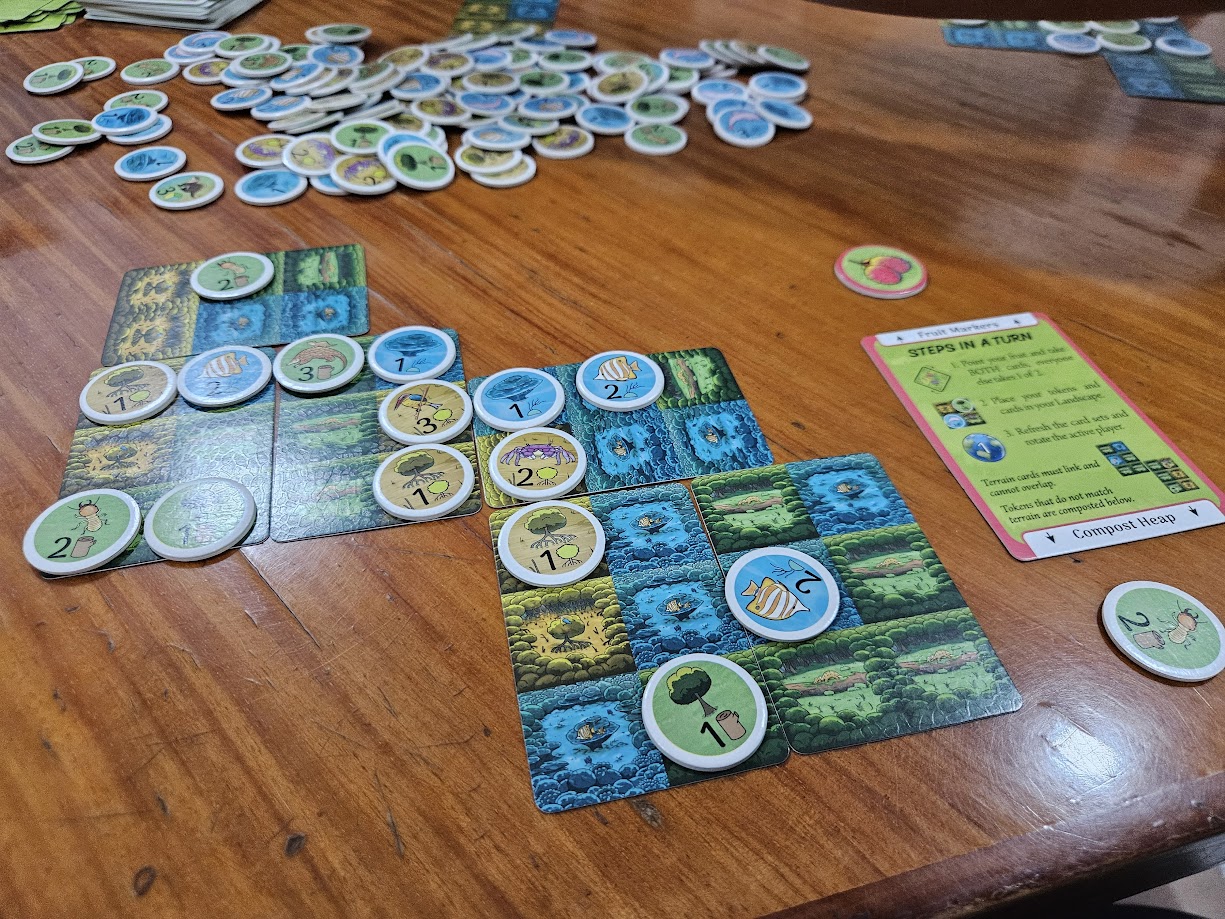
Rainforest City is a card-laying game in which players work to repopulate the Singaporean natural landscape by piecing together rainforests, mangroves, and ocean terrain with native plants and animals. The objective is to create the most vibrant and sustainable ecosystem by strategically placing terrain and species cards to form habitats and construct food chains.
Throughout the game, players draft cards and build their own tableau, aiming to maximize biodiversity and ecological connections. Points are scored by creating habitats that support a variety of species and by completing food chains that demonstrate the interdependence of flora and fauna within the ecosystem.
Rainforest City emphasizes ecological balance and strategic planning, offering an engaging experience that highlights the importance of biodiversity and conservation. The game is designed for players who enjoy spatial puzzles and environmental themes, providing both educational value and replayability.
Rainforest City operates as a modern tableau-builder with a clear ecological focus, drawing on the tactical DNA of spatial puzzle systems and engine-builders. The card-driven structure demands careful sequencing—players must orchestrate terrain and species placement to maximize interconnected habitats and food chains. This is not a breezy opener; the system’s consistent mechanical performance comes from its layered scoring and the need to audit both animal support and flora iconography. For a collection manager, its current status as a new arrival means it’s under close review, but the depth and regional specificity make it a compelling target for curators seeking titles that highlight Southeast Asian biodiversity.
Physically, the game is compact—tokens and cards fit into a modest box, making it easy to transport and store. Setup and teardown are straightforward, though the abundance of tokens and the sometimes ambiguous flora icons require a bit of attention before the first play. With a 30-minute session time, Rainforest City is best positioned as a substantial filler or a focused main event for smaller groups. It’s not a table-hog, but the need to reference iconography and clarify scoring means it’s not quite a grab-and-go experience either; expect a short prep window before diving in.
From a teaching perspective, Rainforest City sits firmly in the procedural camp. The ruleset requires a deliberate walkthrough—animal support chains and scoring intricacies need to be spelled out, and the flora icons may prompt questions until players internalize the system. Once underway, the parallel play structure allows the host to step back, as players work independently with minimal direct interference. The core skill dividend is a sharp audit of spatial visualization and forward planning, rewarding those who can map out ecological synergies. The low-interaction format keeps the room focused and contemplative, making it ideal for groups who appreciate thoughtful, puzzle-driven sessions over high-energy banter.
Category
Tactical & Strategy
My score
7
Our Total Plays
1
Last PLayed
20 Mar 26
🔥 In Rotation
Player Count
1-4
Playtime
30 mins
Proficiency Perks
Strategic Planning
Spatial Reasoning
Check Amazon
As an Amazon Associate, I earn from qualifying purchases.