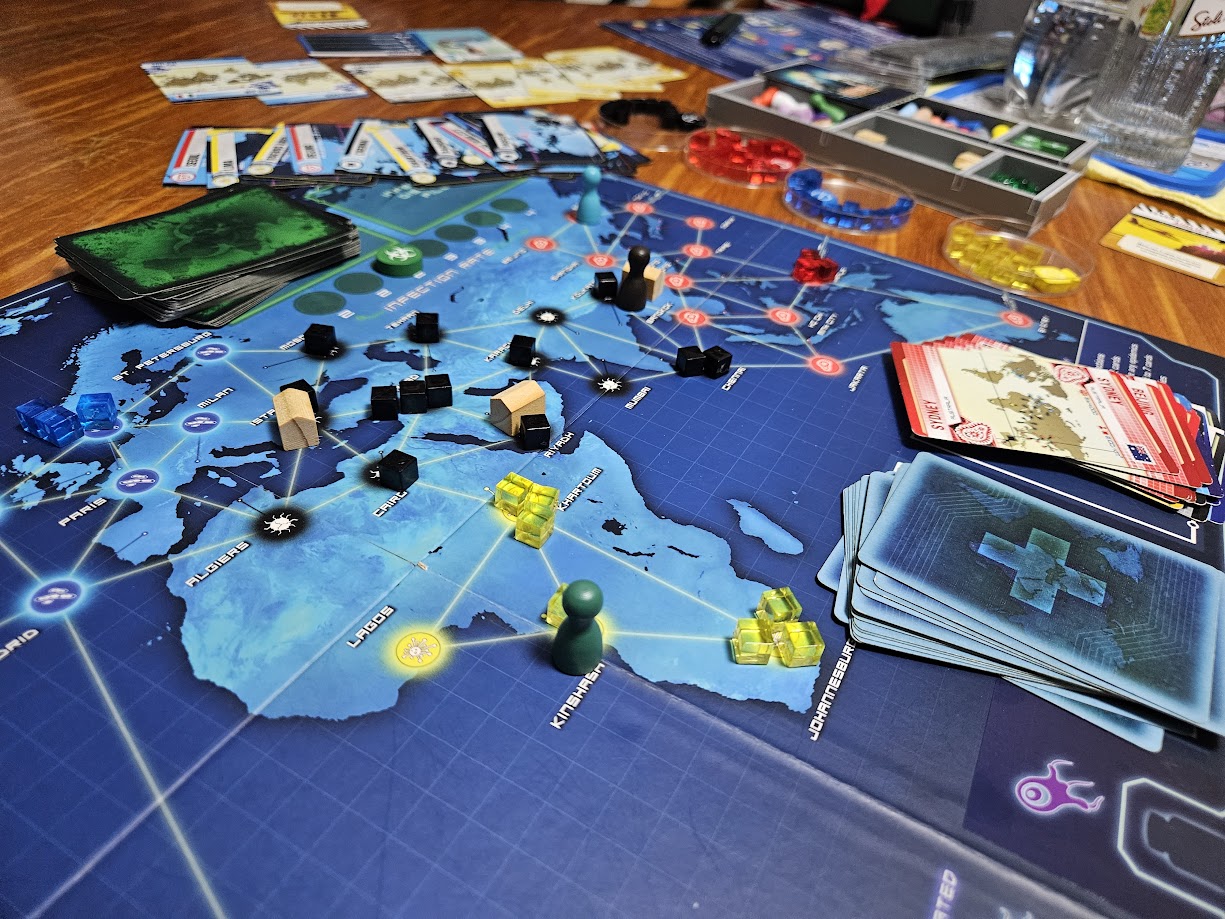

Pandemic
Official Description:
In Pandemic, players take on the roles of disease-fighting specialists working together to treat infections around the world while gathering resources to discover cures for four deadly diseases. The game is cooperative, meaning all players win or lose as a team. Each player has a unique role with special abilities, and teamwork is essential to prevent outbreaks and epidemics from overwhelming the globe.
The gameplay involves traveling between cities, treating infected populations, collecting cards, and strategizing to contain the spread of diseases. Players must balance their actions between treating existing infections, preventing new outbreaks, and working towards discovering cures. The game introduces escalating challenges as new infections appear and outbreaks can trigger chain reactions, increasing the urgency and difficulty.
Victory is achieved if the team discovers cures for all four diseases before time runs out or the world is overrun by outbreaks. Pandemic is known for its emphasis on collaboration, strategic planning, and crisis management, making it a highly engaging and challenging experience for players.
Pandemic stands as a foundational cooperative system, setting the standard for team-based crisis management in modern tabletop design. Its tactical DNA is rooted in shared resource management and escalating threat response, demanding that players coordinate movement and card play with precision. The board’s escalating infection mechanic applies constant mental friction, forcing the group to audit both immediate threats and long-term objectives. As a top-tier strategic dividend, Pandemic’s high operational reliability is evident in its enduring presence on shelves—years of managing tables have shown that its tension and replayability remain undiminished, even as newer titles chase its formula. Its legacy status is well-earned: the game’s influence is visible across the genre, and its shelf retention is significant for any serious collection.
Physically, Pandemic is efficient: the slim box and diverse components make for a straightforward setup, with most sessions ready to go in under fifteen minutes. The game’s footprint is modest, but the variety of cards and tokens requires a bit of table discipline, especially when teaching new players. Older editions may feature a board misprint, so curators should check their copies before hosting. With a 45-minute session time, Pandemic is best positioned as a main event for the evening—its collaborative tension and pacing don’t lend themselves to filler status, but its setup and teardown are manageable for back-to-back plays if the group demands a rematch.
From a teaching perspective, Pandemic is procedural: expect a 20-minute rules overview, with particular emphasis on the nuances of city-to-city travel and the cost of discarding cards for movement. The system’s collaborative nature means the facilitator can step back after the first round, as the table’s energy quickly shifts to open discussion and joint planning. The skill dividend here is substantial—players sharpen their crisis management and group communication, learning to balance immediate triage with long-term strategy. The pure collaborative interaction keeps the room engaged and invested, with every decision carrying weight for the entire team.
Category
Tactical & Strategy
My score
8.5
Our Total Plays
16
Last PLayed
09 Nov 24
🏛️ Legacy
Player Count
2-4
Playtime
45 mins
Proficiency Perks
Strategic Planning
👑 PREMIUM
Play on BGA
Check Amazon
As an Amazon Associate, I earn from qualifying purchases.
← ALL BOARD GAMe REVIEWS