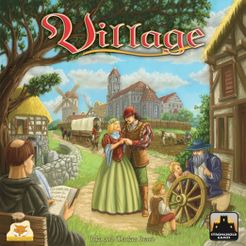
Village
Official Description:
Life in the village is challenging, yet it offers its inhabitants the opportunity to grow and prosper according to their ambitions. In Village, each player controls a family striving for fame and success across generations. Family members can pursue various paths, such as becoming craftsmen, traveling, entering the church, or serving in the council. The passage of time is a central element, as each action consumes time, and eventually, family members will pass away, making room for new generations.
The game features a unique mechanism where the death of villagers is not only inevitable but also an integral part of the strategy. When a family member dies, they may be remembered in the village chronicle, contributing to the family's legacy and victory points. Players must carefully manage their resources, time, and the generational progression of their family to maximize their standing in the village.
Village combines worker placement, resource management, and a generational life cycle, offering a rich and thematic experience. Success depends on balancing short-term gains with long-term planning, as players guide their families through the cycles of life, work, and remembrance in the village community.
Village with its generational worker-placement mechanics offers a rich tapestry of strategic choices. The game’s unique approach to villager lifespans and mortality not only adds depth but also transforms what could be a somber theme into a strategic asset, as players vie for victory points through the village chronicle. Its high operational reliability is evident in its significant long-term shelf retention, a hallmark of its legacy status. The modest artwork and moderate table footprint belie the game's intricate mechanics, which continue to captivate seasoned gamers despite a steep learning curve.
Hosting Village requires a commitment to its setup and playtime, with sessions typically lasting around 90 minutes. The game demands a high-effort setup, making it more suited as the main event of a game night rather than a quick filler. While the components are straightforward, the depth of strategy and the need for careful planning ensure that it remains a focal point of the evening, rewarding players with a deeply engaging experience.
From a teaching perspective, Village demands a veteran lead due to its technical nature. The competitive interaction keeps players engaged, fostering a dynamic atmosphere as they navigate the complexities of resource management and generational planning. The game’s mental friction challenges players to balance immediate needs with long-term goals, enhancing their strategic acumen. While the initial teach may be intensive, the game’s structure allows facilitators to step back once players grasp the core mechanics, letting the competitive energy drive the session forward.
Category
Tactical & Strategy
My score
8
Our Total Plays
10
Last PLayed
19 Mar 20
🏛️ Legacy
Player Count
2-4
Playtime
90 mins
Proficiency Perks
Strategic Planning
Systems & Logic
Check Amazon
As an Amazon Associate, I earn from qualifying purchases.
← ALL BOARD GAMe REVIEWS