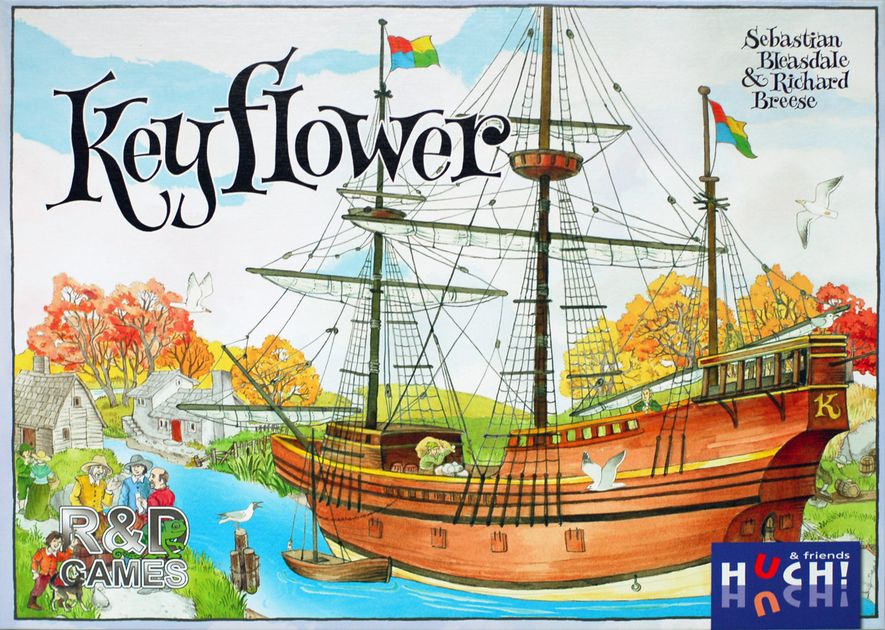
Keyflower
Official Description:
Keyflower is a game for two to six players played over four rounds, each representing a season: spring, summer, autumn, and winter. In Keyflower, each player starts with a “home” tile and a team of workers with different skills. Throughout the game, players bid for new village tiles and use their workers to generate resources, skills, and additional workers. The tiles won are added to each player’s village, expanding their capabilities and options for future rounds.
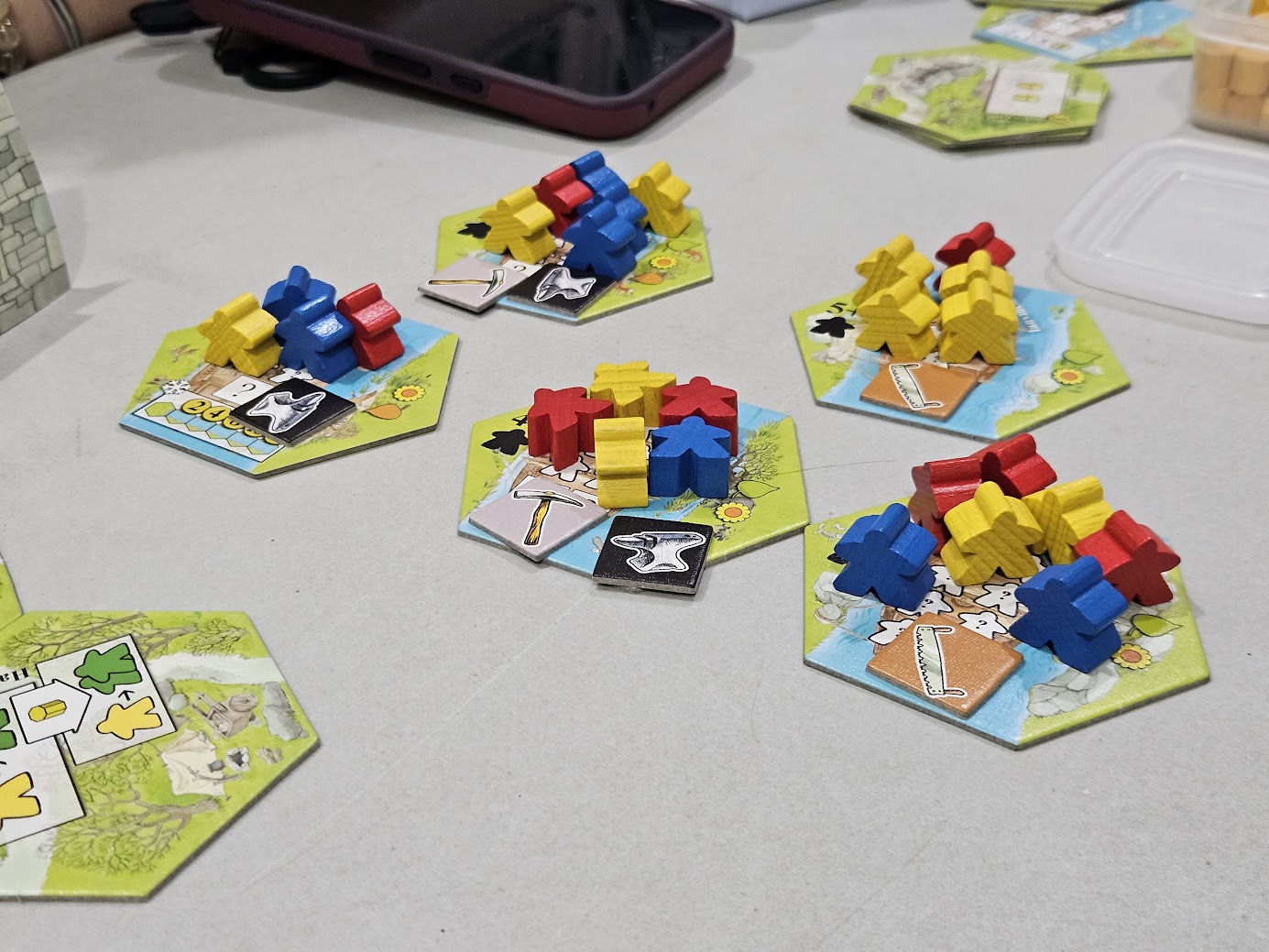
The game features a unique combination of auction, worker placement, and tile-laying mechanics. Players use their workers both to bid for tiles and to activate tiles, whether in their own village or in those of their opponents. The color of the workers used is significant, as only workers of the same color can be used on a given tile or for a particular bid, adding a layer of strategic depth to the game.
During the winter round, players bid for tiles that provide opportunities to score points based on the resources, skills, and villagers they have accumulated. The player whose village is worth the most points at the end of the game is declared the winner. Keyflower offers a rich variety of strategies and replayability due to the random selection of tiles and the dynamic interaction between players.
Keyflower stands as a distinctive entry in the modular city-building lineage, merging auction dynamics with tile expansion in a way that demands both foresight and adaptability. The interplay between bidding and activation—where every worker deployed is a commitment to either acquisition or utility—creates a persistent tension that rewards careful timing and resource tracking. Its consistent mechanical performance makes it a solid table-time value for groups seeking a system that remains engaging across repeated sessions. For a collection in the process of being evaluated or expanded, Keyflower’s blend of tactical auctions and spatial development offers a reliable benchmark for what a mid-weight, multi-layered Euro can deliver, especially for curators looking to test the appetite of a group for deeper, interactive builds.
Physically, Keyflower’s production reflects its era: straightforward, with no insert and a cover that catches the light more than expected. Setup and teardown are not trivial, especially given the volume of components and the absence of modern storage solutions. With a 120-minute playtime and a procedural teach, this is a main event title—best reserved for nights when the group is committed to a single, immersive experience. The lack of insert means extra care is needed to keep the box contents organized between sessions, and the reflective cover is a minor but notable quirk for those who care about shelf aesthetics.
From a teaching perspective, Keyflower requires a methodical introduction. The ruleset is layered, and the competitive interaction—where every bid and activation can shift the balance—means players must quickly internalize both the flow and the stakes. The system delivers a strong skill dividend: players are challenged to read the table, anticipate rivals’ moves, and visualize the evolving spatial puzzle of their village. The competitive dynamic keeps the energy high, with every round inviting negotiation, tactical blocking, and opportunistic play. Once the group is up to speed, the game runs itself, but the initial teach benefits from a steady hand and a willingness to field questions as the auction and activation mechanics reveal their depth.
Category
Tactical & Strategy
My score
7.5
Our Total Plays
1
Last PLayed
21 Feb 26
🔥 In Rotation
Player Count
2-6
Playtime
120 mins
Proficiency Perks
Strategic Planning
Systems & Logic
Spatial Reasoning
Check Amazon
As an Amazon Associate, I earn from qualifying purchases.
← ALL BOARD GAMe REVIEWS