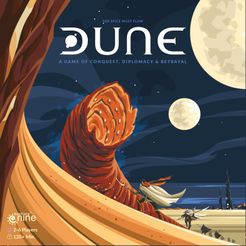
Dune
Official Description:
In DUNE, players assume the roles of leaders of one of six great factions vying for control of the most valuable resource in the universe—melange, the mysterious spice found only on the planet Arrakis. Each faction possesses unique abilities and strategic advantages, reflecting their distinct characteristics from the Dune universe. The game is set against the backdrop of political intrigue, shifting alliances, and treacherous betrayals, as players compete to dominate Arrakis and secure their faction’s supremacy.
Gameplay revolves around negotiation, alliance-building, and tactical maneuvering. Players must manage resources, deploy forces, and utilize their faction’s special powers to outwit opponents. The ever-present threat of sandstorms, the unpredictable appearance of the giant sandworms, and the shifting sands of alliances ensure that no two games are ever the same. Victory can be achieved through military conquest, strategic alliances, or clever manipulation of the game’s political landscape.
DUNE is renowned for its deep strategic gameplay and faithful adaptation of Frank Herbert’s classic science fiction novel. The game challenges players to balance diplomacy and warfare, anticipate opponents’ moves, and adapt to the constantly changing dynamics of the board. With its blend of negotiation, strategy, and thematic immersion, DUNE offers a compelling experience for fans of both the novel and complex board games.
Dune stands as a direct descendant of the classic negotiation-driven strategy games of the late 1970s, now revitalized by GF9 for a modern audience. Its core is built around high-stakes political maneuvering and deeply asymmetric factions, each demanding a unique approach to both alliance and betrayal. The system’s operational reliability is evident in its ability to generate memorable, high-tension sessions that reward players who thrive on reading the table and adapting to shifting alliances. Nearly two decades of managing tables confirms that Dune’s shelf retention is significant—its blend of negotiation, tactical depth, and thematic immersion ensures it remains a reliable secondary option for groups seeking a legendary social engine, especially at higher player counts.
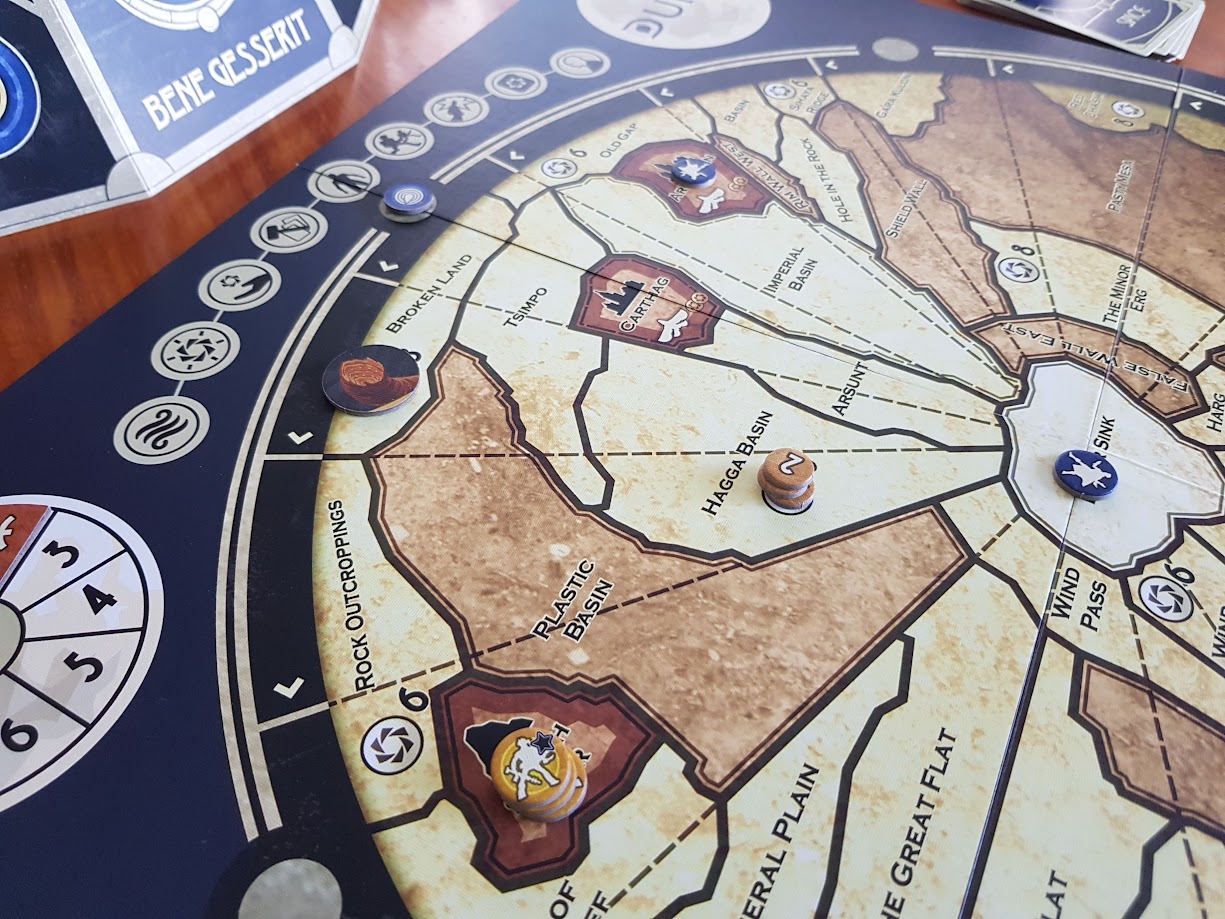
Physically, Dune is compact in storage but not in setup. The base box is tight, with a minimal insert that barely contains the core components, and integrating expansions requires deliberate packing—discarded inserts are common among veteran hosts. Setup and teardown are not trivial, and the game’s 180-minute session time cements it as a main event rather than a filler. For those curating a collection, Dune is best reserved for dedicated sessions where the group is prepared for a full evening of negotiation and conflict, rather than casual or spontaneous play.
From a teaching perspective, Dune is a technical system that demands a veteran lead at the table. The extreme faction asymmetry and layered combat resolution require a thorough rules briefing, and the alliance phase triggers must be actively monitored throughout play. This is not a game where the facilitator can step away; the mental friction is high, and the skill dividend is substantial—players sharpen their negotiation tactics, strategic foresight, and adaptability in a volatile social meta. The direct conflict and constant deal-making keep the room’s energy charged, making Dune a selective but rewarding deployment for groups that relish complex, interactive experiences.
Category
Tactical & Strategy
My score
7
Our Total Plays
5
Last PLayed
09 Sep 20
🏛️ Legacy
Player Count
2-6
Playtime
180 mins
Proficiency Perks
Strategic Planning
Systems & Logic
Social Meta
Check Amazon
As an Amazon Associate, I earn from qualifying purchases.
← ALL BOARD GAMe REVIEWS