Dune: Imperium – Uprising
Official Description:
Dune: Imperium – Uprising is a standalone spinoff to Dune: Imperium that expands on the original game's blend of deck-building and worker placement. Players deploy agents, build their decks, and engage in strategic battles to control Arrakis. The game introduces a new six-player mode that pits two teams against one another, intensifying the struggle for dominance.
Set in the Dune universe, Uprising challenges players to balance political intrigue, resource management, and military conflict. Each decision can shift the balance of power, requiring careful planning and adaptation to opponents' moves. The game incorporates new mechanics and content while remaining compatible with the original Dune: Imperium, allowing for expanded gameplay options.
With its combination of familiar and innovative elements, Dune: Imperium – Uprising offers both returning and new players a fresh experience in the world of Dune. The game supports solo, competitive, and team play, providing a variety of strategic challenges and replayability.
Dune: Imperium – Uprising operates as a standalone evolution within the deck-building and worker placement lineage, now sharpened by the cinematic pulse of the Dune: Part Two narrative. The system’s tactical core is defined by its sand worm combat mechanics and a scoring economy that demands constant recalibration—every agent placement and card draw is a calculated risk, with the board rewarding those who can anticipate shifting alliances and resource scarcity. The introduction of a six-player team mode amplifies the competitive tension, making every round a contest of both table presence and strategic foresight. For a collection that values significant long-term shelf retention, Uprising’s high operational reliability and mechanical depth justify its continued presence, especially for groups seeking a modern, high-friction contest with a proven legacy backbone.
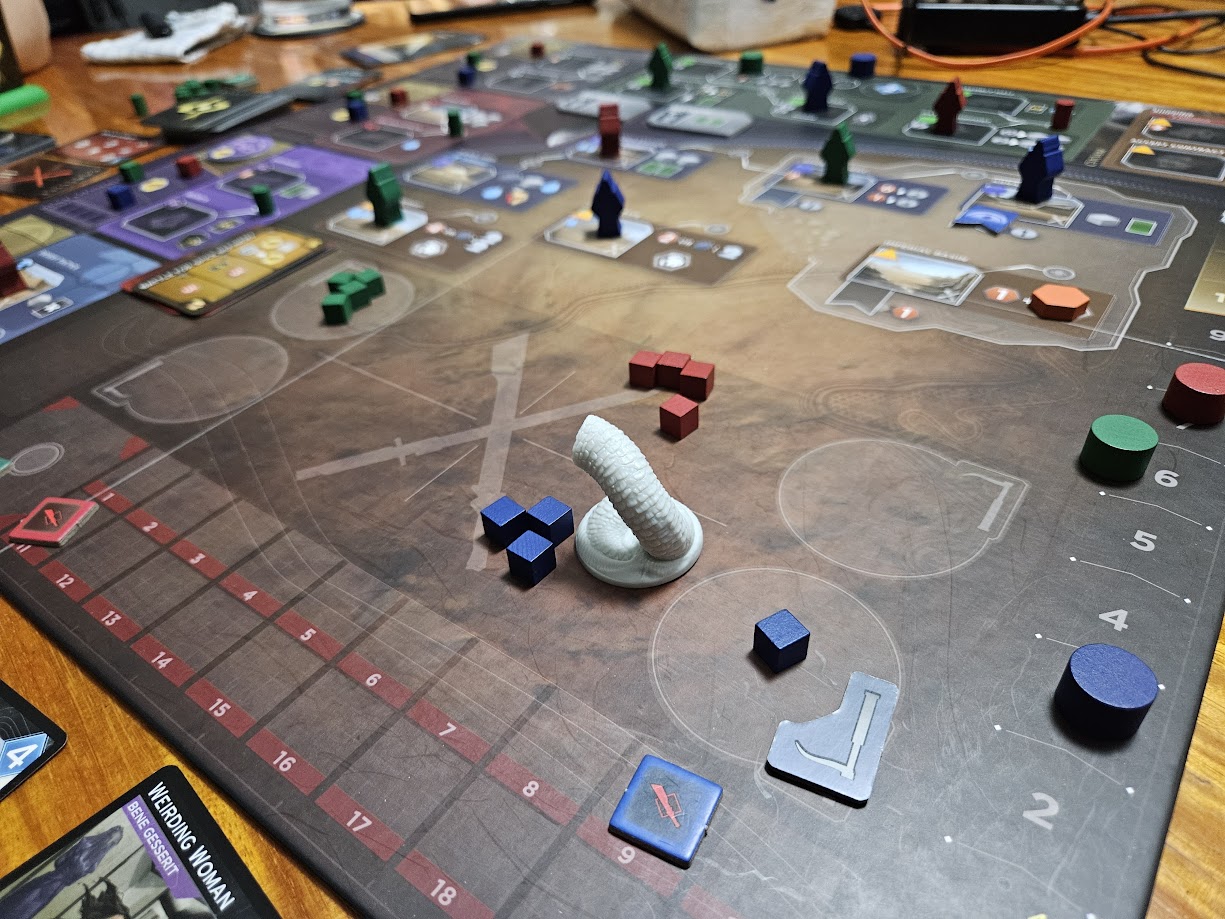
From a logistics standpoint, Uprising is a dedicated main event—expect a full 120-minute session and a setup that commands its own shelf space. The box is a self-contained system, incompatible with the original Deluxe Storage, which means organizers must allocate separate storage and prep time. The sand worm miniature, while divisive in design, is a focal point that will draw attention but may complicate storage solutions for those with integrated Dune collections. This is not a quick rotation title; it’s best reserved for nights when the group is committed to a single, centerpiece experience and has the table real estate to match.
Teaching Uprising is a procedural affair—plan for a 20-minute rules overview, with particular attention needed for spy placement, the distinction between new and original board spaces, and the nuances of sand worm combat bonuses. The system’s high friction ensures that player interaction remains front and center, keeping the room engaged and competitive throughout. The skill dividend here is substantial: players will leave with a sharpened sense of timing, resource management, and adaptive planning, as the game’s structure rewards those who can read both the board and their opponents. Once the teach is complete, the system runs smoothly, but the host should remain available to clarify edge cases and scoring triggers, especially for those new to the Dune: Imperium framework.
Category
Tactical & Strategy
My score
8
Our Total Plays
6
Last PLayed
25 Jan 24
🏛️ Legacy
Player Count
1-6
Playtime
120 mins
Proficiency Perks
Strategic Planning
Check Amazon
As an Amazon Associate, I earn from qualifying purchases.
← ALL BOARD GAMe REVIEWS