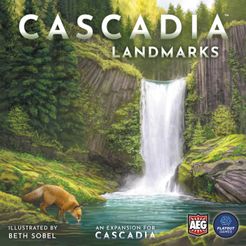

Cascadia: Alpine Lakes
Official Description:
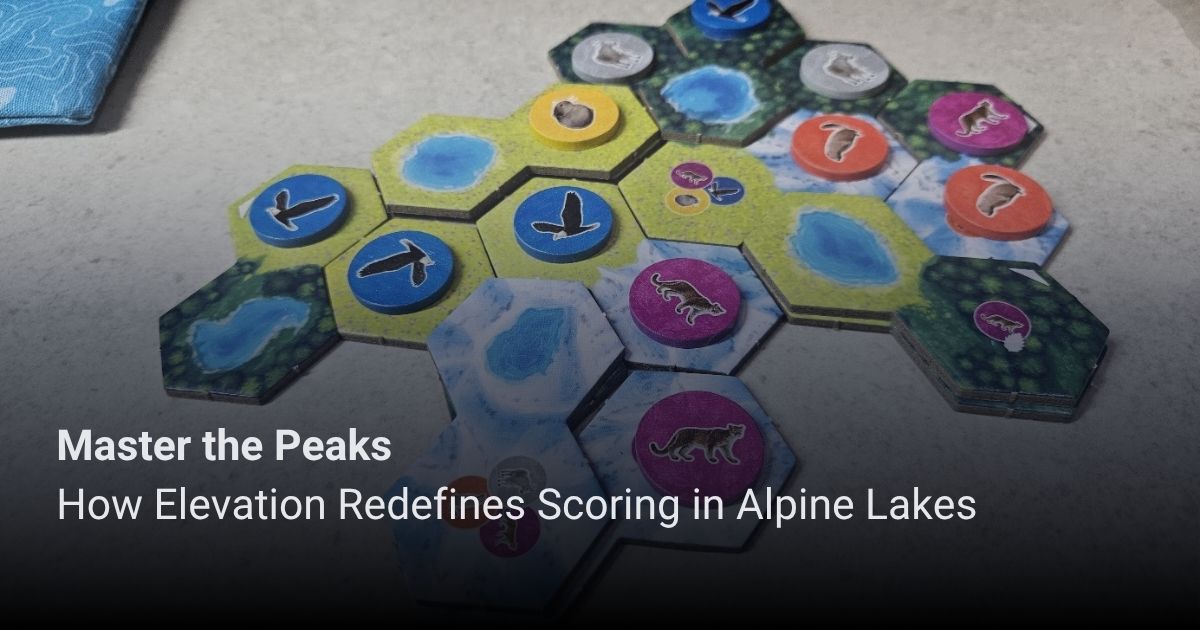
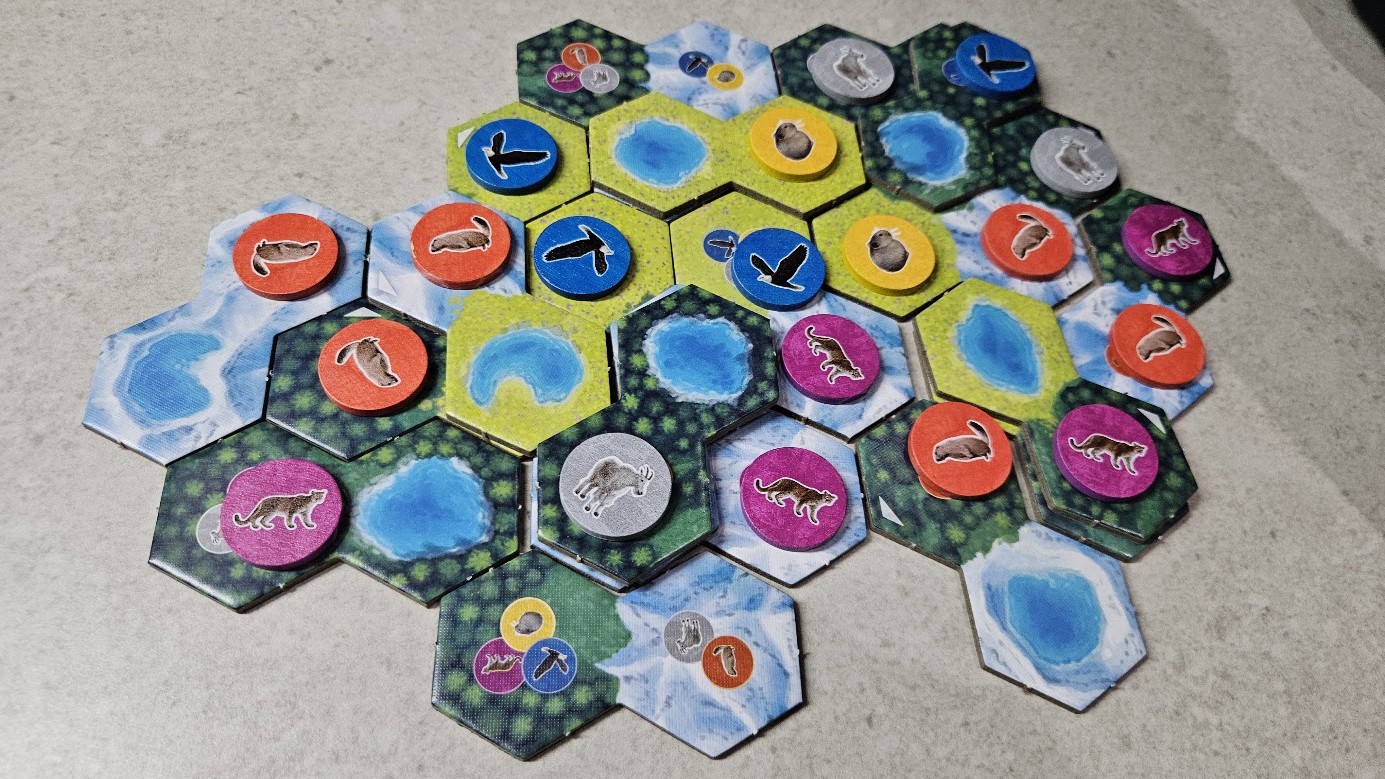
Cascadia: Alpine Lakes is a standalone follow-up to the acclaimed spatial puzzle game Cascadia. In this tile-layering experience, players continue their journey through the Pacific Northwest to create a diverse environment by drafting double-hexagon habitat tiles and unique wildlife tokens. The game introduces a vertical dimension, allowing players to build both outward and upward to complete a beautiful landscape mosaic.
Turns follow a simple loop where players choose a habitat tile and wildlife token pair to add to their expanding environment. While the core mechanisms are similar to the original game, the use of double-hexagon tiles and the ability to stack them introduces new complexity. This evolution turns the environment into a three-dimensional spatial puzzle, presenting players with unique stacking and adjacency challenges.
Scoring is determined by variable objectives based on the arrangement of five wildlife species across three distinct alpine habitats. Players also earn points based on the elevation and surrounding elements of their lakes and wildlife. With a wide array of habitat and environment scoring cards, the game offers thousands of possible combinations, ensuring a fresh spatial challenge in every session.
Cascadia: Alpine Lakes introduces a fresh tactical dimension to the classic habitat-building genre with its vertical spatial expansion. This evolution in design, featuring multi-tier tile drafting, enhances the strategic depth without losing the core appeal of spatial puzzles. The game's technical complexity, marked by vertical habitat scoring and animal bonuses that scale with stack elevation, offers a solid table-time value for seasoned players. As a new addition to the collection, it reflects a reliable secondary option for those looking to explore new layers of strategic planning.
In terms of hosting and logistics, Cascadia: Alpine Lakes maintains the production quality of its predecessor, incorporating two-hex domino tiles for spatial placement. With a session time of 45 minutes, it fits comfortably as a main event in a game night lineup. The setup is straightforward, making it table-ready without excessive preparation. Its engaging mechanics and moderate complexity ensure it holds the attention of players throughout the session, providing a satisfying experience for both hosts and participants.
From a teaching perspective, the game requires a veteran lead due to its technical nature, but once the initial concepts are grasped, players can navigate the system with ease. The parallel play interaction keeps the room's energy focused and competitive, allowing players to concentrate on optimizing their own landscapes. The skill dividend here lies in the mental friction of spatial visualization and strategic planning, as players learn to balance elevation with adjacency for optimal scoring. This dynamic ensures that each session is both challenging and rewarding, making it a valuable addition to any game collection.
Category
Tactical & Strategy
My score
7
Our Total Plays
1
Last PLayed
17 Jul 26
🌱 Breaking In
Player Count
1-4
Playtime
45 mins
Proficiency Perks
Spatial Reasoning
Strategic Planning
Check Amazon
As an Amazon Associate, I earn from qualifying purchases.
← ALL BOARD GAMe REVIEWS