Mastering the Vertical Shift in Cascadia: Alpine Lakes
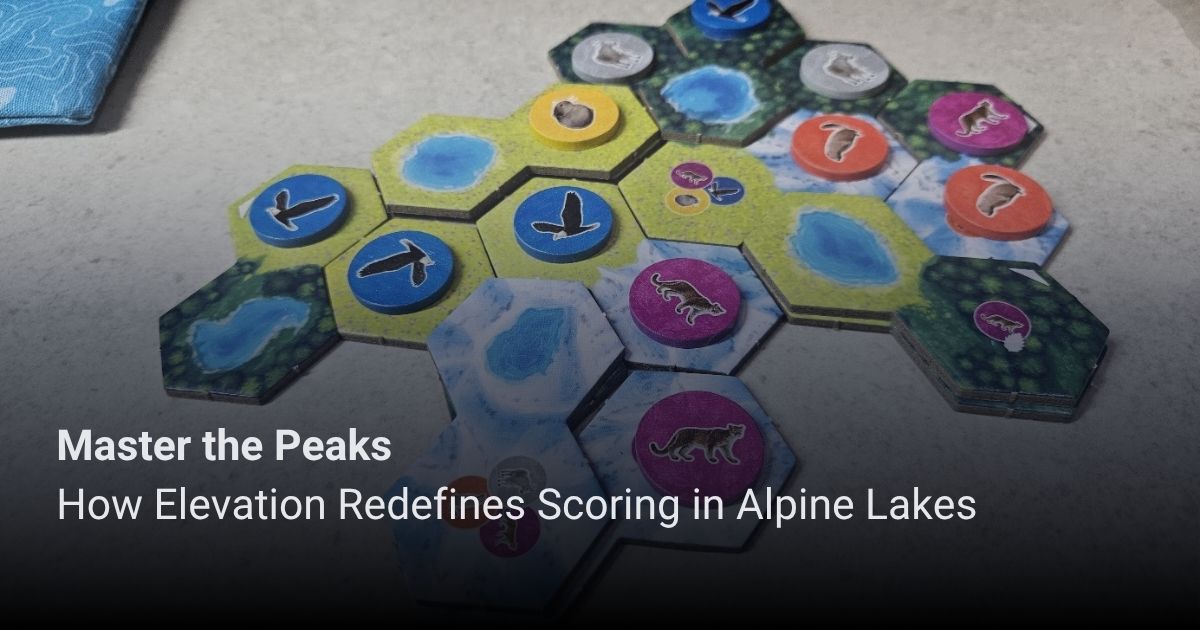
Sprawling wilderness won't win anymore; here is how to pivot your Cascadia strategy toward high-elevation scoring and enclosed lakes.
I love Cascadia. It’s the game that really made me pay attention to Flatout Games, and I instinctively want to give all their games a try, despite surprisingly stressful ones like Calico. There’s just something so satisfying about the tile-laying experience paired with the challenge of getting the animal tokens where you need them to be in order to score the most points. And while I don’t necessarily win a lot of games (my win rate is at about 40% at the moment), I always enjoy the experience.
So I was pretty excited when Cascadia: Alpine Lakes came out, as it represented a really new spin on the game. Sure, the Landmarks expansion added new ways to score, but the core game experience didn’t change all that much. My first playthrough was a little rough, but it kinda blew my mind at how different the game feels. The Cascadia fundamentals are there, but it feels like a whole other experience now. As much as I had guided the teach for that first session, it wasn’t until we actually played the game that I came to fully appreciate that you can’t approach this game like the classic Cascadia if you want to make the most of what has changed.
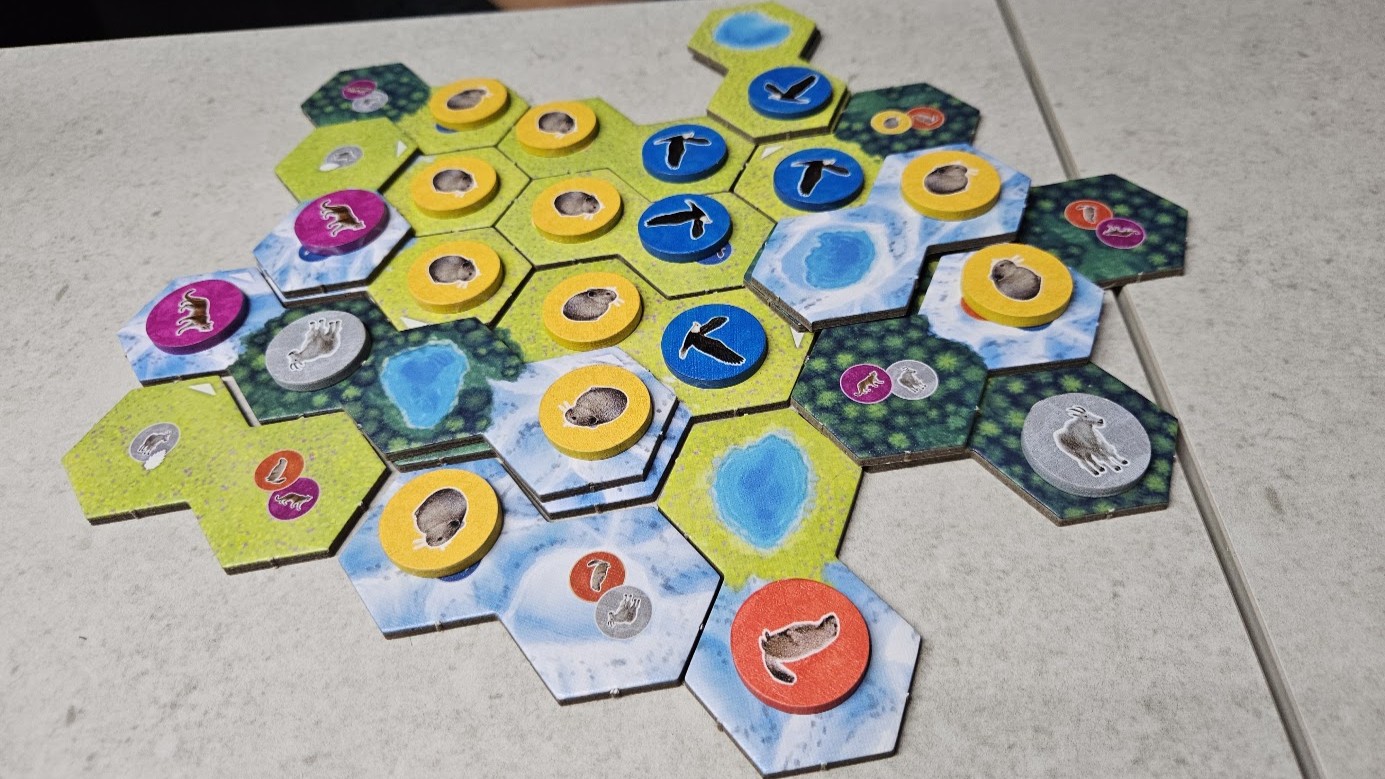
In base Cascadia, you end up with your own bit of wilderness that makes a fun sort of tableau at your side of the table. You build outwards with a focus on trying to match terrain in order to get better points due to contiguous sets. Going into Alpine Lakes, you’ll start building out in this manner, but you’ll need to do so with a plan for how to go higher. And you need to do so in a gradual manner, as you can’t just stack one set of tiles on top of each other while leaving the surrounding tiles at Level 1.
In the original game, you play single-hex tiles, which means you have a lot of flexibility. You might create gaps initially, but it’s not difficult to go back later with the perfect tile that matches the surrounding ones. The new game gives you two hexes fused together, which radically redefines how you place things. It would have been simple if you just needed to spread out, but you need to go higher to win. And it’s easy to mistakenly create gaps that you won’t be able to make use of later.
The new stacking mechanic comes with a bit of a price - you can’t stay too married to your terrain layout on lower levels. Accept that it’s more important to take things higher and think ahead to what your higher levels of terrain will be like instead of focusing on Level 1. And the required cognitive load is greater as you’re trying to visualize your next tier of terrain while also juggling any animal tokens you already have in place. And setting up those tile staircases becomes more important than the basic terrain-matching of the base game.
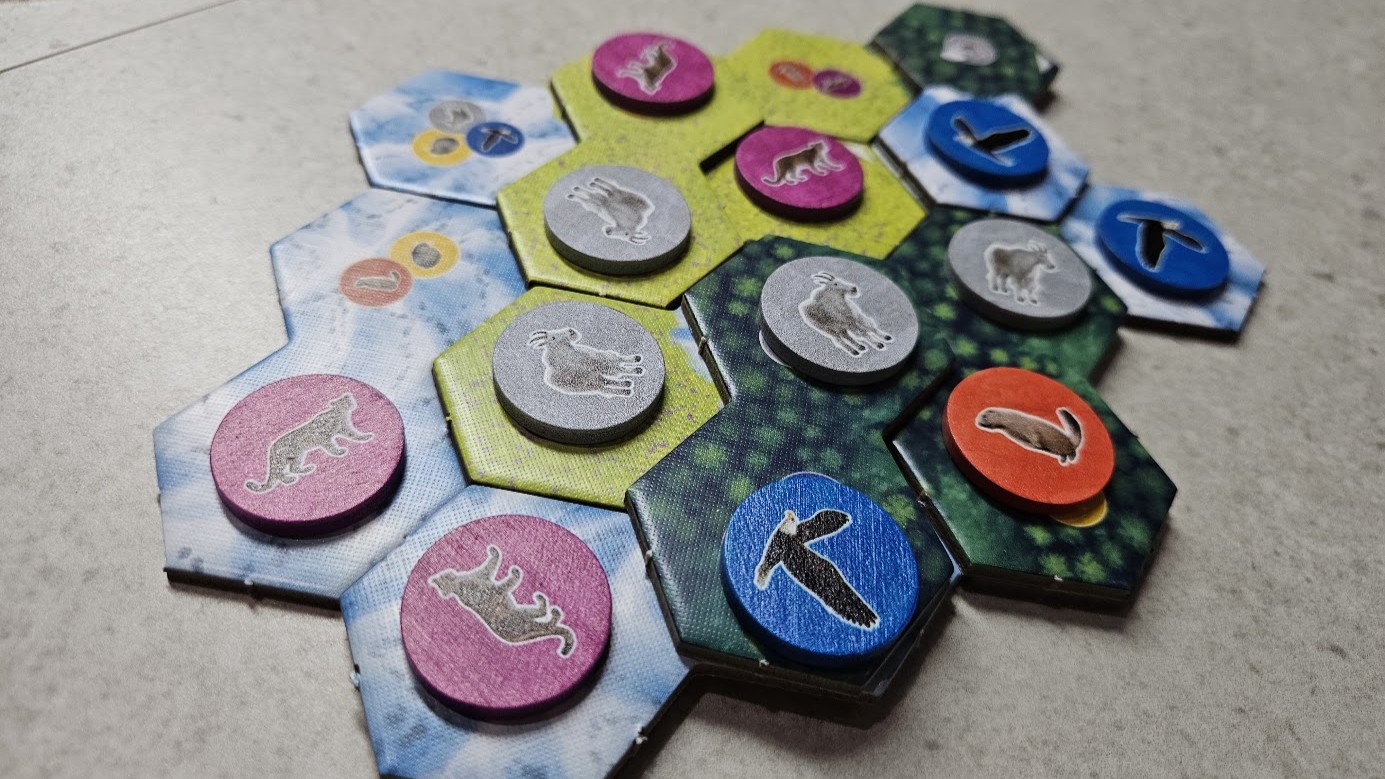
So let’s actually talk about all the changes the elevation mechanic brings to the table. You can ignore this at your own peril, but then you’d pretty much be trying to place base Cascadia while your fellow players make legitimate alpine builds.
This is literally our foundation for the real points later in the game. You still want to build initial terrain sprawl, but you also need to prepare for the future.
Once you hit this level, you’re on your way to greater things. But don’t stop yet, as you still haven’t unlocked serious points.
This is what’ll really cement the win for you and make you an Alpine Lakes player and not just a Cascadia player.
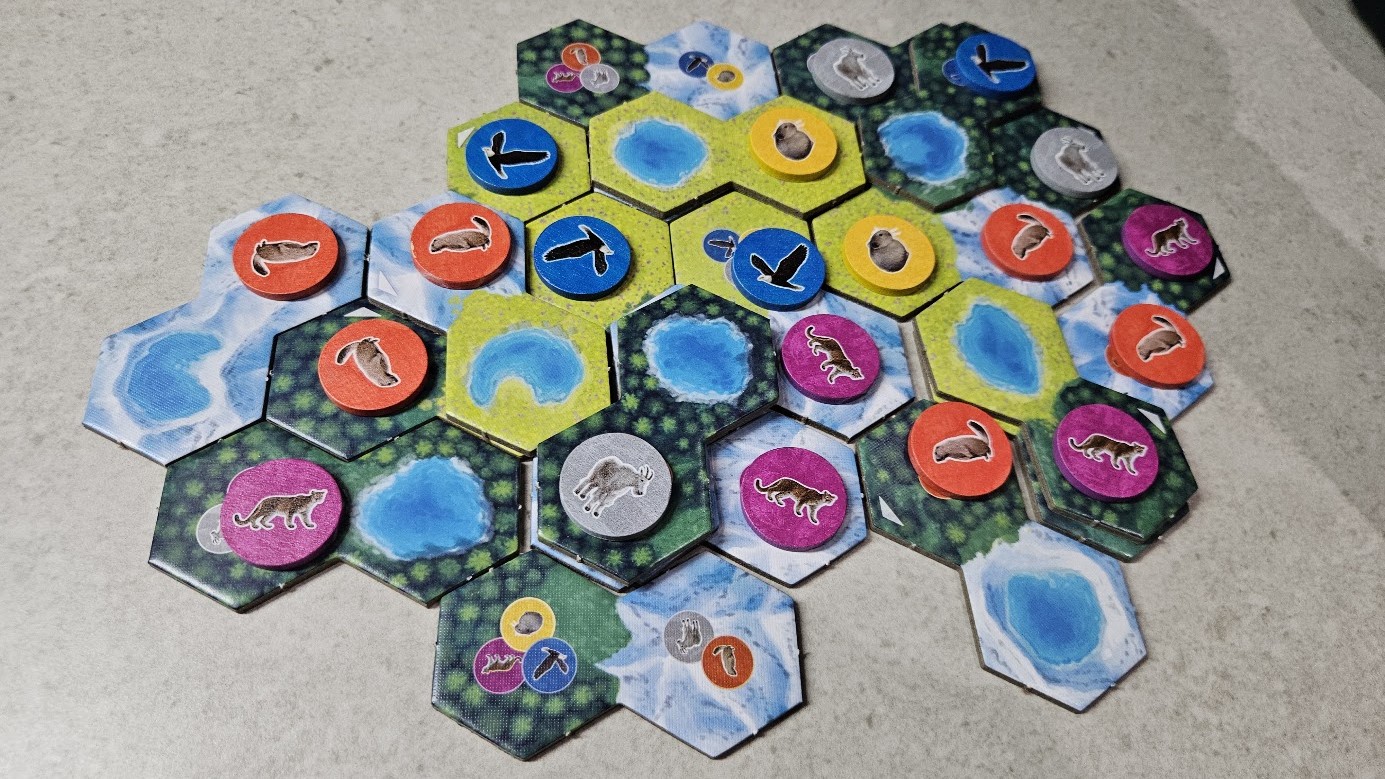
Coming from base Cascadia, it’s easy to focus on what’s familiar, which means matching terrain and arranging your animal tokens. But fully surrounded lakes offer some pretty efficient scoring the higher you go.
One of the most brilliant parts of the Cascadia games is the 20-turn limit that defines the game experience. But that also doesn’t leave you a lot of time to grow your way to the top, so it helps to have a plan for making a truly Alpine landscape.
The original Cascadia game is a bit more of a comfortable and cozy affair, but Alpine Lakes really calls for more strategy and careful planning to get ahead. You can still focus on just collecting the animals you like and call it a day, but it wouldn’t hurt to have a plan to make the most of things.