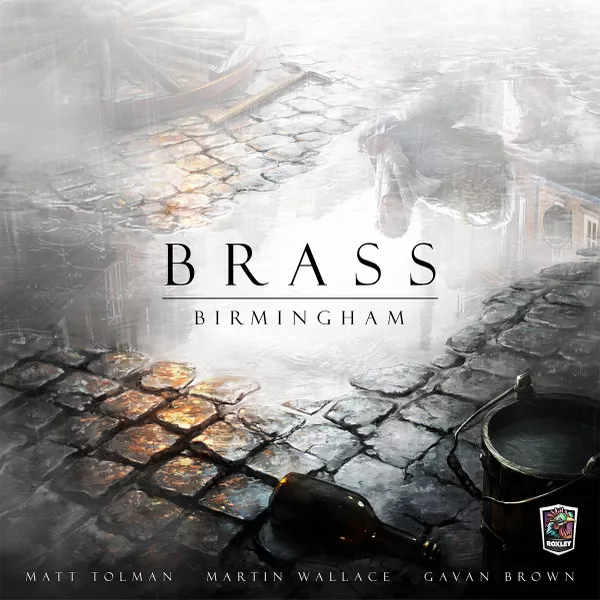
Brass: Birmingham
Official Description:
Brass: Birmingham tells the story of competing entrepreneurs in Birmingham during the industrial revolution, between the years of 1770 and 1870. Players must develop, build, and establish their industries and network, in an effort to exploit low or high market demands.
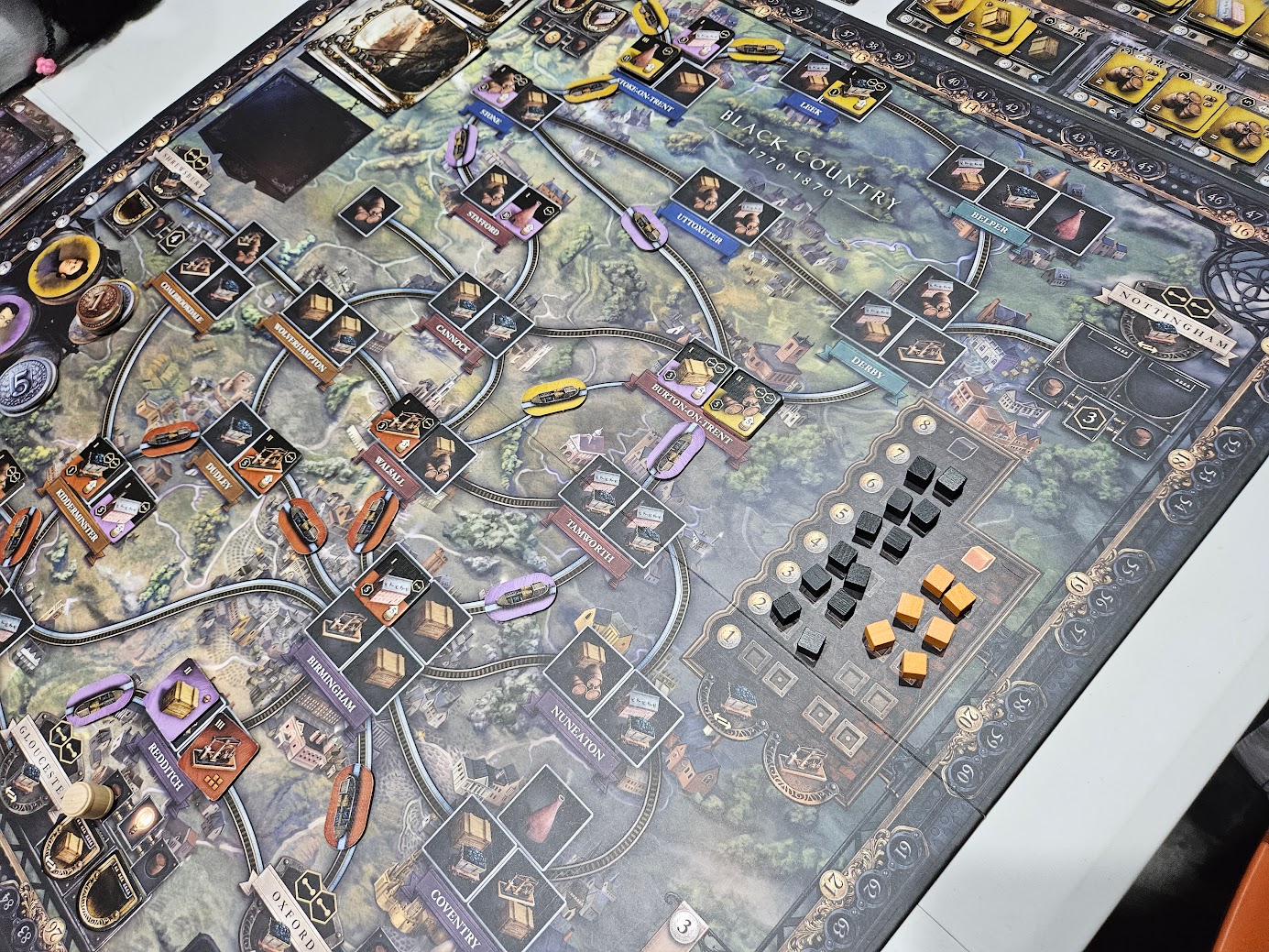
The game is a sequel to the original Brass, featuring dynamic market demands for coal, iron, and beer. Players build canals and railways, develop industries such as cotton mills, coal mines, iron works, manufacturers, and potteries, and sell goods to merchants. The game is played over two halves: the canal era and the rail era, each with its own scoring and strategic considerations.
Brass: Birmingham is known for its deep economic strategy, requiring players to carefully manage resources, timing, and connections. Success depends on adapting to changing market conditions, outmaneuvering opponents, and making the most of opportunities as they arise.
Brass: Birmingham operates as a modern economic engine-builder with deep roots in the Euro-strategy tradition, but it distinguishes itself through its relentless player interdependence and dynamic market manipulation. The system’s high operational reliability is evident in its enduring presence on curated shelves—years of managing tables have shown that its layered network-building and resource management consistently deliver a top-tier strategic dividend. The dual-era structure, shifting from canals to rails, forces players to audit and adapt their plans mid-game, rewarding those who can anticipate and exploit shifting market demands. This is not a passive multiplayer solitaire; every connection and sale is a calculated move in a tightly contested industrial landscape, and its significant long-term shelf retention is a testament to its replayability and depth.
From a logistics standpoint, Brass: Birmingham is a main event title—expect a 15-minute setup and a full two-hour session. The box contents are straightforward, with components that don’t distract but serve their purpose, while the atmospheric art elevates the table presence beyond its utilitarian roots. It’s not a game you pull out on a whim; it demands a dedicated slot in your evening and a table that can accommodate its evolving board state. For hosts, this is the centerpiece of a serious game night, best reserved for groups ready to invest in a full session of competitive maneuvering and economic brinkmanship.
Teaching Brass: Birmingham requires a technical approach—this is not a system you can leave on autopilot. The teach hinges on clarifying the shared resource mechanics and the critical transition between eras, both of which are essential for new players to grasp the game’s internal logic. The mental friction is substantial: players must constantly reassess their network, anticipate opponents’ moves, and optimize timing for maximum impact. The high friction interaction keeps the room engaged and alert, as every decision can shift the balance of power. The skill dividend here is substantial—players leave with sharpened economic foresight and a deeper appreciation for adaptive planning under pressure.
Category
Tactical & Strategy
My score
8
Our Total Plays
4
Last PLayed
30 Jul 23
🏛️ Legacy
Player Count
2-4
Playtime
120 mins
Proficiency Perks
Strategic Planning
Check Amazon
As an Amazon Associate, I earn from qualifying purchases.
← ALL BOARD GAMe REVIEWS