Tabletop
Gaming Across the Four Nations
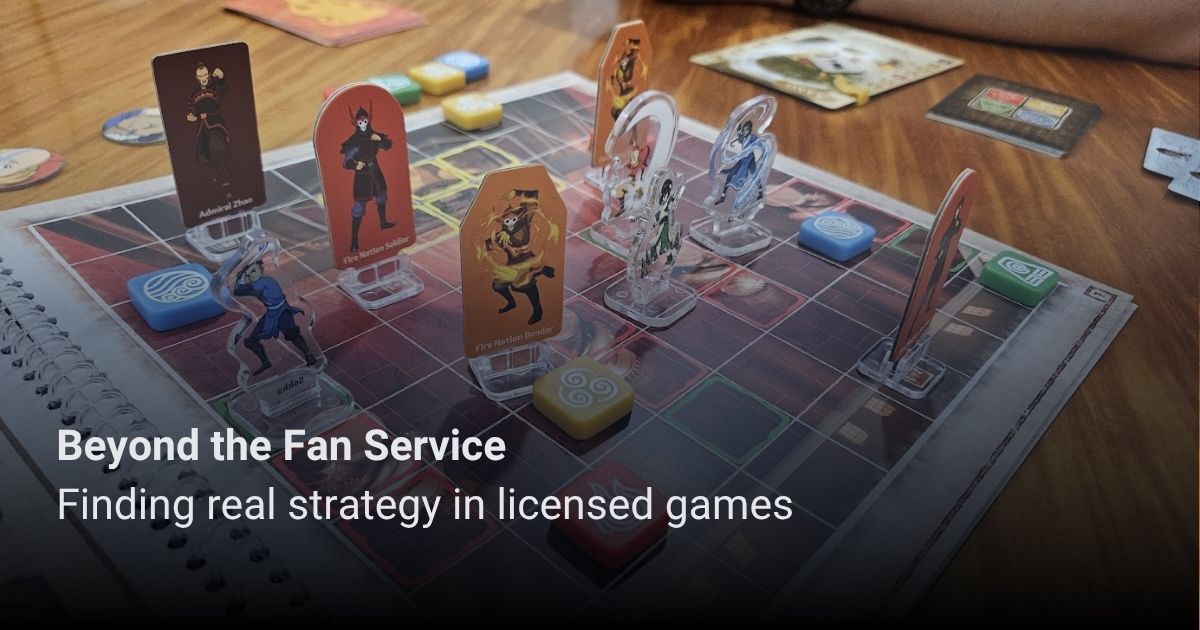
Bringing the elemental magic of a beloved universe to the tabletop is a dream for fans, but translating fluid element-bending into balanced board game mechanics is an entirely different battle.
My partner and I just binged all seven episodes of the second season of Netflix’s live-action adaptation of Avatar: The Last Airbender, and it was pretty good. You can still feel how they had to condense the 20 episodes of the animated series into some seven hours of television, so it’s not a perfect adaptation by any means.
And to celebrate the show coming back, I figured that this week’s Geek Dive might as well be an exploration of the various Avatar-related board games in our collection. We only have 4 titles in total, with Avatar: Journey of Aang by Bad Crow Games still in crowdfunding production.
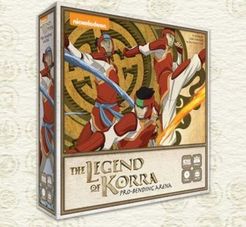
The oldest Avatar game in our collection is one based on the sequel series, The Legend of Korra. The show featured a sport called Pro-Bending that involved two teams of three using their different bending abilities to knock the players of the opposing team off the platform. So it was a bit of football with sumo. This board game focuses solely on this aspect of the show and not much else. So if you liked the sport, then go for it. Otherwise…
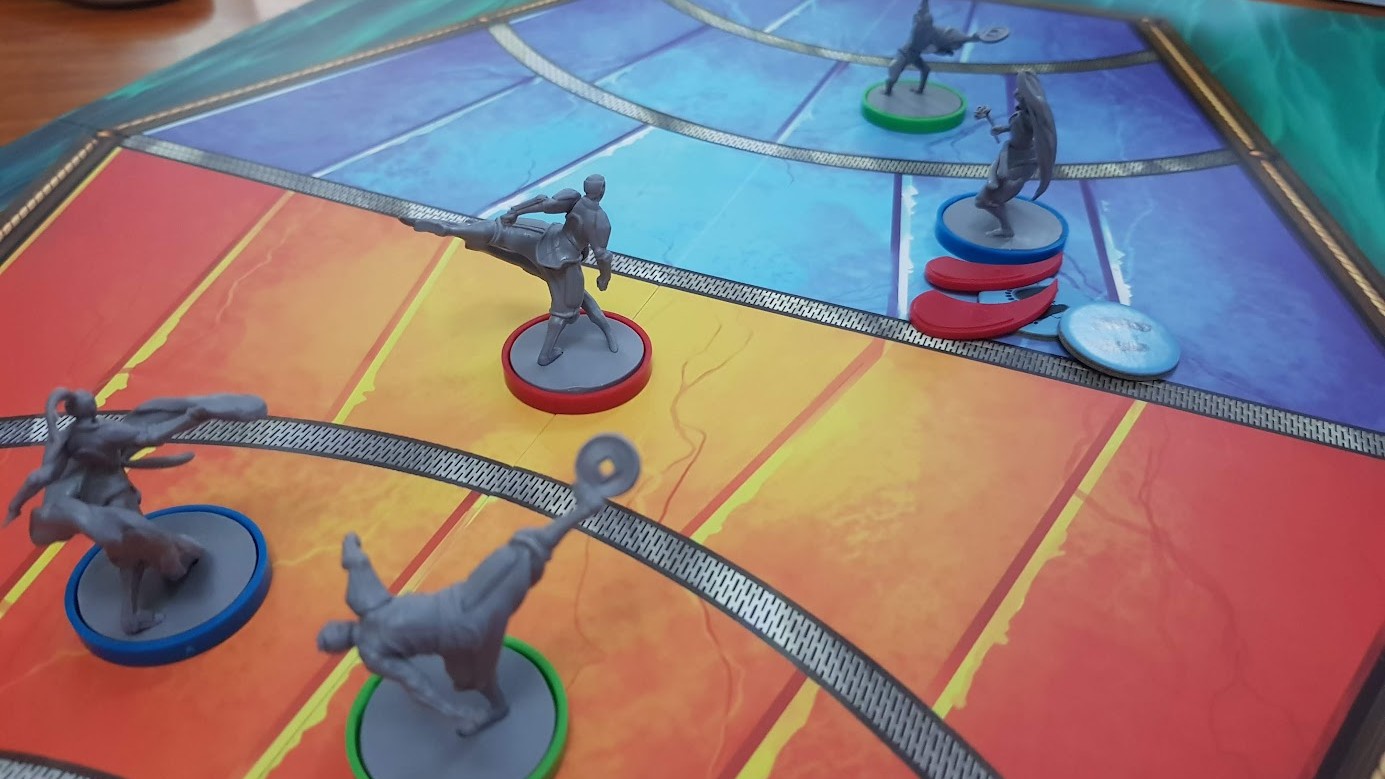
This is a 2-player game, and players use their technique cards to determine their possible actions for their turn. This dictates which elemental bender gets to act during that turn, and things will be focused on moving forward or just pushing opposing players around. The card system is what really keeps this feeling like a board game and can limit your “plays” based on where your characters are on the board or how much chi you have to spend.
There is no getting around that this is a sports game with a franchise plastered all over it. If you’re not in the sort of ebb and flow of team sports in general, then the game may not be your favorite. Plus, it’s strictly a two-player game, so that severely limits play.
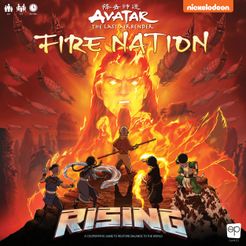
This game is a reimplementation of Thanos Rising, but with a giant Fire Lore Ozai in the middle of the board instead of Thanos. And using that game as the source material means it’s a pretty brutal game that really requires players to work together.
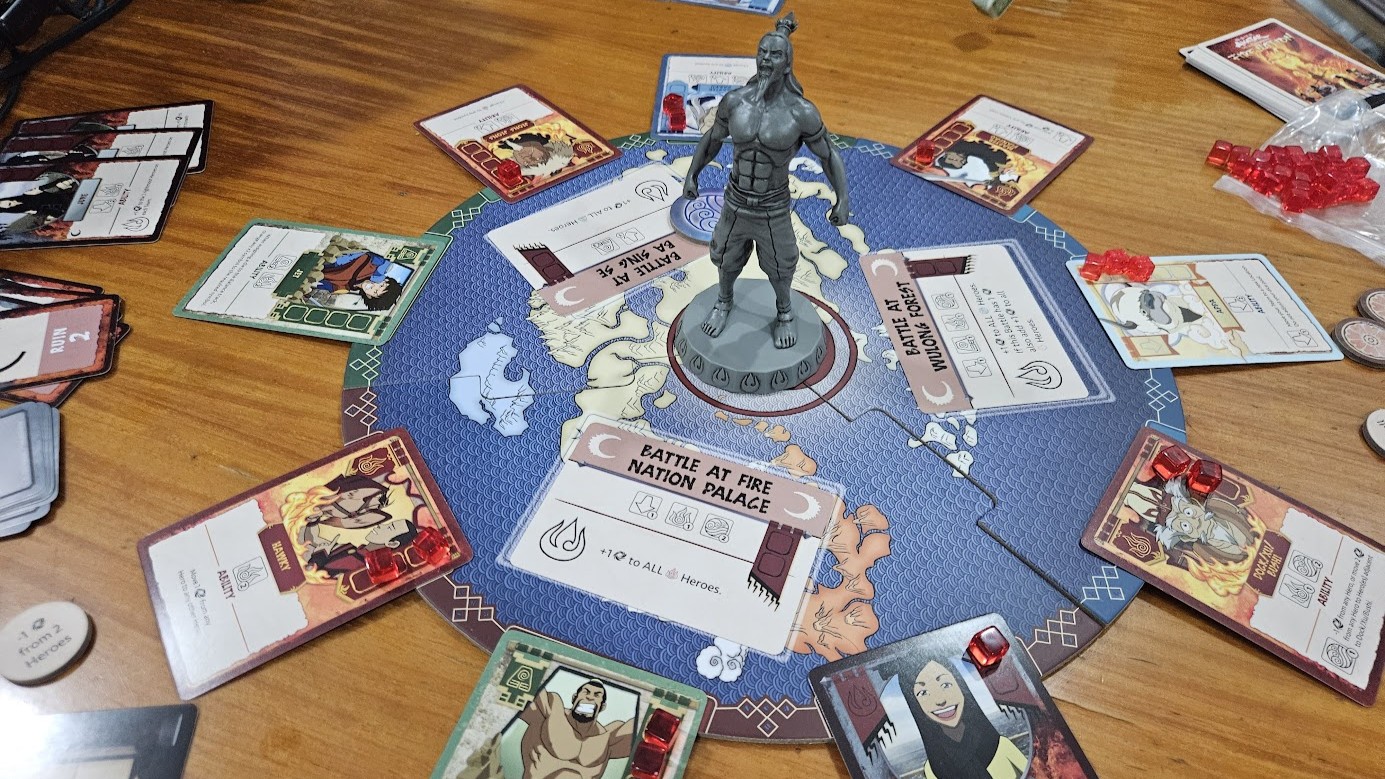
The core game loop consists of revealing where the Fire Lord will turn his attention before players get to act. The characters on your team will provide you with a varying number of dice to roll, and those results will determine which cards you can purchase/recruit to your team, or enemy cards you can try to defeat.
Officially, our tables have not managed to defeat this game yet. Playing with fewer players doesn’t seem to help since that means access to fewer element dice, so you may be better off with 4 players just to try to cover more elements. But there’s a lot of randomness in the game, and that’s what makes it swing a lot.
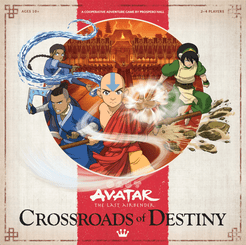
Now this is a gem of a game and works with players of all ages. It’s a cooperative strategy game that has players portray members of Team Avatar and play through different scenarios based on stories from the show. It’s a very combat-heavy game with a greater focus on tactical movement. But it’s also not overly difficult to grasp the core mechanics and feel like you’re really bringing your character to life.
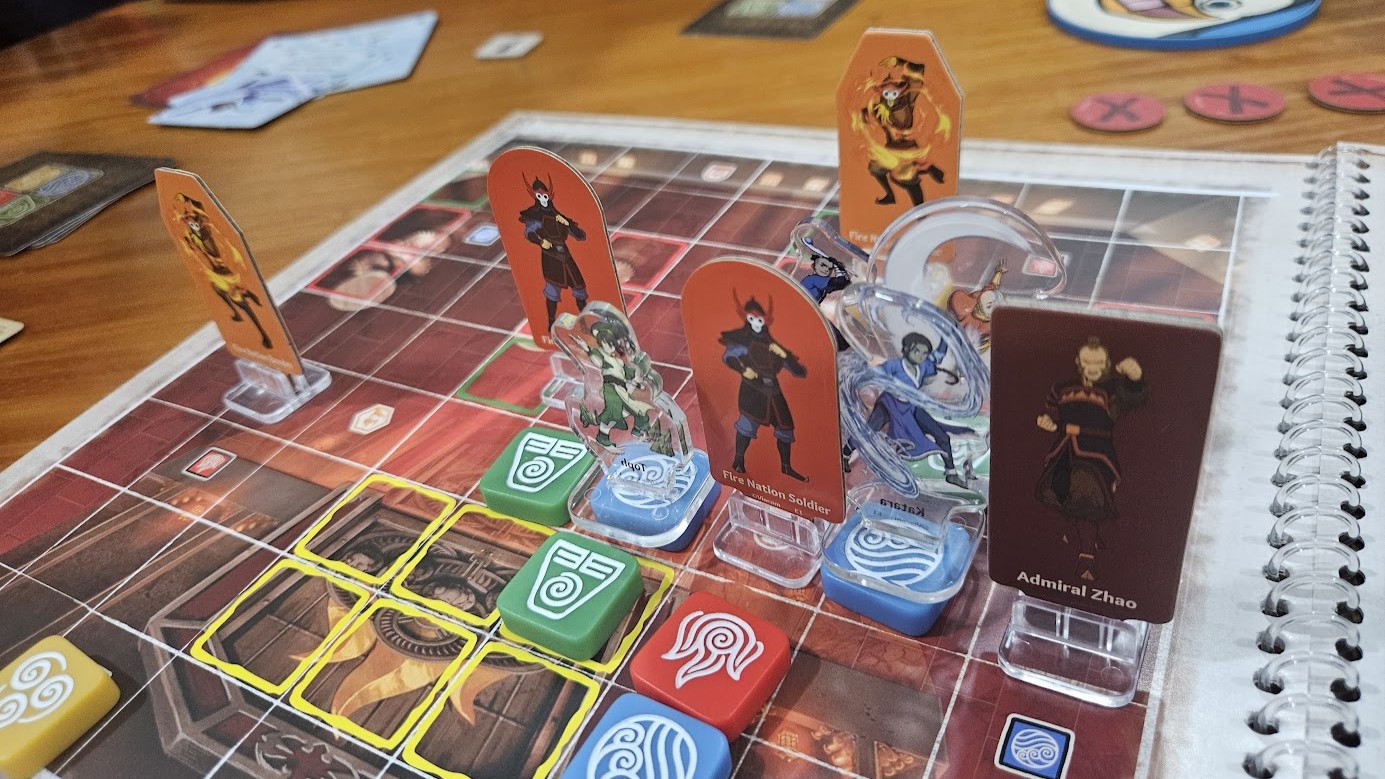
What is particularly exciting about this game is the optional campaign mode. This includes character progression in the form of adding more cards to your deck, thus increasing your options with new bending powers or, at the very least, clever techniques. We haven’t had a chance to assemble a group to do this, but it’s a great way to include replayability without going full Legacy in terms of component destruction.
Like many other Funko Games, this is probably one of the easier-to-approach games based on the show. And while they didn’t go with full miniatures, the little standees they made for Team Avatar still look good on the table. I really have to hand it to the Propero Hall team - they really know how to translate different IPs into tabletop experiences.
The Op Games took another stab at an ATLA game, but still went the reimplementation route. Aang’s Destiny uses the same game system as Hogwarts Battle, which is a pretty solid cooperative deckbuilding game. Just like in that game, Destiny has players playing through particular story chapters, and each one unlocks more game content for future sessions. You again get to play the roles of different members of Team Avatar, and each comes with a starting deck generally tailored to their play style.
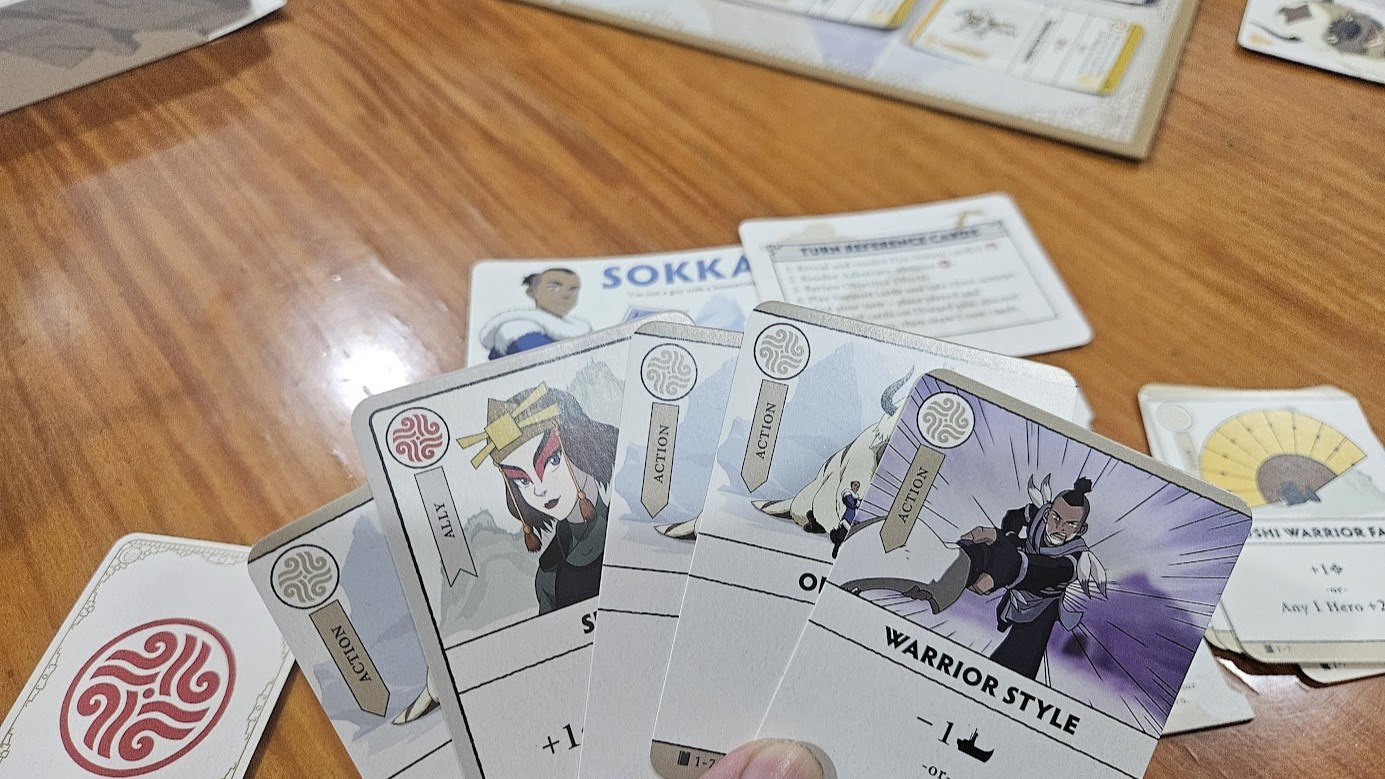
It’s a little funny that they retained the 7 boxes/chapter structure as Hogwarts Battle, given there are only 3 books/seasons for the original ATLA cartoon. Beyond that, there’s a lot of effort put into gating story-related content to keep pace with the show, including when sidekicks come into play. There’s a lot of love put into how this game was crafted.
We’ve yet to play through the complete “campaign”, but those familiar with Hogwarts Battle transition easily into this game. Crossroads can feel a lot more exciting than this one, but Destiny can feel more strategic.
After checking BoardGameGeek, this covers all the more notable board games based on the franchise. It’s a little surprising how we’ve been getting steady releases in the last few years. And most of those releases have been based on the older first animated series, and not as much The Legend of Korra. For now, I’d most recommend Crossroads of Destiny, with Aang’s Destiny as the potential setup in terms of complexity.