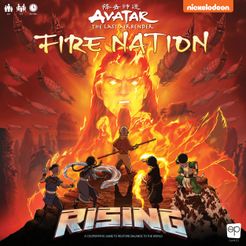
Avatar: The Last Airbender – Fire Nation Rising
Official Description:
Avatar: The Last Airbender – Fire Nation Rising is a cooperative card and dice game for 1-5 players. Players take command of iconic heroes such as Avatar Aang, Katara, Sokka, Toph, and Zuko as they unite to fight back against the Fire Nation. The game is set in the world of the beloved animated series, where players must work together to recruit heroes, defeat villains, and ultimately face the Fire Nation leader, Lord Ozai.
Throughout the game, players build teams of heroes, each with unique abilities, and use dice to resolve actions and combat. Strategic decisions are required to balance recruiting new allies, managing threats from the Fire Nation, and overcoming various challenges that arise during gameplay. The cooperative nature of the game encourages teamwork and coordination as players strive to prevent the Fire Nation from achieving its goals.
Victory is achieved by defeating Lord Ozai and thwarting the Fire Nation’s plans, while failure to do so results in the Fire Nation’s triumph. The game captures the spirit of the series, offering fans an immersive experience that combines strategy, cooperation, and the rich narrative of Avatar: The Last Airbender.
Avatar: The Last Airbender – Fire Nation Rising inherits its DNA from the Thanos Rising system, but dials up the pressure with relentless Fire Nation escalation. The core loop is a high-difficulty dice-driven gauntlet, where players must constantly triage threats and coordinate hero recruitment to avoid being overwhelmed. Thematically, it’s a direct channeling of the animated series’ desperate resistance, with the oversized Fire Lord Ozai statue looming as a constant reminder of the stakes. For a collection in the early stages of evaluation, this title currently offers niche ROI—its punishing randomness and high loss rate limit its long-term shelf retention, especially for groups seeking a more measured cooperative arc.
Physically, the game arrives in a standard Rising series box, but the centerpiece Ozai statue and a spread of cards demand a moderate setup window. Expect a 15-minute prep before the first roll, with a full session clocking in at about an hour. The production is visually striking, but the table footprint and component management mean it’s best positioned as a main event for the evening, not a quick filler. For hosts, the tactile presence is a draw, but the setup and teardown are non-trivial—plan accordingly if you’re running multiple tables or tight on time.
From a teaching perspective, the system is procedural: expect a 20-minute rules brief, with the first round serving as a live demonstration. The collaborative structure means you’ll need to keep an eye on group focus, as the game’s mental friction comes from balancing immediate threats with long-term objectives. Players will leave with a sharpened sense of tactical triage and group coordination, but the high-stakes dice swings can sap momentum if the table isn’t prepared for frequent setbacks. The interaction level keeps the room engaged, but the punishing difficulty curve means this is best deployed with groups who appreciate a challenge and can handle a few hard losses.
Category
Thematic & Narrative
My score
6
Our Total Plays
3
Last PLayed
16 Jan 26
🔥 In Rotation
Player Count
1-5
Playtime
60 mins
Proficiency Perks
Strategic Planning
Systems & Logic
Check Amazon
As an Amazon Associate, I earn from qualifying purchases.