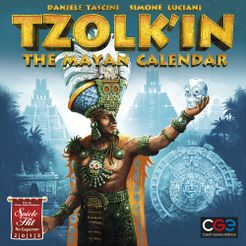
Tzolk'in: The Mayan Calendar
Official Description:
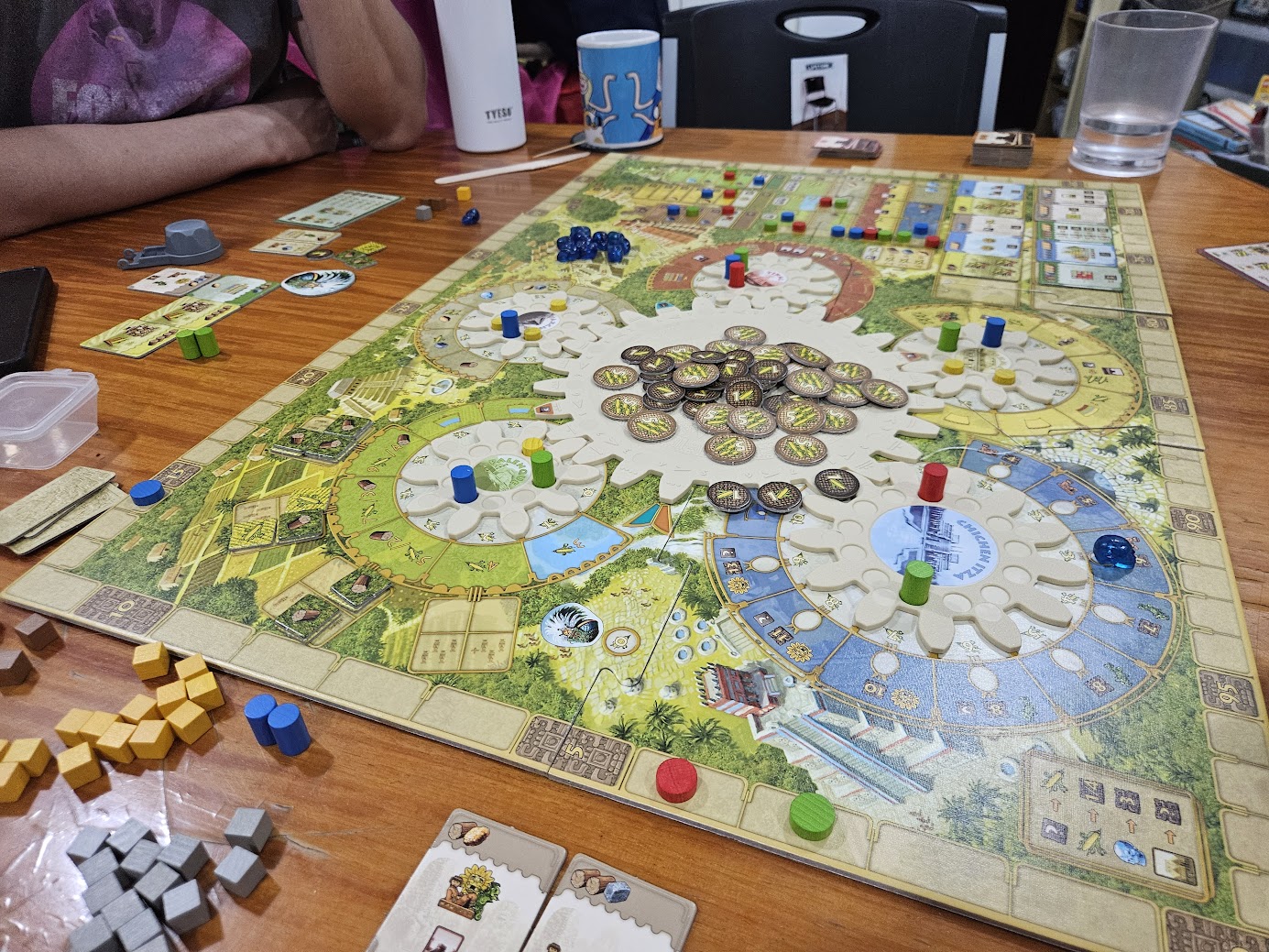
Tzolk'in: The Mayan Calendar introduces a unique game mechanism: dynamic worker placement. Players represent different Mayan tribes and place their workers on giant interconnected gears, which rotate as the game progresses. This rotation changes the value and options available to the workers, requiring players to carefully plan when to place and retrieve their workers to maximize their benefits.
Throughout the game, players must balance the acquisition of resources, construction of buildings and monuments, and the appeasement of the gods. Timing is crucial, as the rotating gears create a constantly shifting landscape of opportunities and challenges. Strategic planning and adaptability are essential to succeed in this dynamic environment.
The game combines resource management, timing, and tactical decision-making, all set against the backdrop of the ancient Mayan civilization. Players compete to lead their people to prosperity by making offerings, constructing impressive monuments, and earning the favor of the gods, with the winner being the player who accumulates the most victory points by the end of the game.
Tzolk’in: The Mayan Calendar stands apart in the worker placement lineage by introducing a kinetic, gear-driven timing mechanism that fundamentally alters the rhythm of play. The rotating centerpiece isn’t just a visual flourish—it’s a mechanical audit of each player’s ability to anticipate shifting opportunities and optimize timing. The binary structure—each turn is a decision to commit or retrieve—keeps the pace deliberate, but the real mental friction comes from projecting several turns ahead as the gears cycle. This system delivers high operational reliability, earning its place as a top-tier strategic dividend for any collection. Its continued presence on the table every few months is a testament to its enduring shelf retention and the unique challenge it offers even to seasoned groups.
From a hosting perspective, Tzolk’in is a main event title. The board’s size and the functional gear centerpiece demand a generous table and a dedicated setup window—expect at least 15 minutes before the first move. The tactile engagement of the gears is a draw, but it also means the game isn’t suited for cramped spaces or quick transitions. With a 90-minute session time, it fills the anchor slot in a game night, rewarding groups that want a focused, immersive experience rather than a filler between lighter fare. The physical presence and setup investment are justified by the singular play experience it delivers.
Teaching Tzolk’in requires a technical approach; this is not a system you can hand off to new players without guidance. The rules are straightforward in isolation, but the interplay of timing, resource management, and the evolving board state means the first play is a practical tutorial. As a competitive system, it keeps the table engaged—players are constantly monitoring each other’s positions and timing, which maintains a high level of energy and indirect interaction. The skill dividend here is substantial: players leave with sharpened foresight and a deeper appreciation for timing-based strategy, making it a rewarding challenge for groups that thrive on planning and adaptation.
Category
Tactical & Strategy
My score
8
Our Total Plays
12
Last PLayed
01 May 25
🏛️ Legacy
Player Count
2-4
Playtime
90 mins
Proficiency Perks
Strategic Planning
🟢 PLAY NOW
Play on BGA
Check Amazon
As an Amazon Associate, I earn from qualifying purchases.
← ALL BOARD GAMe REVIEWS