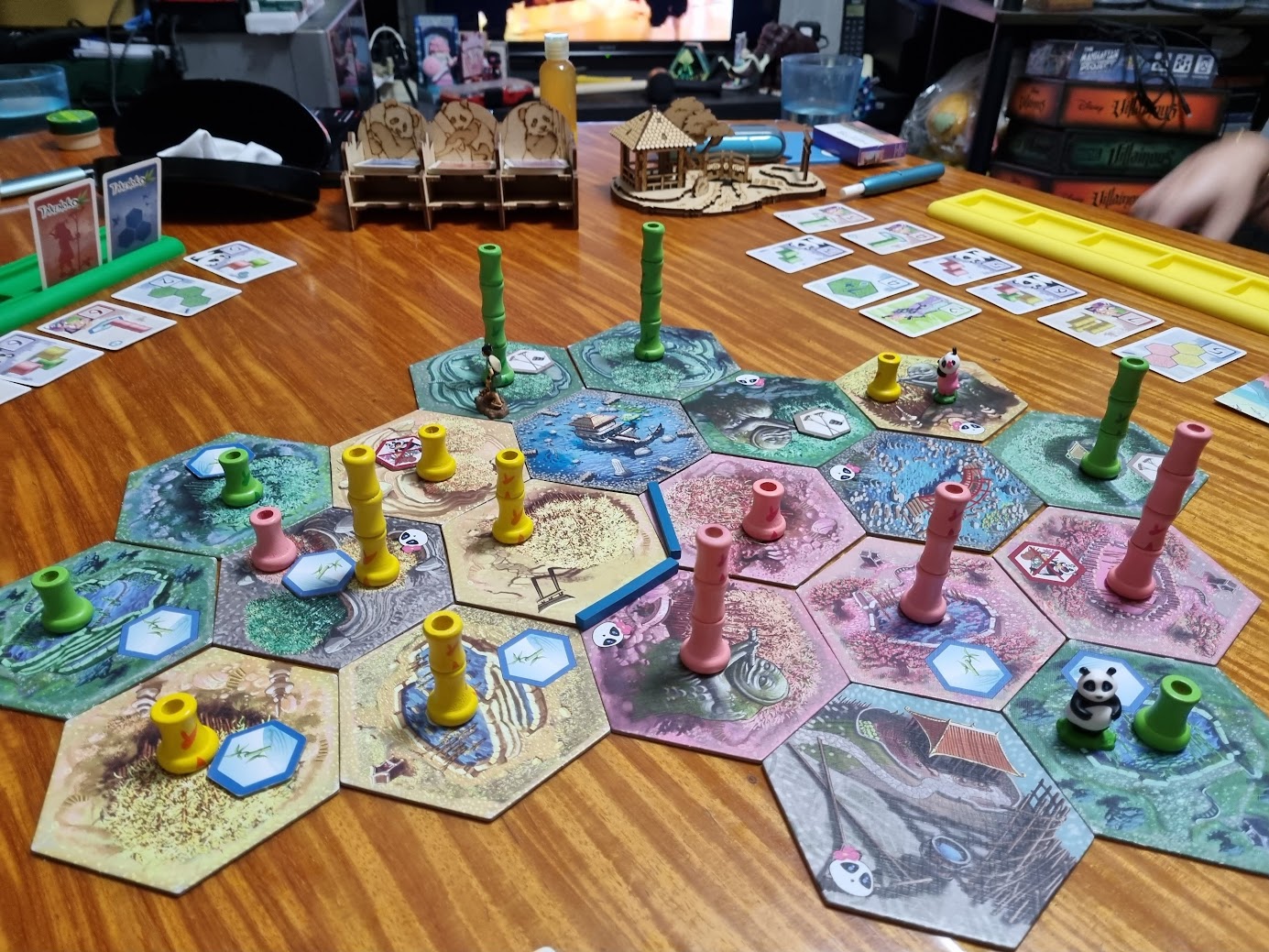

Takenoko: Chibis
Official Description:
Takenoko: Chibis is an expansion for the game Takenoko that introduces new elements to enhance gameplay. The expansion features a miniature of the female panda, adding a new dynamic to the game as she joins the original male panda in the bamboo garden. Players will encounter new objectives and opportunities as the female panda can give birth to adorable baby pandas, each represented by unique tokens.
The expansion includes nine different baby panda tiles, six new plot tiles, 18 new cards, and 17 additional bamboo pieces. These components introduce fresh strategies and interactions, as players must now consider the needs and actions of both pandas. The new plot tiles and objectives provide additional variety and replayability, ensuring that each game session offers new challenges.
Takenoko: Chibis enriches the original game by expanding the narrative and strategic possibilities. With the arrival of the female panda and her offspring, players must adapt their tactics to maximize their points and achieve their objectives, making the bamboo garden more lively and competitive.
Takenoko: Chibis extends the original’s tactical garden-building with a subtle but meaningful layer—baby panda bonuses and new color-boosting tiles. Within the context of modular tile-layers and objective-driven Euro-lites, this expansion doesn’t overhaul the core, but it does sharpen the decision space. The new tiles, which can benefit multiple bamboo colors, create fresh intersections for point optimization and tactical pivots. After years of managing tables, I see its consistent mechanical performance as a reason for its continued shelf presence: it’s a reliable secondary option for groups who want a familiar system with just enough new levers to keep the table engaged. Its legacy status is earned—Chibis doesn’t chase trends, but it does keep the garden competitive and lively.
Physically, Chibis is a compact addition, but the slim box means you’ll need to discard the original insert to store everything together. Setup remains in the 15-minute range, so it’s practical for most game nights, especially as a main event for lighter groups or a substantial closer after a heavier title. The expansion’s footprint is modest, but the extra components do require a bit more table discipline to keep objectives, tiles, and baby panda tokens organized. For hosts, it’s a straightforward upgrade—no major logistical hurdles, just a bit of component management to keep the experience smooth.
From a teaching perspective, Chibis sits in the procedural camp: expect a 20-minute teach, especially if you’re detailing the new tile effects and baby panda mechanics. The system’s mental friction is moderate—players will need to visualize tile benefits and plan for multi-step objectives, but the rules overhead doesn’t spike. The competitive interaction remains indirect, so the room’s energy stays light and focused on personal optimization rather than direct conflict. The main skill dividend here is in adaptive planning and spatial visualization, as players juggle evolving objectives and the dual-panda dynamic. Once the basics are down, you can step away and let the table run—Chibis rewards attentive play without bogging down the flow.
Category
Tactical & Strategy
My score
7
Our Total Plays
4
Last PLayed
28 Dec 15
🏛️ Legacy
Player Count
2-4
Playtime
45 mins
Proficiency Perks
Strategic Planning
Spatial Reasoning
Check Amazon
As an Amazon Associate, I earn from qualifying purchases.
← ALL BOARD GAMe REVIEWS