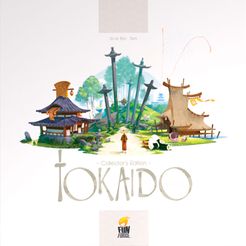

Takenoko
Official Description:
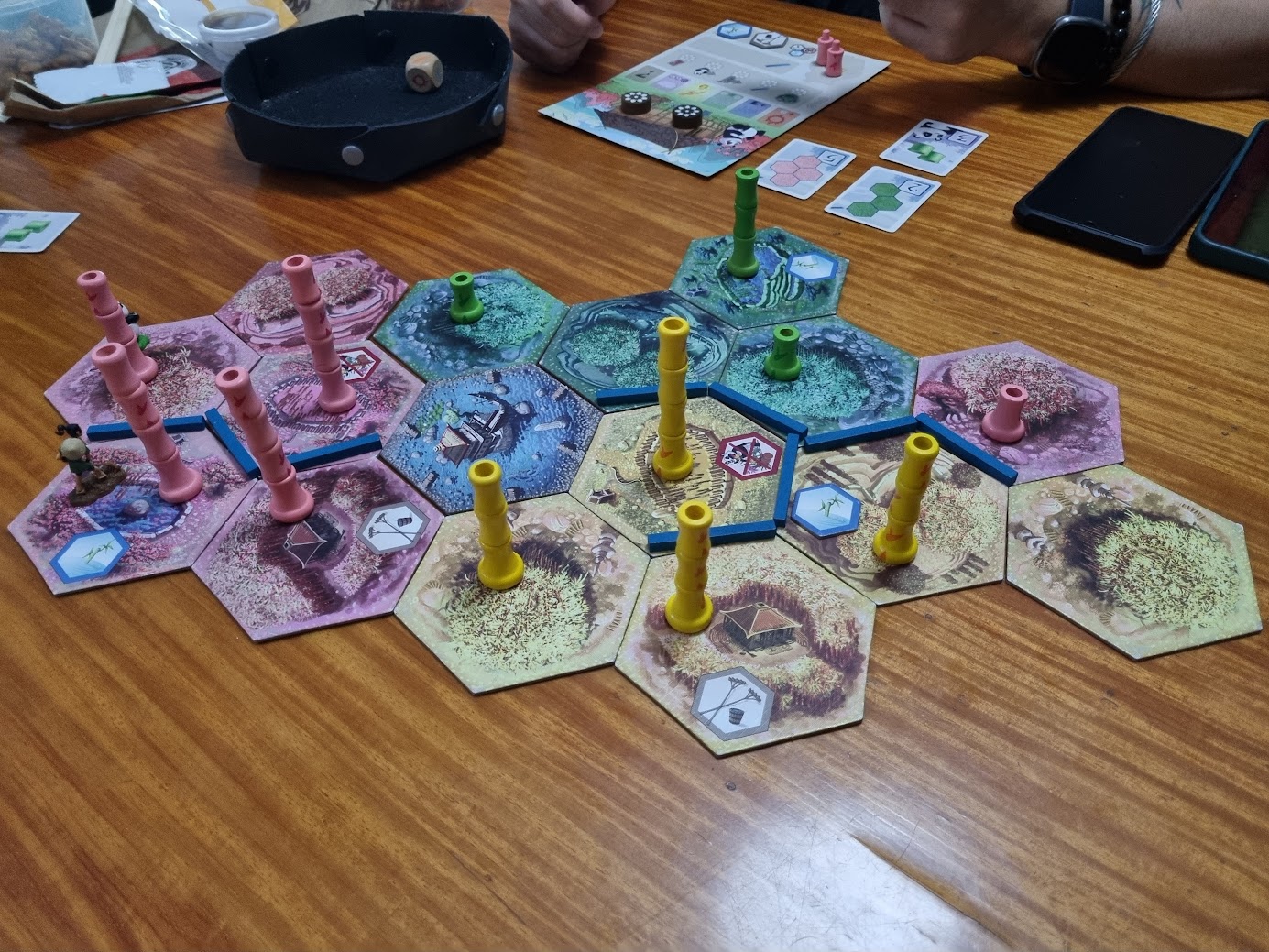
Takenoko is a board game in which players are tasked with cultivating land plots, irrigating them, and growing one of three species of bamboo—green, yellow, and pink—with the help of the Emperor of Japan’s gardener and a hungry panda. The game is set at the Japanese Imperial court, where the Emperor has entrusted the players with caring for his bamboo garden. Players must manage the land, grow bamboo, and satisfy the panda’s appetite, all while completing various objectives.
Each turn, players perform actions such as placing new land tiles, irrigating plots, moving the gardener to grow bamboo, or moving the panda to eat bamboo. The game features a modular board that changes as new tiles are added, creating a dynamic and strategic environment. Players draw objective cards that require them to grow bamboo in specific patterns, collect certain bamboo sections, or arrange plots in particular configurations.
The game ends when a player completes a set number of objectives, after which final points are tallied. The player with the most points, earned by fulfilling objectives and pleasing the Emperor, wins the game. Takenoko combines elements of strategy, resource management, and spatial planning, all set within a charming and visually appealing theme.
Takenoko’s enduring presence in the collection is anchored by its modular board and evolving set collection engine, which consistently delivers a top-tier strategic dividend. The shared garden structure ensures every move is a negotiation between personal advancement and tactical denial, creating a persistent undercurrent of competitive tension. Its lineage sits comfortably among modern Euro-inspired titles that reward adaptive planning and opportunistic play, but Takenoko’s approachable theme and dynamic board state have secured it significant long-term shelf retention. Years of managing tables confirm that its blend of visual charm and mechanical depth keeps it relevant, especially for groups seeking a system that rewards both careful planning and responsive tactics.
From a logistics standpoint, the game’s cute components and functional plastic insert make setup straightforward, provided you avoid vertical storage to prevent component spills. The box contents are robust enough to withstand repeated play, and the insert does its job—though it’s not immune to the occasional misalignment if stored carelessly. With a 45-minute session time and a setup that rarely exceeds fifteen minutes, Takenoko fits best as a main event for lighter nights or as a reliable anchor between heavier titles. Its table presence is strong, drawing attention and inviting participation, but it doesn’t overstay its welcome or monopolize space.
Teaching Takenoko is a procedural affair: expect a 20-minute rules overview, especially when clarifying the nuances of weather effects and the diverse scoring criteria tied to goal cards. The system’s competitive structure means you’ll want to stay engaged for the first round, but the ruleset is forgiving enough to let experienced players self-manage after that. The game’s mental friction comes from balancing spatial visualization—arranging plots and bamboo growth—with the need to anticipate and disrupt opponents’ objectives. The result is a skill dividend that sharpens both adaptive planning and spatial awareness, while the indirect competition keeps the room lively without tipping into high-conflict territory.
Category
Tactical & Strategy
My score
8
Our Total Plays
37
Last PLayed
25 Jul 26
🚀 High Velocity
Player Count
2-4
Playtime
45 mins
Proficiency Perks
Strategic Planning
Spatial Reasoning
👑 PREMIUM
Play on BGA
Check Amazon
As an Amazon Associate, I earn from qualifying purchases.
← ALL BOARD GAMe REVIEWS