Race to the Raft
Official Description:
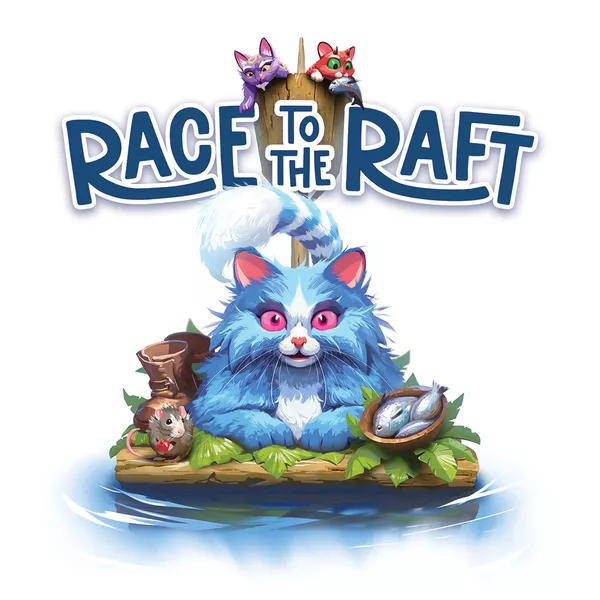
Race to the Raft is a cooperative, path-building, tile placement, social puzzle board game for 1–4 players. Players take on the roles of cats stranded on a burning island and must work together to guide them to safety before the flames consume everything. The game is set in the same universe as The Isle of Cats and features a series of scenarios that increase in complexity and challenge.
Throughout the game, players draw and place tiles to create safe paths across the island, navigating around obstacles and hazards. Communication and teamwork are essential, as players must coordinate their actions and share limited resources to ensure all cats reach the raft in time. Each scenario introduces new rules and objectives, providing a variety of puzzles and strategic decisions.
Race to the Raft emphasizes collaboration and problem-solving, offering a unique experience with each playthrough. The modular setup and scenario-based gameplay ensure high replayability, making it suitable for both solo and group play. The game combines engaging mechanics with a thematic narrative, challenging players to save the cats from impending danger.
Race to the Raft operates within the modern cooperative tile-layer tradition, but it pivots away from the resource drafting and polyomino placement of its predecessor, The Isle of Cats. Here, the focus is on high-stakes, scenario-driven path construction, where the board demands a sharp audit of player visualization and group foresight. The system’s communication restrictions inject a persistent tension, forcing teams to rely on nonverbal cues and shared intuition. For a collection that values consistent mechanical performance and scenario-driven replayability, this title offers solid table-time value—its procedural puzzle structure and collaborative tension have kept it relevant even as newer titles cycle through the shelves.
Component management is a real consideration: the box is packed tight, and the bagged fire tiles require careful handling to avoid mid-session chaos. Setup and teardown are not trivial, but the scenario-based structure means you can prep in advance for a focused 60-minute session. This is not a filler or a quick warm-up; it’s best positioned as a main event for groups who want a contained, challenging experience. The physical footprint is manageable, but expect to spend a few minutes post-game sorting and restoring order.
From a teaching perspective, Race to the Raft sits firmly in the procedural camp. The onboarding curve is best managed by walking new players through the tutorial scenarios, especially given the communication limits that can trip up even experienced groups. Once the basics are in place, the system rewards teams who can collectively map out options and adapt under pressure—the mental friction here is substantial, and the collaborative format keeps everyone engaged. The game’s interaction level ensures the table stays focused and invested, with each player’s decisions directly impacting the group’s survival. For hosts, it’s a reliable choice when you want to foster teamwork and leave players with a tangible sense of shared accomplishment.
Category
Tactical & Strategy
My score
7
Our Total Plays
5
Last PLayed
22 Mar 25
🏛️ Legacy
Player Count
1-4
Playtime
60 mins
Proficiency Perks
Strategic Planning
Spatial Reasoning
Check Amazon
As an Amazon Associate, I earn from qualifying purchases.
← ALL BOARD GAMe REVIEWS