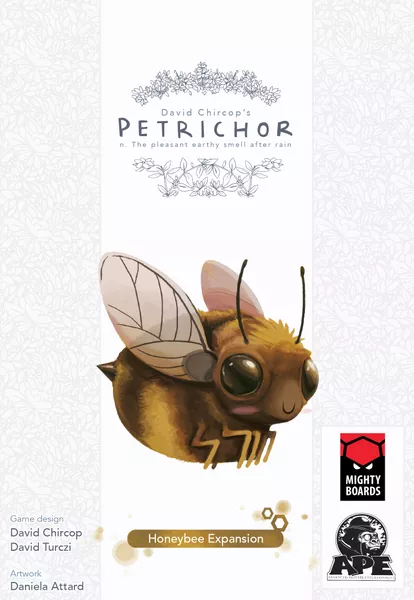
Petrichor
Official Description:
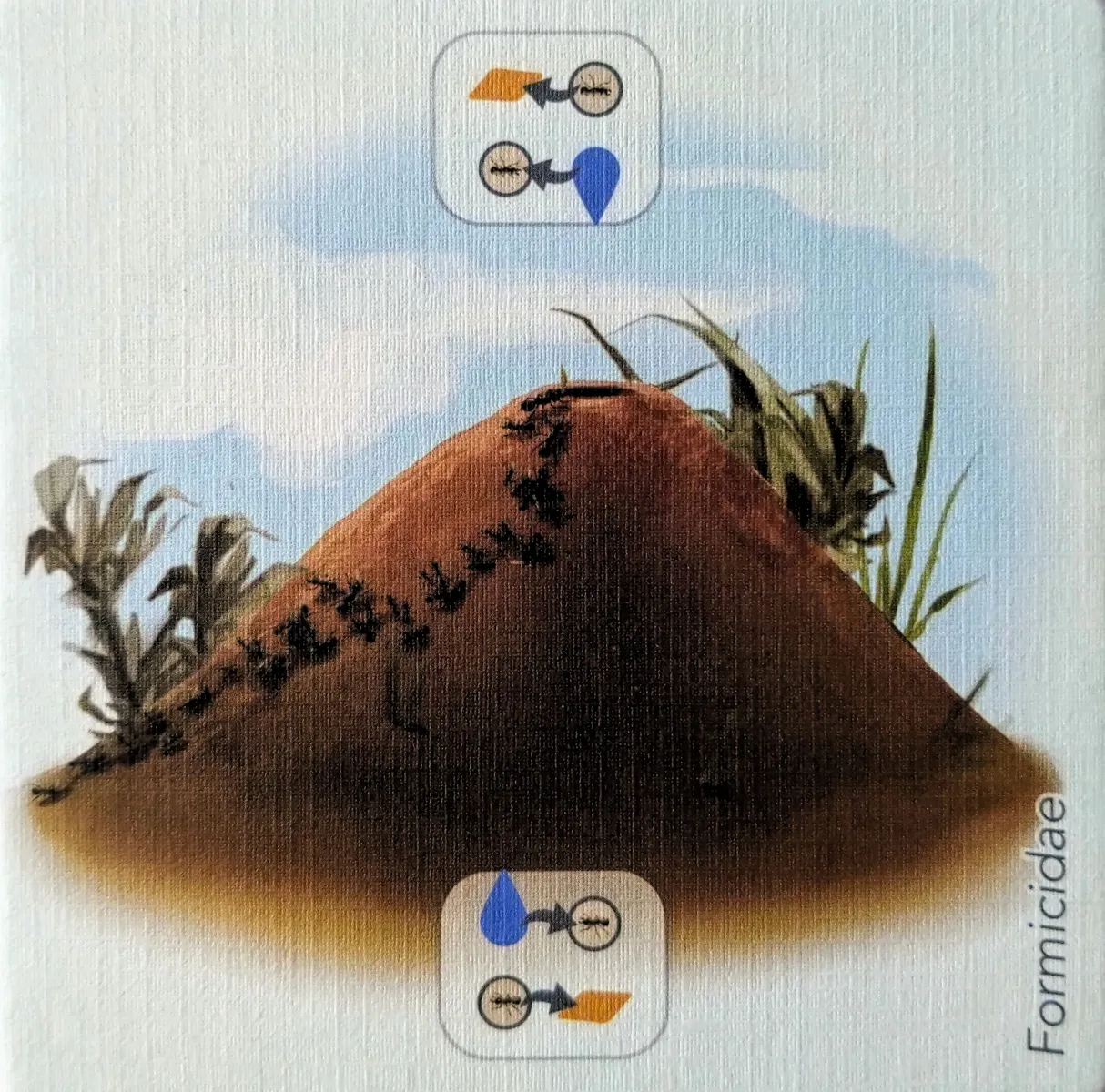
Petrichor is a highly interactive board game for 1-4 players (expandable to 5 with an expansion) in which players take on the roles of clouds, competing to control the weather and influence the growth of crops. The game is centered around action selection and area influence mechanics, where players use their clouds to move, rain, and manipulate weather conditions over modular crop tiles.
Throughout the game, players will perform actions such as moving clouds, adding water droplets, making it rain, and voting on weather effects that impact the fields. The goal is to water crops efficiently and harvest them at the right time to score points. Strategic planning and timing are essential, as players must balance their own interests with the changing weather and the actions of their opponents.
Petrichor offers a unique theme and gameplay experience, focusing on the natural cycle of rain and plant growth. The combination of area control, voting, and resource management creates a dynamic and engaging environment where players must adapt to both the board state and the decisions of others to achieve victory.
Petrichor operates within the tradition of interactive area-control systems, but its weather-cycle theme and dual-purpose card play introduce a sharp layer of tactical ambiguity. The board’s tranquil visuals mask a contest where every cloud movement and water bead placement can trigger a cascade of scoring shifts, especially as weather votes reshape the landscape. This is not a passive tableau-builder; it’s a contest of timing and positional leverage, where the “Skill Dividend” comes from reading both the board and your opponents’ intentions. Its consistent mechanical performance and years of shelf presence mark it as a reliable secondary option for groups seeking a strategic puzzle with teeth—its legacy status is earned by surviving the culling that comes with a large, competitive collection.
From a logistics standpoint, Petrichor’s minimalist design and translucent water beads keep the table state clear, even as the action escalates. Setup and teardown are straightforward, fitting comfortably into a 15-minute prep window, and the 80-minute session length positions it as a main event for a focused group. The tactile clarity of the components supports the game’s spatial demands, but hosts should expect a table that demands attention—this isn’t a filler or a casual warm-up, but a centerpiece that rewards careful play and sustained engagement.
Teaching Petrichor is a procedural affair; expect a 20-minute rules brief, with particular emphasis on the dual-use cards and the timing of weather votes. The system’s high-friction interaction means you’ll need to stay present for the first scoring cycle, as players calibrate to the direct competition and the board’s demand for spatial visualization. Once the group locks in, the game’s “Mental Friction” ensures that every decision is scrutinized, and the energy at the table remains high—players leave with a sharpened sense of timing and a clear audit of their ability to adapt under pressure. This is a title that rewards repeat play and strategic growth, but it’s best deployed with groups ready for a contest, not a stroll.
Category
Tactical & Strategy
My score
7
Our Total Plays
1
Last PLayed
25 Jan 24
🏛️ Legacy
Player Count
1-4
Playtime
80 mins
Proficiency Perks
Strategic Planning
Spatial Reasoning
Check Amazon
As an Amazon Associate, I earn from qualifying purchases.
← ALL BOARD GAMe REVIEWS