
Luthier
Official Description:
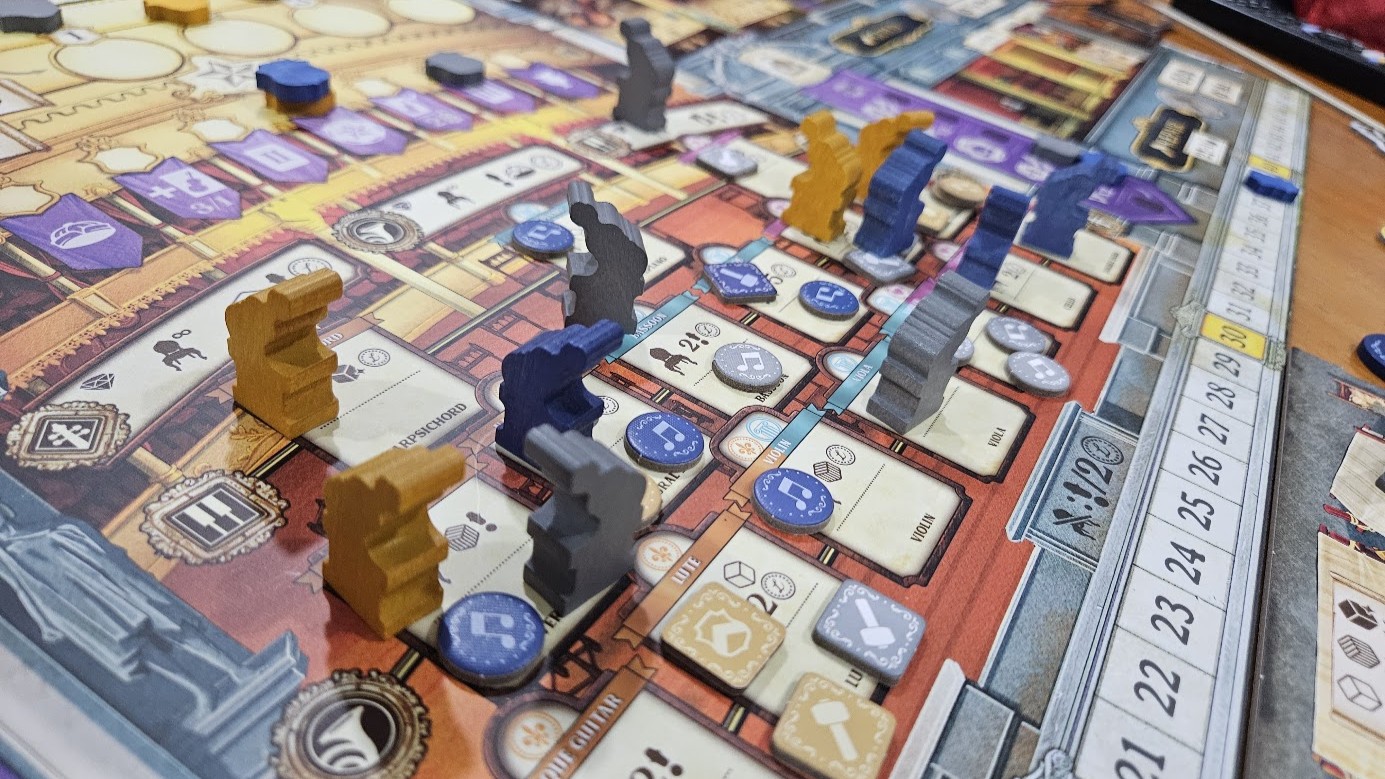
Luthier is a complex euro game centered on the art of crafting and repairing musical instruments, while also managing performances to satisfy patrons. Players take on the roles of historical instrument makers, sending family members and apprentices to compete for rewards and prestige at the orchestra hall. The game features worker placement and hidden bidding mechanics, requiring strategic planning and resource management.
Throughout the game, players must balance the demands of crafting high-quality instruments with the need to maintain and repair existing ones. Success depends on efficiently allocating workers, acquiring materials, and outmaneuvering opponents in the pursuit of lucrative commissions and influential patrons.
Luthier offers a deep and immersive experience, challenging players to master both the technical and social aspects of the luthier’s craft. The game is designed for those who enjoy intricate strategy, historical themes, and competitive gameplay centered on artistry and reputation.
As a modern euro with deep roots in worker placement and hidden bidding, Luthier channels the legacy of high-weight, multi-path strategy games while carving out its own identity through the theme of historical instrument craftsmanship. The system’s mental friction is substantial—players must juggle the demands of fabrication, repair, and performance, all while reading the table for patron priorities and timing their bids. This is a box that delivers significant long-term shelf retention: its strategic dividend is clear, with enough depth and replayability to justify the investment for groups seeking a mainstay with real staying power. Its current 'breaking in' status is a function of both its recent arrival and the time needed for groups to internalize its layered scoring and competitive tempo.
Component density is immediately apparent—expect a table covered in cardboard tokens and a setup that demands patience and precision. Luthier is a high-effort production, both in terms of physical prep and teardown, and the 150-minute session time cements its role as a main event rather than a filler. For hosts, this means planning ahead: allocate a dedicated block of the evening, and be prepared for a table that stays busy from start to finish. The tactile management of components is part of the experience, but it also means this is not a game to rush or slot between lighter fare.
From a teaching perspective, Luthier is firmly in technical territory. The ruleset requires a veteran lead, especially for first-timers, and the competitive interaction ensures that no one can coast on autopilot. The skill dividend here is substantial—players sharpen their resource allocation, timing, and adaptive planning, all under the pressure of direct competition for commissions and patron favor. The room’s energy stays high, with frequent moments of tension as bids are revealed and priorities shift. Once the group is up to speed, the system rewards attentive play and strategic foresight, but the initial teach is best handled by someone with years of managing tables and a clear plan for onboarding new players.
Category
Tactical & Strategy
My score
8
Our Total Plays
2
Last PLayed
17 Jul 26
🌱 Breaking In
Player Count
1-4
Playtime
150 mins
Proficiency Perks
Strategic Planning
🚧 BETA (FREE)
Play on BGA
Check Amazon
As an Amazon Associate, I earn from qualifying purchases.
← ALL BOARD GAMe REVIEWS