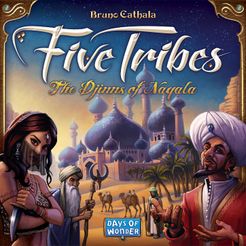
Five Tribes: The Djinns of Naqala
Official Description:
Crossing into the fabled Sultanate of Naqala, your caravan arrives at a time of uncertainty. The old sultan has just died, and control of the land is up for grabs. The oracles predicted that the arrival of strangers would shift the balance of power, and now the time has come for cunning and strategy to determine who will become the new ruler. In Five Tribes: The Djinns of Naqala, players must maneuver the five tribes—Assassins, Elders, Builders, Merchants, and Viziers—across the board, using their unique abilities to gain influence and control over the various tiles of Naqala.
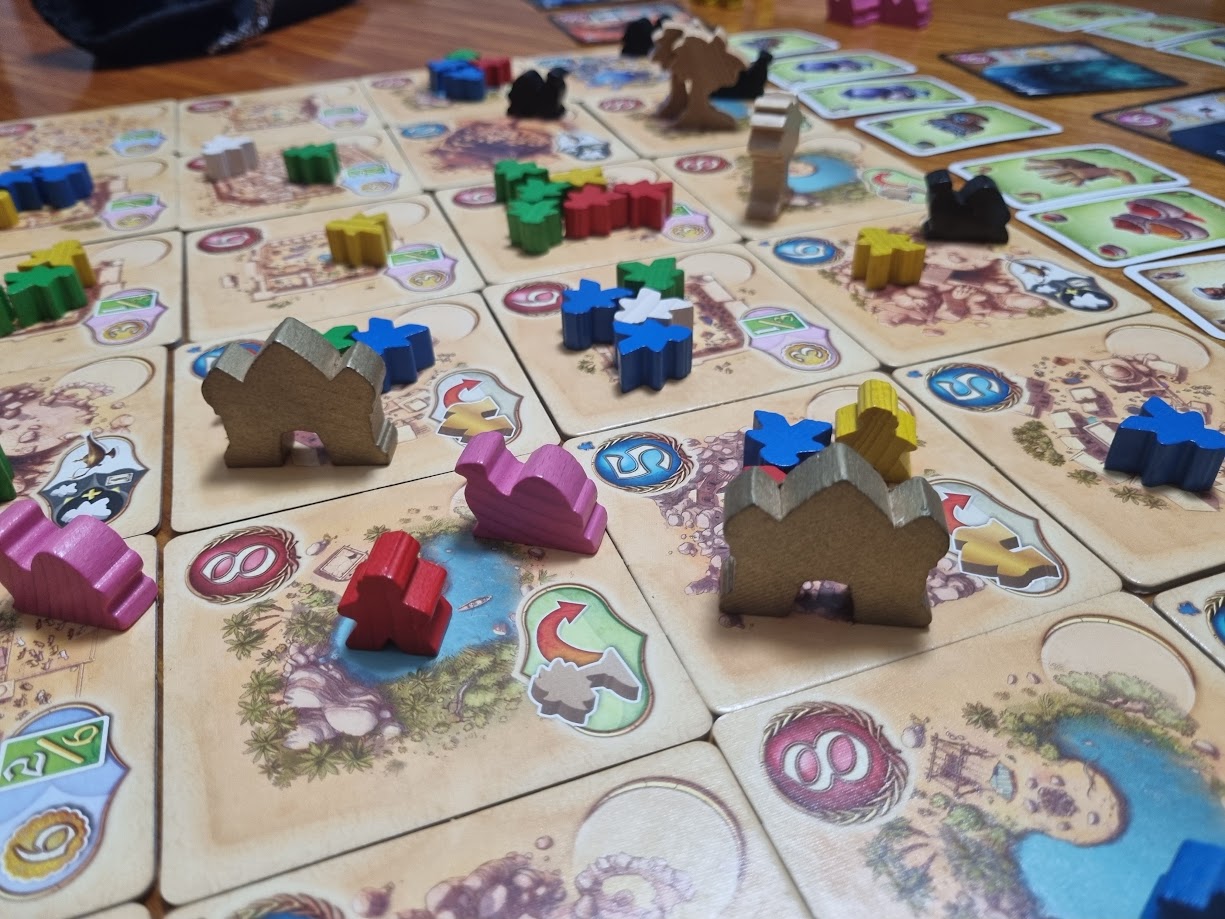
The game features a unique twist on the traditional worker placement genre, as all the meeples begin on the board and players must pick up and redistribute them to activate their powers. Strategic movement and careful planning are essential, as players seek to claim oases, build palaces, and harness the power of mystical Djinns. Each tribe offers different advantages, and the interaction between their abilities creates a dynamic and challenging environment where every move can shift the balance of power.
Victory is achieved by accumulating the most points through controlling valuable tiles, collecting sets of resources, and enlisting the aid of powerful Djinns. Five Tribes rewards tactical thinking, adaptability, and foresight, making each game a unique contest for supremacy in the legendary land of Naqala.
Five Tribes: The Djinns of Naqala stands as a modern benchmark in tactical Euro design, rooted in the tradition of spatial optimization and dynamic turn-order control. The core system—redistributing meeples across a shifting grid—demands a sharp audit of spatial visualization and forward planning, with every move recalibrating the board state and player incentives. The high-stakes bidding for turn order injects a layer of tension, forcing players to weigh immediate tactical gains against long-term engine potential. Djinn powers and the interplay of the five tribe colors create a lattice of scoring routes, rewarding those who can pivot strategies mid-game. Its significant long-term shelf retention is no accident: after years of managing tables, this title continues to deliver a top-tier strategic dividend, justifying its place as a perennial favorite among seasoned collections.
From a logistics standpoint, Five Tribes is a main event title—expect a densely packed box, a precise component count for camels (which scales by player count), and a coin system that benefits from pre-game organization. The sprawling tile grid requires a medium-to-large table footprint, and setup is not a casual affair. This is a system that rewards hosts who appreciate a tactile, hands-on prep phase and are willing to invest in a 20-minute setup for an 80-minute session. It’s best reserved for groups ready to commit to a full evening’s focus, rather than as a filler or warm-up. The physical presence and table demand are part of its enduring appeal, but also a clear signal that this is not a lightweight addition to the lineup.
Teaching Five Tribes is a procedural exercise—expect to spend time walking through the drop-and-pickup loop, clarifying the unique scoring for each tribe, and highlighting the nuances of Djinn activation. The competitive dynamic is ever-present, with players constantly monitoring each other’s bids and board positions, which keeps the room’s energy sharp and engaged. The system’s mental friction is substantial: players leave the table having exercised both spatial visualization and adaptive planning, as every turn is a puzzle with shifting variables. While the teach is approachable for experienced groups, it’s not a game you can set in motion and step away from—active facilitation is required to keep the flow and ensure the intricate mechanics are respected. The payoff is a session where every participant feels the weight and reward of their decisions, making it a staple for groups that thrive on deep, interactive play.
Category
Tactical & Strategy
My score
8
Our Total Plays
30
Last PLayed
06 Oct 24
🏛️ Legacy
Player Count
2-4
Playtime
80 mins
Proficiency Perks
Strategic Planning
Spatial Reasoning
👑 PREMIUM
Play on BGA
Check Amazon
As an Amazon Associate, I earn from qualifying purchases.
← ALL BOARD GAMe REVIEWS