
Fibonachos
Official Description:
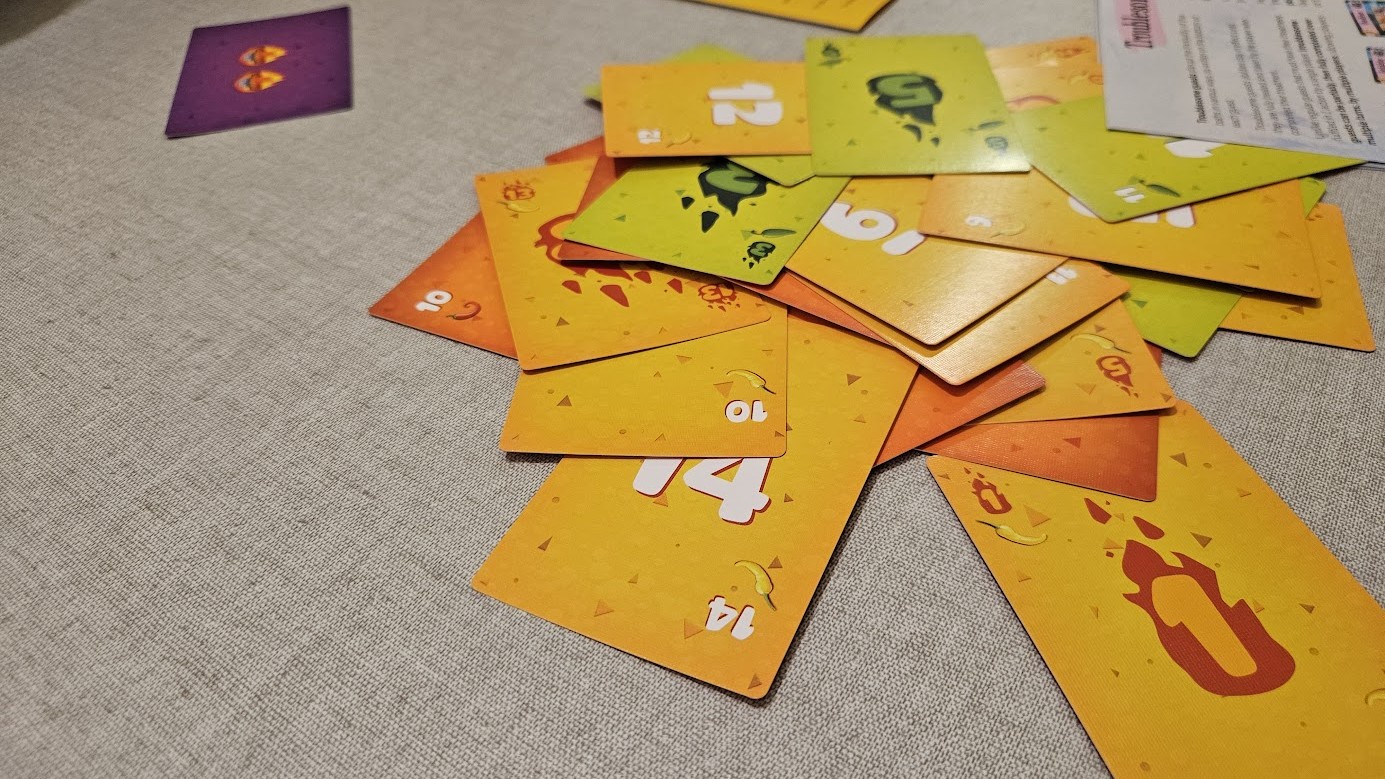
Fibonachos is a trick-taking game that uses a deck of 51 cards, consisting of three suits with 17 cards each. Each suit contains two cards numbered 1 and one card each numbered 2 through 16. The numbers 1, 2, 3, 5, 8, and so on, follow the Fibonacci sequence, which is a central theme of the game.
Players must follow the lead suit and may play trump cards, but the activation of the trump suit depends on the actions of other players. This dynamic introduces a layer of strategy, as players must anticipate and react to the choices of their opponents to maximize their own trick-taking opportunities.
The game is designed for optimal play with four to five participants and emphasizes classic trick-taking mechanics with a unique twist involving the Fibonacci sequence and interactive trump activation.
Fibonachos lands squarely in the casual trick-taking lineage, but its mathematical twist sets it apart from the usual filler fare. The core hook—trick rules governed by strict Fibonacci sequence restrictions—demands more from players than the average light card game, and the scoring system’s commitment to the theme can feel like high mechanical friction for the output. As a new addition still in the early stages of table testing, its current value is best described as niche ROI: it’s a curiosity for math-minded groups but lacks the broad shelf retention of more approachable trick-takers.
The compact box and minimalist, color-forward card art make Fibonachos easy to transport and set up, aligning with the expectations for a quick-start card game. With a session time of about 35 minutes, it fits best as a mid-evening diversion or a palate reset between heavier games, rather than as a main event. The physical logistics are straightforward—just a deck of 51 cards—but the unique numbering and suit structure mean you’ll want to keep the rulebook handy for reference, especially during early plays.
From a teaching perspective, Fibonachos sits firmly in the procedural camp: expect a 20-minute rules rundown, with most of that time spent clarifying the Fibonacci-based trick restrictions and the conditional trump activation. The mental friction here is real—the system rewards players who can quickly audit number patterns and anticipate opponents’ moves, but it can bog down less experienced tables. The competitive interaction keeps the energy lively, but the need for constant rule-checking means the facilitator can’t step away. The skill dividend is sharp for those who enjoy mathematical puzzles, but the overall experience is best reserved for groups who appreciate a cerebral challenge over breezy play.
Category
Casual & Filler
My score
5.5
Our Total Plays
1
Last PLayed
20 Jun 26
🌱 Breaking In
Player Count
2-5
Playtime
35 mins
Proficiency Perks
Systems & Logic
Check Amazon
As an Amazon Associate, I earn from qualifying purchases.
← ALL BOARD GAMe REVIEWS


