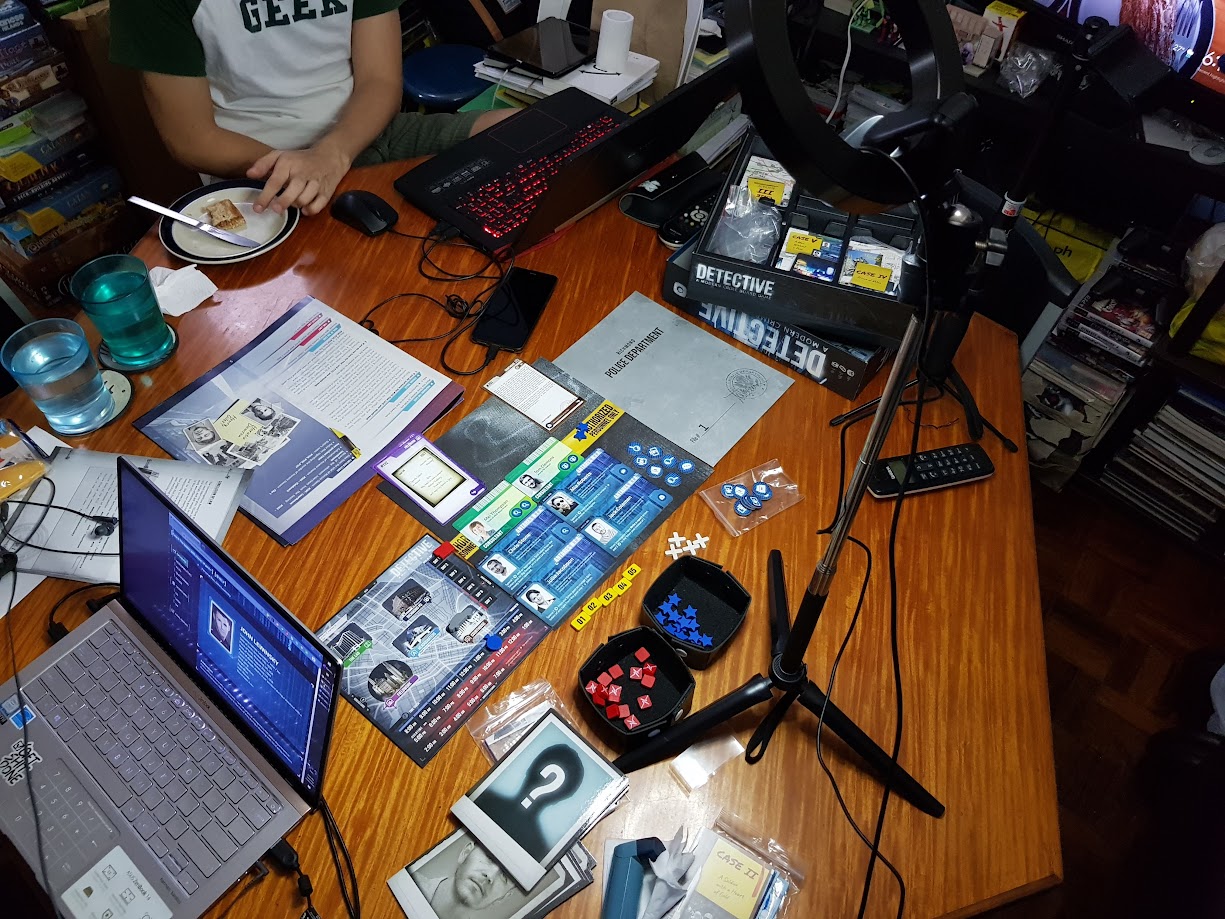

Detective: A Modern Crime Board Game
Official Description:
Detective: A Modern Crime Board Game is a cooperative game for 1 to 5 players that challenges participants to solve intricate cases using a combination of traditional board game elements and modern technology. Players take on the roles of investigators working for the Antares National Investigation Agency, tasked with unraveling five interconnected cases. Each case is part of a larger narrative, and the decisions made in one case can influence the outcomes of subsequent investigations.
The gameplay blends classic card-driven mechanics with the use of an online database, which simulates real-life investigative tools. Players must gather clues, interrogate suspects, analyze evidence, and manage their time and resources effectively. The game encourages teamwork and critical thinking, as players must discuss theories, share information, and decide together which leads to pursue.
Detective: A Modern Crime Board Game stands out by integrating real-world knowledge and internet research into the experience, requiring players to think like true detectives. The immersive storytelling, combined with the innovative use of technology, creates a unique and engaging challenge that pushes the boundaries of traditional board gaming.
Detective: A Modern Crime Board Game operates as a contemporary investigative system, merging classic card-driven mechanics with a tech-forward Antares database. The narrative backbone is robust, threading together five cases with historical resonance—including WWII-era connections—while layering in investigator abilities and a demand for deductive realism. This is not a passive puzzle; the game expects players to actively interrogate leads, cross-reference digital evidence, and make consequential decisions that ripple across the campaign. Its high operational reliability is evident in the way it sustains tension and immersion over multiple sessions, earning significant long-term shelf retention for any collection focused on narrative depth and collaborative challenge. For a curator, its 🏆 Complete status signals a system that has delivered on both replay value and mechanical integrity, justifying its continued presence among top-tier investigative titles.
From a logistics standpoint, Detective is refreshingly manageable for its genre. The box contents are streamlined: a modest board, player tiles, and upgraded wooden tokens that provide a tactile anchor amid the digital sleuthing. Setup is efficient—once the laptop is ready and internet access secured, the game is ready to launch. The requirement for active web searches and database use is a double-edged sword: it modernizes the experience but demands a stable connection and a group comfortable with tech integration. With a 180-minute session time, this is a main event title—best reserved for dedicated groups or anchor slots in a game night, rather than as a filler or warm-up. The physical footprint is reasonable, but the mental engagement and time commitment are substantial.
Teaching Detective is a procedural affair, typically requiring a focused 20-minute introduction. The core rules are accessible, but the real complexity emerges as players attempt to synthesize narrative threads and manage finite resources. The collaborative structure means the facilitator can step back after the initial teach, allowing the group to drive the investigation and discussion. The system’s Skill Dividend is substantial: players sharpen their ability to connect disparate clues, manage collective resources, and debate theories under time pressure. The high level of interaction keeps the table engaged and energized, with every participant invested in the outcome. For hosts, it’s a reliable choice when you want to foster deep engagement and shared accomplishment, provided the group is ready for a sustained, cerebral challenge.
Category
Thematic & Narrative
My score
9
Our Total Plays
7
Last PLayed
29 Aug 21
🏆 Complete
Player Count
1-5
Playtime
180 mins
Proficiency Perks
Strategic Planning
Systems & Logic
Check Amazon
As an Amazon Associate, I earn from qualifying purchases.
← ALL BOARD GAMe REVIEWS