Daybreak
Official Description:
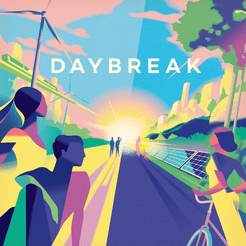
Daybreak is a cooperative board game about climate action, where players take on the roles of world powers working together to address the global climate crisis. Each player manages a unique world power, deploying policies and technologies to both dismantle the engine of global heating and build resilient societies. The game emphasizes collaboration, as players must balance the need to reduce emissions with the necessity of adapting to the impacts of climate change.
Throughout the game, players face escalating crises caused by climate change, which threaten the stability and well-being of societies around the world. Players must coordinate their actions, share resources, and implement effective strategies to prevent catastrophic outcomes. The game challenges players to achieve "drawdown," the point at which more carbon is being removed from the atmosphere than is being emitted, while also ensuring that societies remain stable and resilient.
Daybreak is designed to be scientifically grounded and accessible, providing an engaging and educational experience about the complexities of climate action. The game encourages players to think critically about global cooperation, technological innovation, and the urgent need for collective action to address one of humanity's greatest challenges.
Daybreak operates as a complex cooperative system, drawing on the tradition of multi-faceted crisis management games but with a distinct focus on simulating the global carbon cycle and climate response. Its mechanical core is built around escalating environmental threats and the need for coordinated, country-specific strategies, demanding that players not only manage their own resources but also synchronize with others to achieve collective stability. The game’s innovative climate engine and policy deployment mechanisms create a persistent mental friction, rewarding those who can parse both immediate threats and long-term mitigation. With nearly two decades of managing tables, I see Daybreak’s consistent mechanical performance as a reliable secondary option for groups seeking a challenge that endures beyond a single session. Its current shelf presence is justified by the depth of its cooperative puzzle and the replay value inherent in mastering its layered systems.
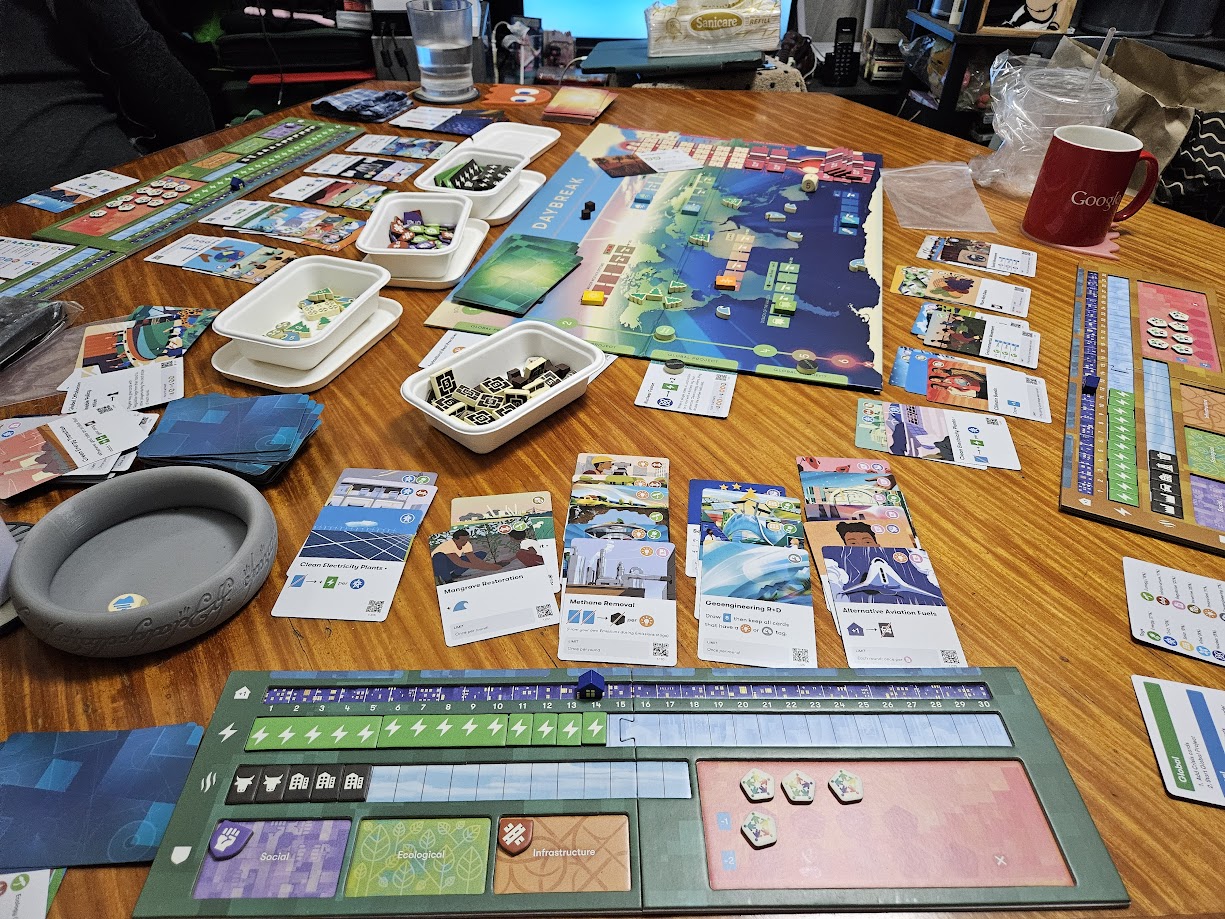
Physically, Daybreak’s eco-conscious production is evident in its component choices, from the sustainable materials to the inclusion of eco-friendly token holders. However, the box itself is notably fragile, requiring careful handling and storage—this is not a title to toss in a bag for casual transport. Setup and teardown fall within the 15-minute range, making it suitable as a main event for the evening rather than a filler between lighter games. The session length, clocking in at around two hours, aligns with its ambition and complexity; expect to dedicate a full block of time and table space to do it justice. For hosts, this is a centerpiece experience best reserved for groups ready to invest in a multi-session arc.
From a teaching standpoint, Daybreak sits firmly in the technical category. The rules are accessible on paper, but the real challenge lies in guiding new players through the steep learning curve of its interlocking systems and the necessity of mastering each country’s unique mechanics. The collaborative structure means the facilitator must remain engaged throughout, as the game’s layered crises and evolving board state rarely allow for passive oversight. The skill dividend here is substantial: players leave with a sharpened sense of global systems thinking and the ability to coordinate under pressure. The high level of interaction keeps the table focused and energized, with every decision carrying weight for the group’s collective outcome.
Category
Tactical & Strategy
My score
7.5
Our Total Plays
8
Last PLayed
18 Feb 24
🏛️ Legacy
Player Count
1-4
Playtime
120 mins
Proficiency Perks
Strategic Planning
🟢 PLAY NOW
Play on BGA
Check Amazon
As an Amazon Associate, I earn from qualifying purchases.
← ALL BOARD GAMe REVIEWS