Cities
Official Description:
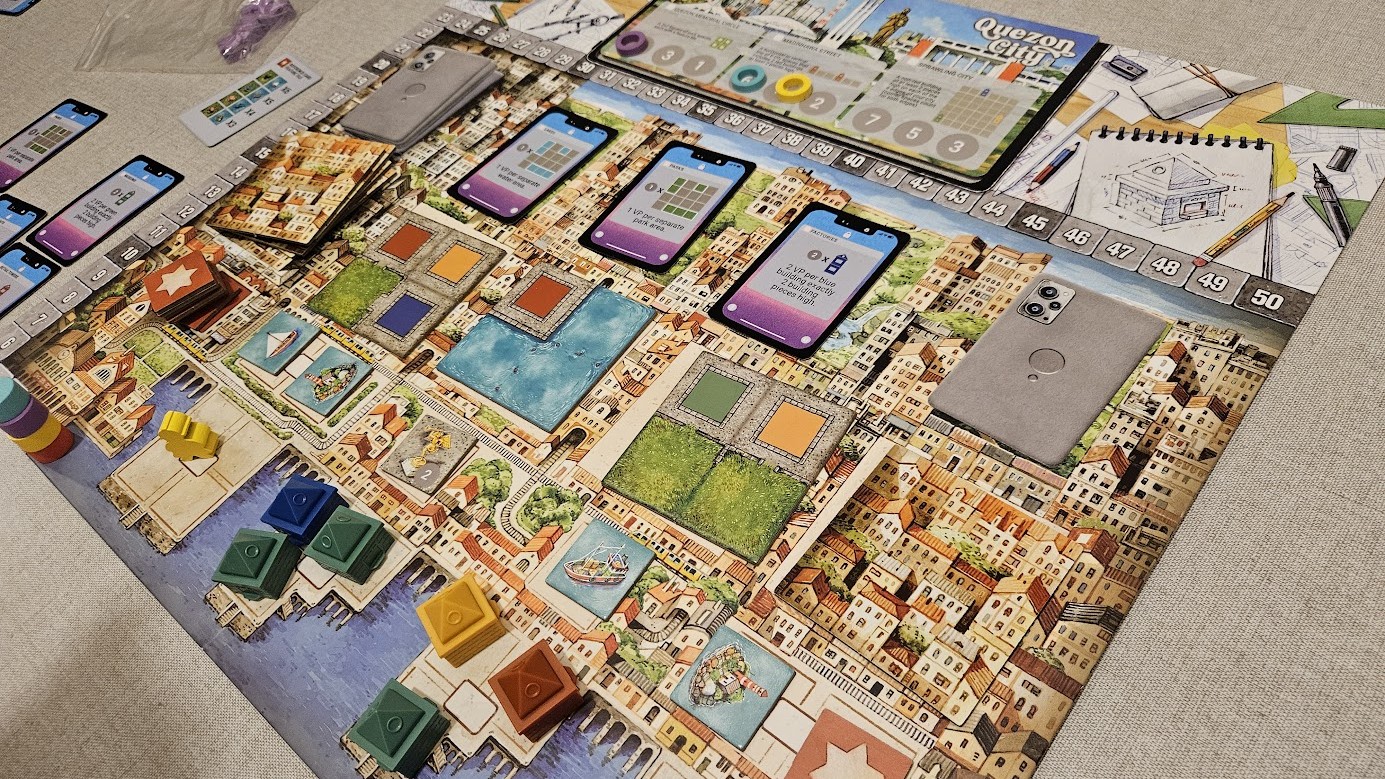
Cities is a city-building game in which players draft the best projects and arrange them in their own playing area. The game features action and resource draft mechanisms, allowing players to strategically select and place tiles to develop their city. Each round, players must balance the acquisition of new projects with the optimal placement of buildings and features to maximize their city's potential.
Throughout the game, players compete to create the most efficient and prosperous city by carefully managing resources and making tactical decisions. The drafting system ensures that each game presents new challenges and opportunities, requiring players to adapt their strategies based on the available options and the actions of their opponents.
The objective is to score the most points by the end of the game, achieved through thoughtful city planning and effective use of drafted projects. Cities offers a blend of strategic depth and replayability, making it engaging for players who enjoy city-building and tile-placement games.
Within the context of modern city-builders, Cities delivers a focused, puzzle-driven experience where every draft and placement matters. The system’s core tension—balancing project selection with optimal arrangement—demands a steady audit of spatial priorities and resource sequencing. Draft restrictions (no duplicate board types) add a layer of mental friction that keeps even seasoned planners alert. Cities’ high operational reliability is evident in its ability to generate consistently tight, satisfying sessions, making it a strong candidate for long-term shelf retention. As a recent addition, its early table presence is justified by the way it rewards careful planning and adapts well to different player counts.
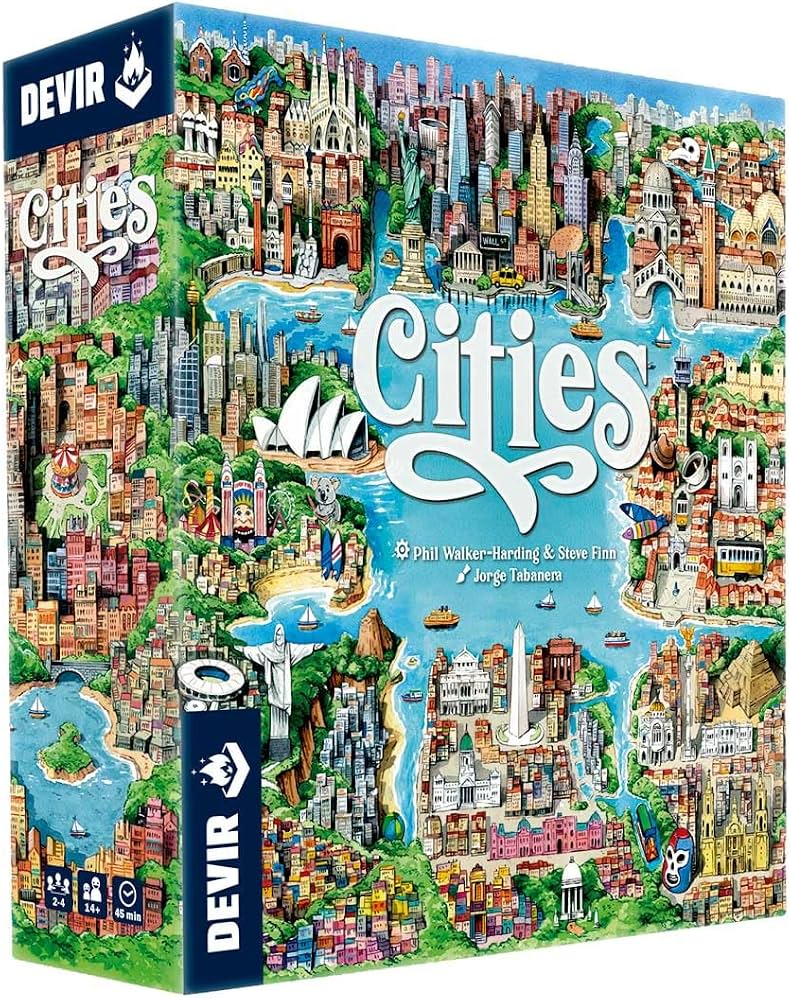
Component-wise, Cities is refreshingly straightforward: the box is compact, with all contents sorted into plastic baggies, minimizing setup and teardown. The 45-minute session time and clean organization mean it’s easy to deploy as a main event for smaller groups or as a substantial closer for a longer night. There’s no excess—just the essentials, which keeps the physical logistics manageable and the table footprint modest. For hosts managing multiple tables, this efficiency is a welcome relief, especially when cycling through several games in a single evening.
From a teaching perspective, Cities sits in the procedural zone: expect a 20-minute rules rundown, but most players will be comfortable by the end of the first round. The parallel play structure means you can step away after the initial teach, as players operate independently with minimal need for arbitration. The system’s skill dividend is clear—players sharpen their sequencing and spatial reasoning, learning to anticipate both their own needs and the shifting draft pool. The indirect interaction keeps the room focused but relaxed, making Cities a reliable choice for groups that prefer thoughtful play over direct confrontation.
Category
Tactical & Strategy
My score
8
Our Total Plays
2
Last PLayed
14 Aug 26
🌱 Breaking In
Player Count
2-4
Playtime
45 mins
Proficiency Perks
Strategic Planning
Spatial Reasoning
👑 PREMIUM
Play on BGA
Check Amazon
As an Amazon Associate, I earn from qualifying purchases.
← ALL BOARD GAMe REVIEWS