
Carcassonne: The Phantom
Official Description:
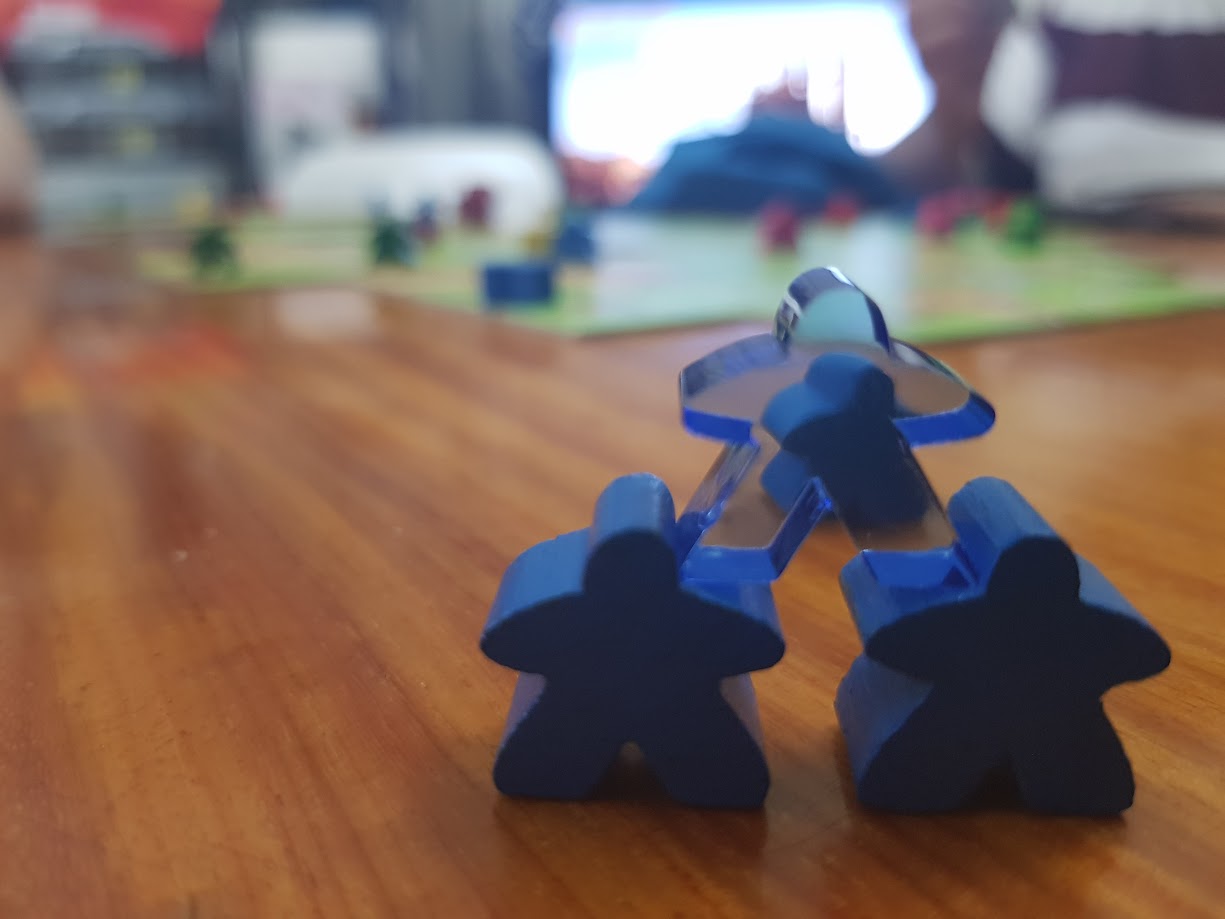
Carcassonne: The Phantom is a mini-expansion for the Carcassonne board game. It consists of six transparent phantom figures, each in a different color to match the player colors, with a purple phantom included for the gray player. Each player receives one phantom figure at the start of the game.
The phantom acts as an additional follower. On a player's turn, when placing a tile, the player may place both a regular follower and the phantom on the same or different features of that tile. The phantom follows the same rules as a standard follower and is returned to the player when the feature it occupies is scored.
This expansion adds a new layer of strategy by allowing players to place two followers in a single turn, increasing tactical options and competition for features on the board. The rules are simple and integrate seamlessly with the base game and other expansions.
Carcassonne: The Phantom operates as a precision upgrade within the modular tile-laying tradition, injecting a top-tier strategic dividend into a system already known for its tactical elasticity. The addition of a translucent phantom figure per player unlocks dual-placement turns, letting players contest features with a sharper edge and recalibrate their board presence mid-game. This micro-expansion’s high operational reliability is rooted in its seamless integration—no rules bloat, just a direct boost to tactical maneuverability. Its enduring shelf retention is no accident: after years of managing tables, I’ve seen few expansions that so consistently elevate the core experience without overstaying their welcome. The Phantom’s legacy status is well-earned, as it remains a go-to for groups seeking to deepen the mental friction of Carcassonne without complicating the teach.
From a logistics standpoint, the Phantom set is a model of minimalist efficiency. The translucent plastic meeples are visually distinct and easy to track, adding a subtle but effective table presence. Storage is a non-issue; the entire set tucks into any base box with room to spare, making it a practical addition for hosts who value quick setup and teardown. With a typical session clocking in at 45 minutes, this expansion fits comfortably as a main event for lighter nights or as a high-impact opener before heavier fare. There’s no component sprawl or fiddly prep—just a straightforward, table-ready enhancement that delivers immediate value.
Teaching the Phantom is a procedural affair: the core twist is simple, but the implications for competitive play are significant. Players must internalize that the phantom cannot act alone and is always paired with a standard follower, which can trip up newcomers if not emphasized. Once in play, the system rewards sharp spatial visualization and forward planning, as the dual-placement mechanic amplifies both opportunity and risk. The competitive interaction level keeps the room engaged—expect more table talk and calculated blocking as players jockey for control. For the host, it’s a low-maintenance teach that allows you to step back and watch the skill dividend unfold as players adapt to the expanded tactical landscape.
Category
Tactical & Strategy
My score
8
Our Total Plays
8
Last PLayed
31 Mar 15
🏛️ Legacy
Player Count
2-6
Playtime
45 mins
Proficiency Perks
Strategic Planning
Spatial Reasoning
Check Amazon
As an Amazon Associate, I earn from qualifying purchases.
← ALL BOARD GAMe REVIEWS