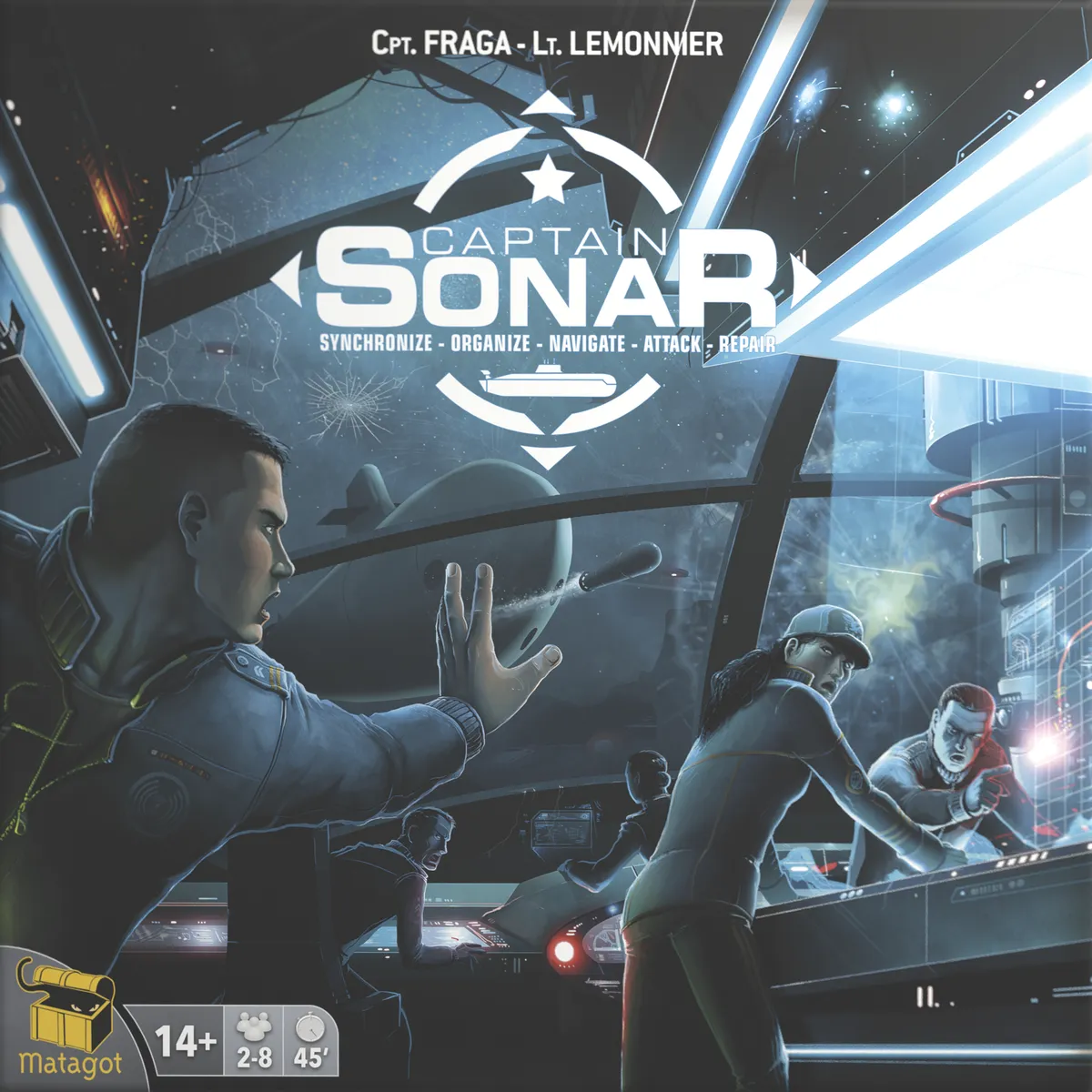
Captain Sonar
Official Description:
In Captain Sonar, players are split into two teams, each operating a state-of-the-art submarine. The objective is to locate and destroy the opposing team's submarine before they do the same. Each player takes on a specific role—Captain, First Mate, Engineer, or Radio Operator—each with unique responsibilities that contribute to the team's success.
The game is played in real time, requiring quick thinking, communication, and coordination among teammates. The Captain navigates the submarine, the First Mate prepares systems, the Engineer manages damage, and the Radio Operator tracks the enemy's movements. Success depends on the team's ability to work together efficiently under pressure.
Captain Sonar offers a tense and immersive experience, simulating the intensity of submarine warfare. The game supports up to eight players and can be played in either real-time or turn-based modes, making it adaptable to different group preferences and play styles.
Captain Sonar stands as a benchmark for real-time, team-based tactical play, drawing from the tradition of high-interaction, role-driven games. Its design thrives at full capacity, where eight players split into two crews, each managing a modern submarine with distinct roles and responsibilities. The game’s high operational reliability is rooted in its ability to generate sustained tension and engagement, even after years of shelf competition. Captain Sonar’s enduring presence in the collection is a direct result of its significant long-term shelf retention—few titles maintain this level of energy and replay value across so many sessions.
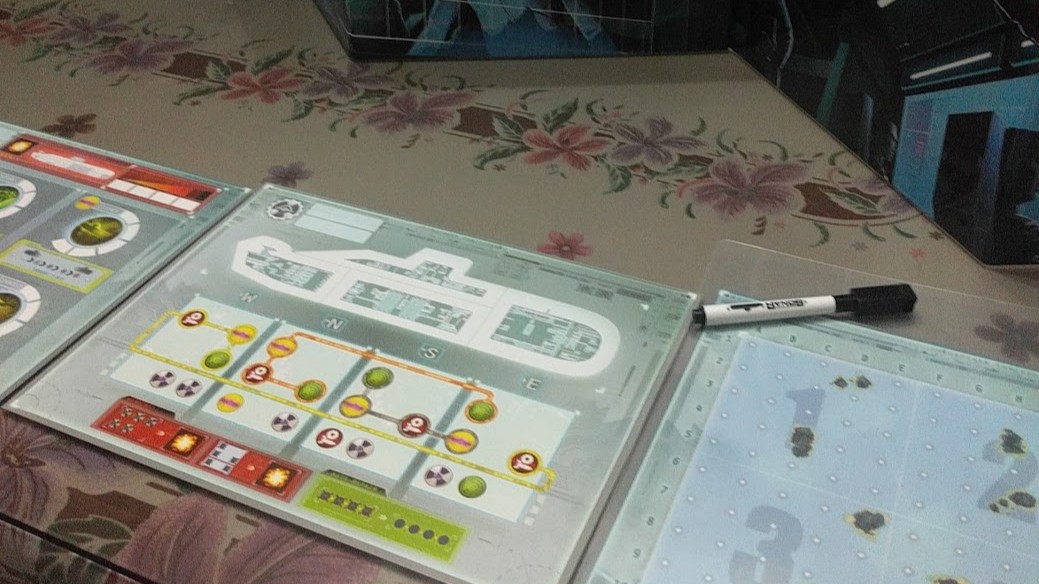
From a logistics standpoint, Captain Sonar is a main event title. The box is well-organized, housing dry-erase sheets and player screens, but the setup and teardown are non-trivial, especially with the need to monitor and occasionally replace markers. Sessions run about an hour, and the game demands a dedicated table and a focused group. It’s not a filler or a warm-up; this is the centerpiece of a game night, best reserved for groups ready to commit to a full, immersive experience. The physical system is robust, but hosts should plan for a short pre-game check to ensure all components are ready for high-pace play.
Teaching Captain Sonar is a procedural affair—expect a 20-minute rules briefing, especially for new crews. The system’s mental friction is high: players must coordinate, communicate, and react in real time, with each role demanding a different cognitive load. The game’s high-friction interaction keeps the room’s energy at a peak, but it also means the facilitator cannot step away; active oversight is required to clarify rules and manage station swaps, particularly at lower player counts. The skill dividend is substantial: players leave with sharper multitasking, communication, and rapid decision-making abilities, making Captain Sonar a perennial favorite for groups seeking a challenging, high-engagement team experience.
Category
Tactical & Strategy
My score
8
Our Total Plays
6
Last PLayed
24 Aug 19
🏛️ Legacy
Player Count
2-8
Playtime
60 mins
Proficiency Perks
Strategic Planning
Reflex & Speed
Check Amazon
As an Amazon Associate, I earn from qualifying purchases.
← ALL BOARD GAMe REVIEWS