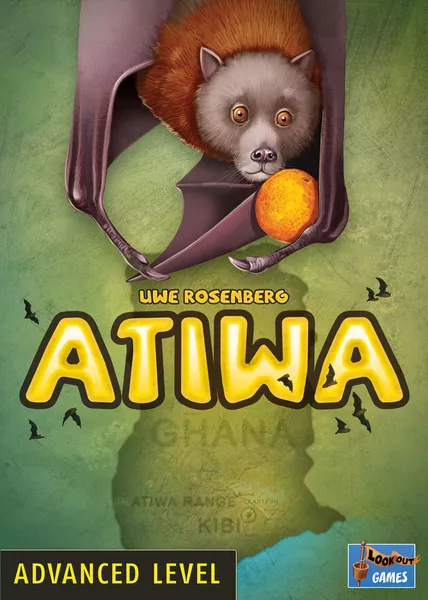
Atiwa
Official Description:
Atiwa is a game in which players develop a small community near the Atiwa Range in Ghana, West Africa. The game centers on the relationship between fruit bats and the local ecosystem, highlighting how these animals contribute to reforestation and sustainable agriculture. Players are tasked with creating housing for new families, managing resources, and sharing knowledge about the benefits of fruit bats to the environment.
Throughout the game, players must balance the needs of their growing community with the preservation of nature. Strategic decisions involve acquiring resources, expanding settlements, and ensuring the well-being of both people and wildlife. The gameplay emphasizes the importance of ecological awareness and the positive impact of harmonious coexistence between humans and animals.
Atiwa combines resource management and worker placement mechanics, challenging players to make thoughtful choices that benefit both their community and the environment. The game offers an educational perspective on environmental stewardship, inspired by real-world efforts to protect the Atiwa Range and its unique biodiversity.
Atiwa operates within the established tradition of Euro-style worker placement, but distinguishes itself by embedding ecological stewardship directly into its core mechanics. The system’s focus on fruit bat ecology and sustainable expansion demands a sharp audit of player foresight, as every action must account for both immediate gains and the long-term health of the community and environment. The bat cycle, a central mechanism, rewards those who can anticipate chain reactions and optimize resource flows, creating a high operational reliability that justifies its significant long-term shelf retention. For a collection that values games with enduring strategic dividends, Atiwa’s blend of environmental theme and mechanical depth secures its place as a proven classic—one that continues to earn table time even after years of competition.
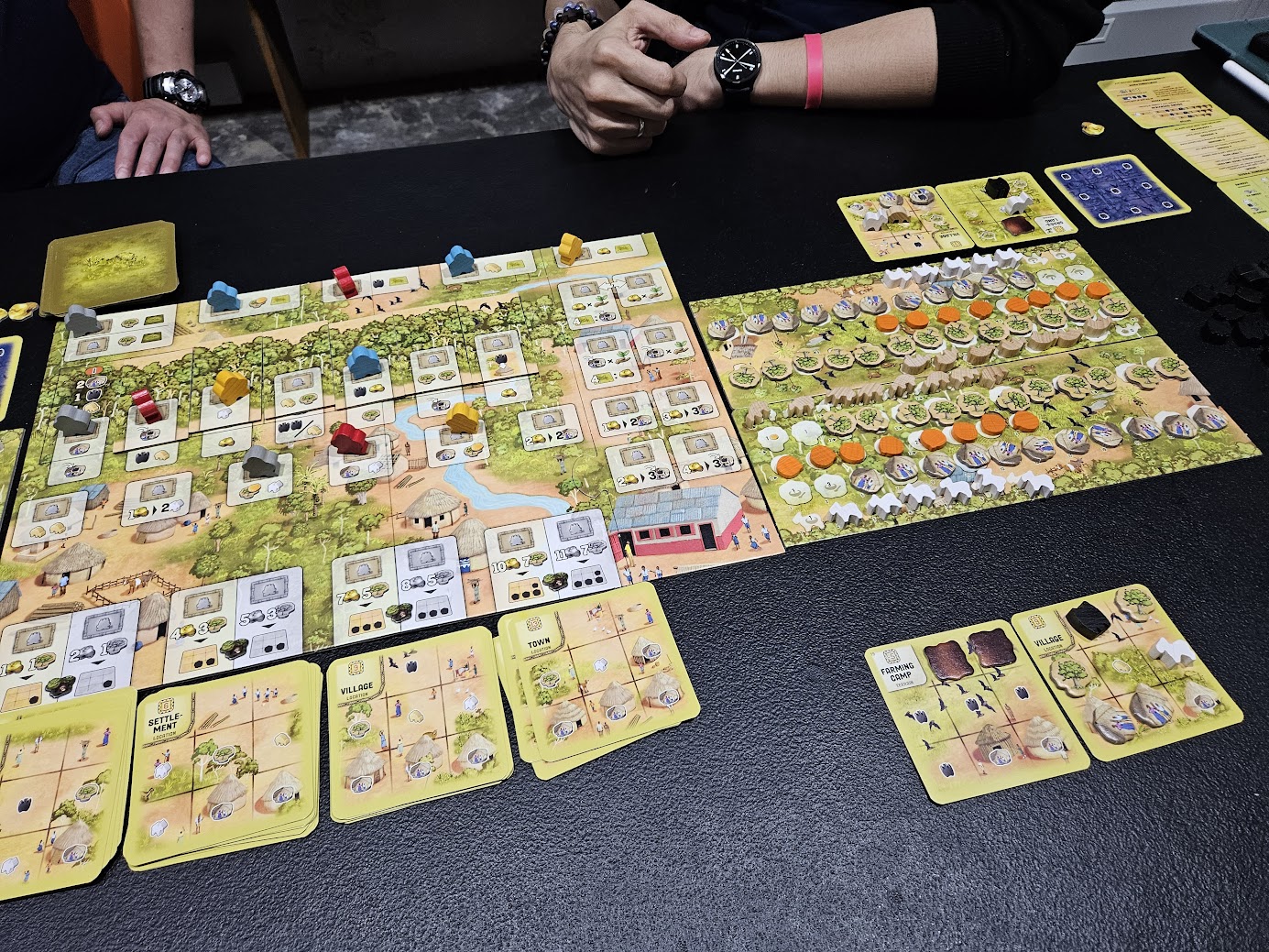
From a logistics standpoint, Atiwa’s standard box arrives without an insert, requiring organizers to rely on a healthy supply of baggies to keep the dense assortment of components in order. Setup and teardown are not trivial, and the game’s 120-minute session time positions it firmly as a main event for the evening rather than a filler. While the component management is manageable for experienced hosts, it’s not a system you’ll want to deploy on a whim; plan for a dedicated slot and ensure your storage solution is up to the task. The physical footprint and session length make it best suited for groups who appreciate a focused, immersive experience.
Teaching Atiwa is a technical affair—expect to lead the first playthrough, as the interlocking systems and competitive tension require careful explanation. The game’s design puts a premium on mental friction, challenging players to visualize spatial relationships and plan several turns ahead. The competitive structure keeps the table engaged, with indirect interaction and blocking that maintain a steady current of energy in the room. Players leave with a tangible skill dividend: a deeper appreciation for resource optimization and the cascading effects of their decisions, both in-game and in the broader context of environmental stewardship. This is a system that rewards repeat plays and thoughtful hosts, offering both challenge and educational value in equal measure.
Category
Tactical & Strategy
My score
8
Our Total Plays
6
Last PLayed
07 Sep 24
🏛️ Legacy
Player Count
1-4
Playtime
120 mins
Proficiency Perks
Strategic Planning
Spatial Reasoning
Check Amazon
As an Amazon Associate, I earn from qualifying purchases.
← ALL BOARD GAMe REVIEWS