Caverna: The Cave Farmers
Official Description:
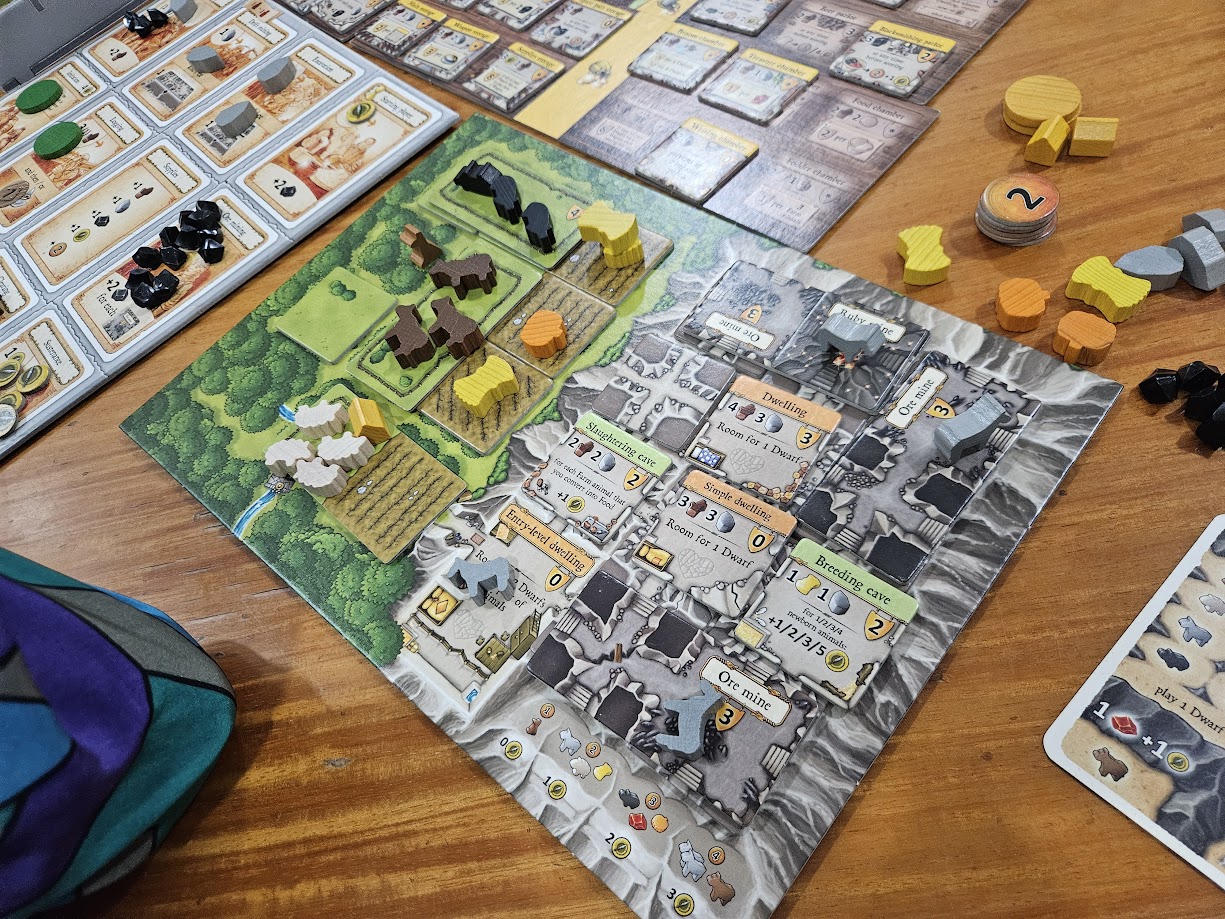
Caverna: The Cave Farmers is a worker-placement game in which players take on the roles of dwarven families living in a small cave in the mountains. Each player starts with a couple of dwarves and a home board, and over the course of the game, they expand their living space by excavating rock, furnishing caverns, and developing the surrounding forest. The game emphasizes resource management, as players must balance mining, farming, and animal husbandry to grow their families and improve their homesteads.
Throughout the game, players use their workers to take actions such as gathering resources, building rooms, and embarking on expeditions. The choices made each round allow for a variety of strategies, from focusing on agriculture and livestock to delving deeper into the mountain for valuable minerals. The game offers a high degree of freedom, enabling players to customize their cave dwellings and adapt their approach based on available actions and competition from other players.
Caverna is designed for 1 to 7 players and features a modular setup that enhances replayability. The game concludes after a set number of rounds, with players scoring points for their developed cave, accumulated resources, and the prosperity of their dwarven family. The player with the most points is declared the winner, having built the most successful and balanced homestead.
Caverna: The Cave Farmers stands as a direct evolution of the classic Euro-style worker-placement engine, channeling the dense, decision-heavy DNA of its predecessor while layering in a cave-farming motif that sharpens the mental friction. The system’s competitive edge is rooted in a sprawling action selection grid, where every placement is a calculated investment in long-term prosperity. The modular setup and sheer breadth of viable strategies ensure that each session remains fresh, rewarding those who can audit the board state and pivot their plans. Its significant long-term shelf retention is no accident—after years of managing tables, I can confirm that Caverna’s ability to consistently deliver a top-tier strategic dividend keeps it in regular rotation for groups seeking a deep, replayable challenge.
From a logistics standpoint, Caverna is unapologetically high-effort. The box is dense, packed with a formidable count of wooden components, and demands a substantial table footprint—this is not a title you slot in between lighter fare. Setup and teardown are projects in themselves, and the session length (often pushing three and a half hours) cements its role as the main event of any gathering. For hosts, this means planning ahead: allocate a dedicated block of time, clear the largest table, and expect to be managing trays and tokens throughout. The payoff is a tactile, immersive experience, but only for groups ready to commit to the full arc.
Teaching Caverna is a technical exercise best handled by a veteran lead. The ruleset is layered, and the sheer volume of available actions can overwhelm new players without a structured walkthrough. However, the system rewards those who study the available cavern options during downtime, allowing the table to maintain momentum and minimize decision stalls. The competitive interaction is indirect but ever-present, keeping the room focused and engaged as players monitor each other’s expansions and resource pools. The core skill dividend here is a sharpened sense of spatial visualization and adaptive planning—players leave the table with a tangible upgrade to their resource optimization instincts and a clear appreciation for the depth of modern Euro design.
Category
Tactical & Strategy
My score
10
Our Total Plays
25
Last PLayed
11 Jul 25
🏛️ Legacy
Player Count
1-7
Playtime
210 mins
Proficiency Perks
Strategic Planning
Spatial Reasoning
👑 PREMIUM
Play on BGA
Check Amazon
As an Amazon Associate, I earn from qualifying purchases.
← ALL BOARD GAMe REVIEWS


