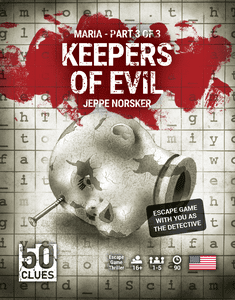
50 Clues: Keepers of Evil
Official Description:
50 Clues: Keepers of Evil is an immersive escape room game designed for adults, offering a dark and mysterious experience supported by digital elements. As the third part of the Maria trilogy, the game continues the narrative established in the previous installments, challenging players to combine objects, solve puzzles, and decipher codes to progress through the story.
Players are drawn into a suspenseful and atmospheric environment where critical thinking and teamwork are essential. The game is structured to be played at home, providing the excitement and challenge of an escape room without the need to visit a physical location.
Throughout the experience, players must unravel complex mysteries and make decisions that impact the outcome of the story. The integration of digital support enhances the gameplay, ensuring a seamless and engaging adventure from start to finish.
As the final chapter in the Maria trilogy, 50 Clues: Keepers of Evil attempts to deliver a climactic narrative but ultimately lands with a muted impact. The game’s structure leans heavily on its predecessors, continuing the dark, adult-themed storyline with a focus on code-breaking and object combination. However, after years of managing tables and observing player engagement, this installment’s inconsistent puzzle logic and unsatisfying narrative resolution have led to a significant drop in long-term shelf retention. Its current value to a veteran curator is primarily archival—having been solved, it now serves more as a reference point for series completionists than as a repeatable experience or a reliable table draw.
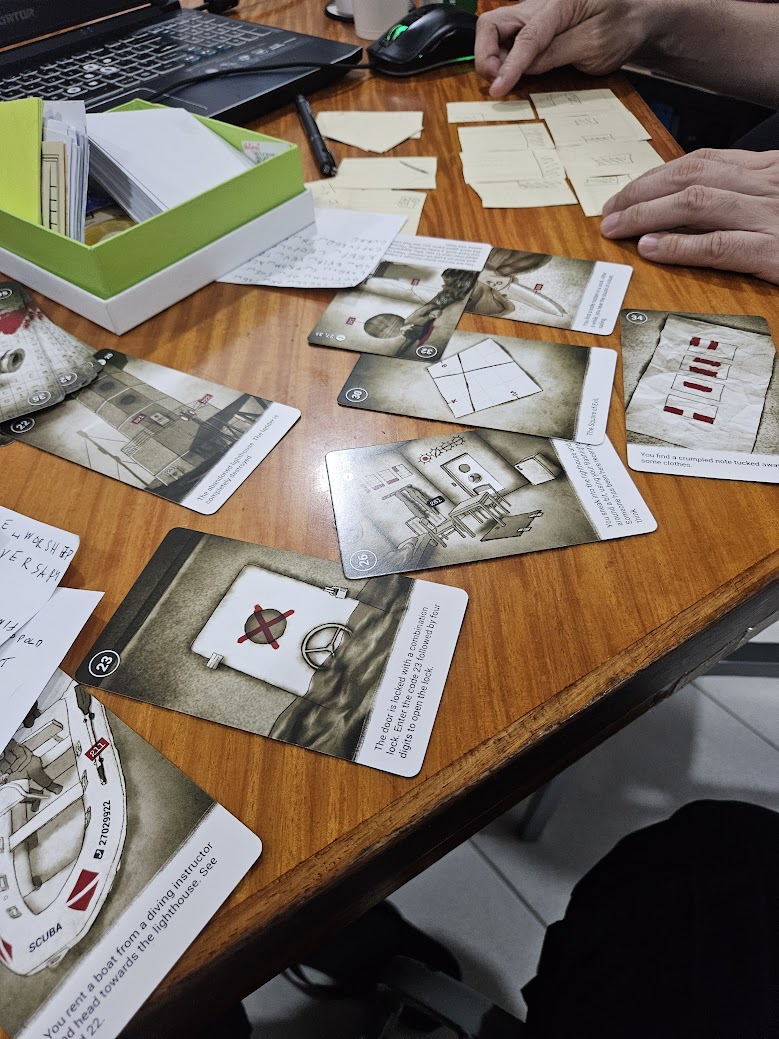
Physically, the game is streamlined for minimal setup: a slim box of cards and a mandatory web-based code interface. This makes it easy to deploy for a single session, with the entire experience fitting comfortably into a 90-minute window. The digital component is non-negotiable, so stable internet access is a prerequisite. In practical terms, this title is best positioned as a one-off main event for a group interested in narrative escape experiences, but its lack of replayability and the underwhelming finale mean it’s unlikely to see repeat table time or fill gaps between heavier games.
From a teaching perspective, the rules are straightforward—most groups will be comfortable by the second puzzle, allowing the host to step back and let the collaborative process unfold. The system’s light mental friction means players are rarely stumped by the mechanics, but the inconsistent logic of the puzzles can lead to frustration rather than satisfaction. The main skill dividend here is group communication and basic deduction, but the uneven challenge curve and low narrative payoff tend to dampen the room’s energy, making it a less compelling choice for hosts seeking a memorable, high-engagement session.
Category
Thematic & Narrative
My score
5
Our Total Plays
1
Last PLayed
30 Apr 25
🔍 Solved
Player Count
1-5
Playtime
90 mins
Proficiency Perks
Systems & Logic
Check Amazon
As an Amazon Associate, I earn from qualifying purchases.