Tabletop
Which Legendary Deck Building Game Should You Buy?
Upper Deck’s Legendary line spans everything from superhero team-ups to cutthroat Westeros politics, and choosing the wrong core box can stall your collection before it starts. We break down the major standalone Legendary releases—including Marvel’s new Second Edition and DC’s debut—so you know exactly which box belongs on your table.
As much as we got started with the Legendary games through the more difficult Legendary Encounters line, we quickly fell in love with the original Marvel experience. It’s a largely cooperative system that has the players needing to work together to resolve the core threat, but there’s still a chance to have a winner based on whoever scores the most victory points. Plus, who can fault a card game that celebrates the diverse cast of characters of the Marvel Universe?
But there’s more to the main Legendary line than the Marvel line. This game system has been applied to different franchises in surprisingly different ways. Each Legendary core set also sets up a different feeling and experience that tries to capture the essence of the franchise it’s celebrating. And this article aims to walk you through the different entry points depending on which franchise strikes your fancy.
Just note, I’m only going through the Legendary games, which are still different from the Legendary Encounters games, which are related but still quite different. I’ll see when I can go back to that line of games in a future post.
Originally released in 2012, Legendary: A Marvel Deck Building Game is where the Devin Low deck-building legacy really gets cemented. It sets up the core system where players face a new threat from the Villain deck each turn and need to find ways to fight any villains and henchmen in the city while also trying to recruit strong heroes to their cause. The unique combination of a Mastermind and Scheme for each game not only allows players to celebrate different classic comic book stories, but also provides greater replayability.
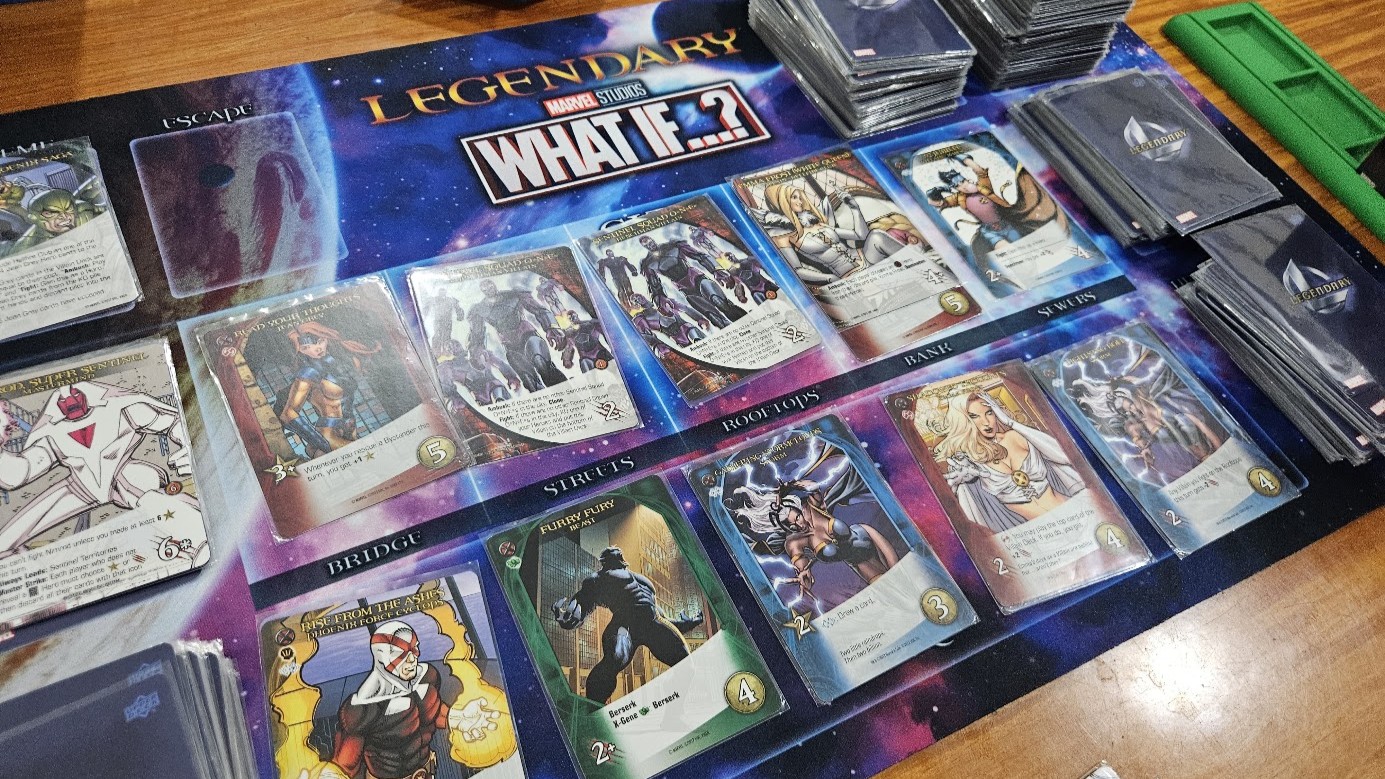
It’s a great time to get into the game, with a new second edition getting released this year (our copy just arrived!) that updates a lot of the core heroes, masterminds, and villains to bring them to a greater degree of parity with the stronger characters released across the many, many expansions that have come out over the years. You can skip the original core box with its lack of card art diversity and dive into this superior experience. And it’s still compatible with all the Marvel expansions out there, so you’re not going to miss out on all the great game content out there.
Ever since we got into the Marvel Legendary game line, my partner and I have also recommended this game over most other deck-building games on the market. The most painful point of comparison is the DC Deck-Building Game by Cryptozoic, and it didn’t make as much narrative or mechanical sense to me. That has finally changed this year with the introduction of Legendary: A DC Deck Building Game. Our copy also just arrived this week, and I’ve only just finished sleeving the 500-card set.
While we haven’t played this game yet, it’s easy to dive right in coming from the Marvel side, as most of the mechanics carry over. The main difference is a unique Hope and Fear system, which seems to be similar to the Light and Dark system in the Buffy edition. Similar to the Marvel core set, the game doesn’t introduce overly complicated mechanics beyond Hope and Fear and should be a good entry point for DC fans.
The Marvel set mostly had Avengers, and this DC set similarly mostly has members of the Justice League. There are a few other team faction icons that appear, including the Titan Tians, Birds of Prey, and Justice League Dark, but we’ll have to wait for expansions before we can assemble full teams to face those evil masterminds.
Last year introduced us to Legendary: Game of Thrones, which is the first game in the series that made a truly competitive version of the game with players representing the different Great Houses. They made some interesting mechanical changes to support this entire idea, including each player acting as a Mastermind threatening the other players, along with a novel reinterpretation of the classic City board from the original game.
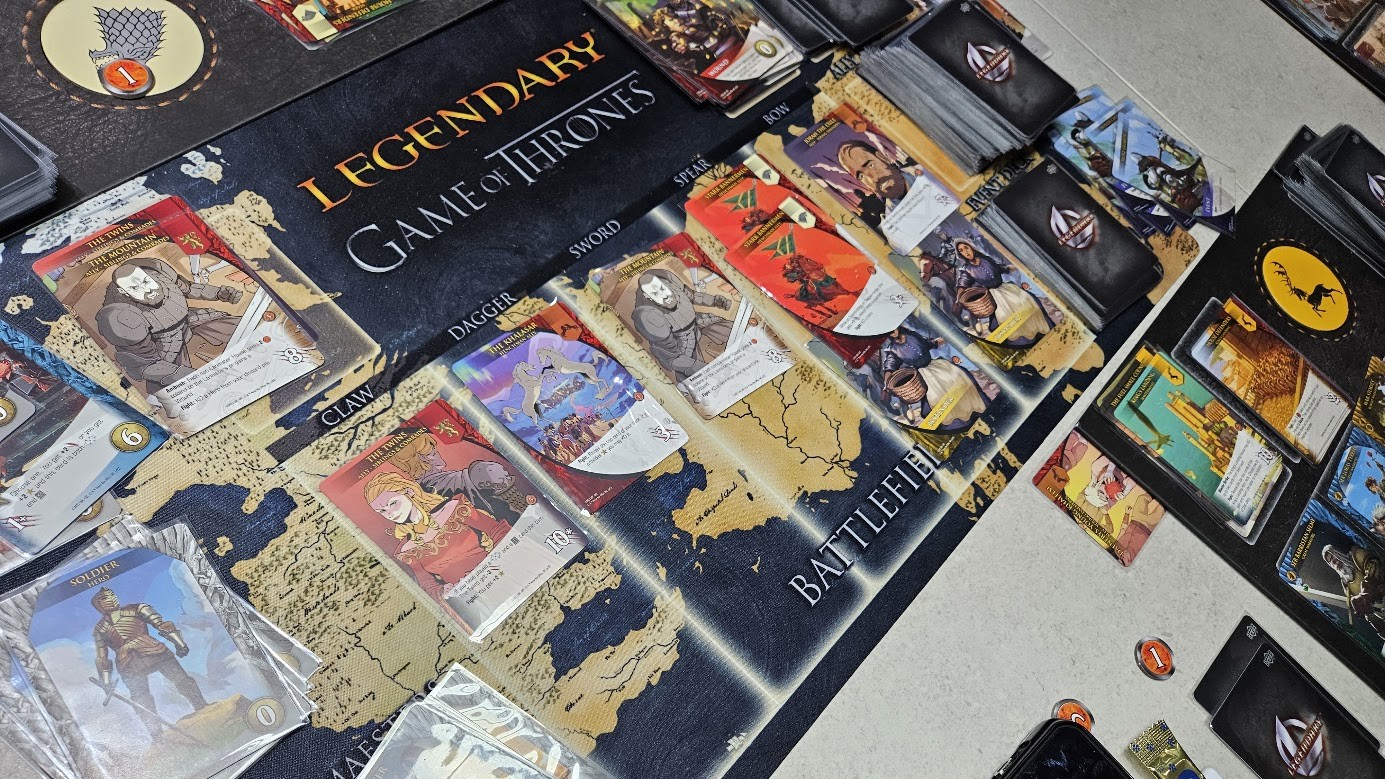
The base game allows players to act as House Baratheon, House Lannister, House Stark, or the Dothraki to start, but with luck we’ll get expansions that will introduce characters for the Night’s Watch to give Jon Snow some support.
Each house plays quite differently in a manner that’s quite flavorful. The principles of each house and even every character are translated into some pretty smart game mechanics in some rather novel ways. You’ll just need to get used to attacking the other players in order to win, as most Legendary games have players trying to avoid getting in each other's way while dealing with a more central set.
There are a number of Legendary releases designed around more niche franchises that are still pretty good, but also more dependent on the players being familiar with the IP.
This was a rather unexpected release for a cult classic movie that may not have as much relevance today. Even as a core set, it only has 400 cards and is sold in a box that Marvel has used for their larger expansions. All that just gives you a sense of the niche this game occupies and how it was designed to appeal to a very particular audience. That said, the card art is very mixed (leaning towards the not-great side), which takes away from the experience.

This set came out a year later and is an amazing celebration of the TV series. It’s another 500-card core set, and they smartly used stills from the TV show as card art instead of making their own (see above). And as mentioned in the DC portion of this article, it first brought in a Light and Dark system that affected how strong heroes or villains end up being. The Mastermind is now a Big Bad, but they still have Schemes that players need to thwart. I generally like this set, but I also recognize it’s one of the hardest ones on this side of the Encounters fence.
This set kicked off this unusual side of the Legendary universe that celebrates the various James Bond movies. This core box covers 4 different movies across different Bond eras. It also uses stills from the movies for card art and has a somewhat complex Villain deck-building process that feels similar to the Firefly game. This one feels a little niche in the sense that it doesn’t feel like it could mix well with other Legendary games. Just mixing characters outside their original movie already feels weird.