Wok and Roll
Official Description:
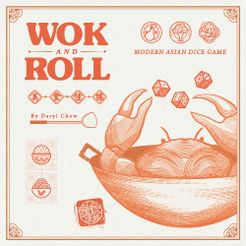
Wok and Roll is a modern Asian dice game in which players compete to develop menus and become the best zi char (a Singaporean term for a Chinese restaurant) eatery in town. Each player takes on the role of a chef, rolling dice to gather ingredients and complete various Asian dishes featured on their menu. The game combines elements of strategy and luck, as players must decide how best to use their dice rolls to maximize their menu options and outpace their competitors.
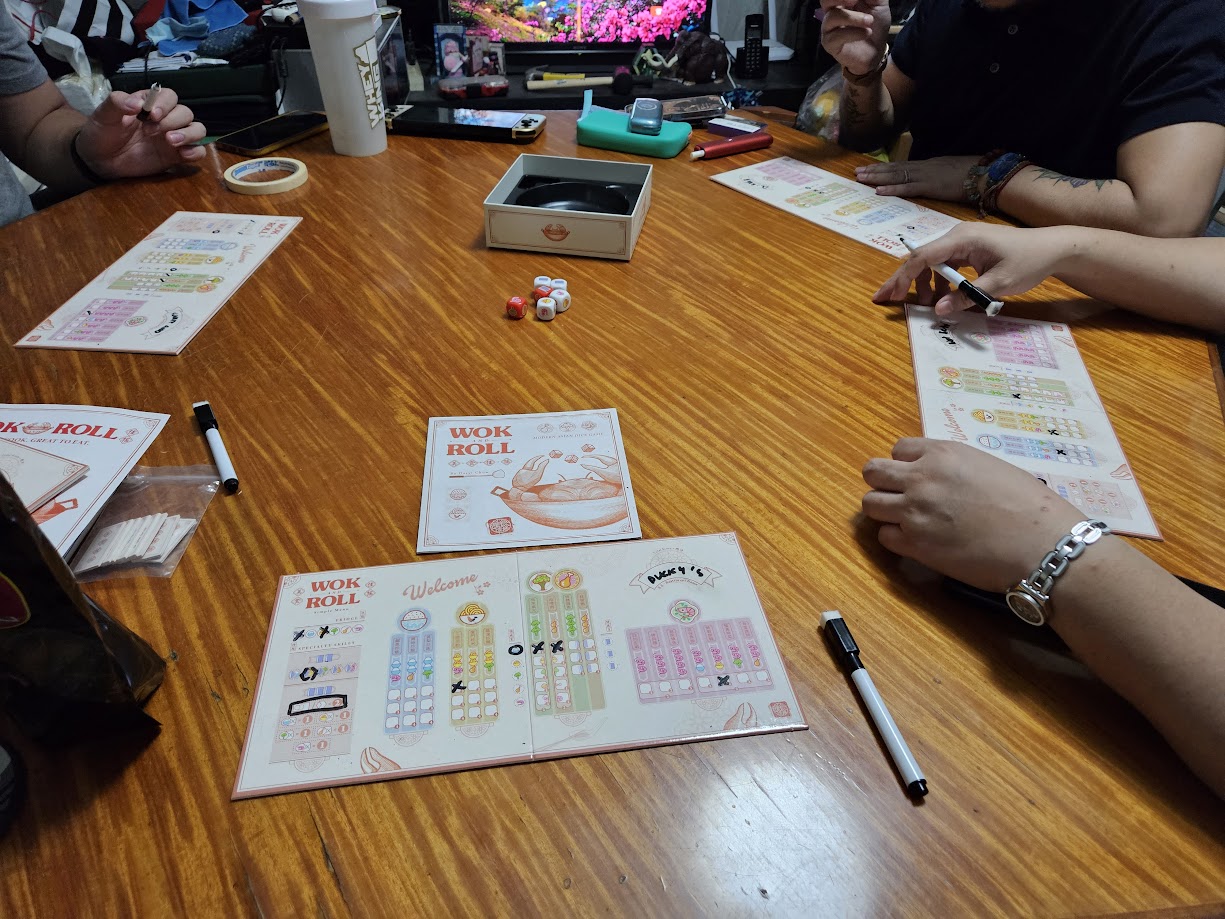
On each turn, the active player rolls six dice, which depict different ingredients needed to complete dishes. The active player can reroll some or all of the dice up to two times, aiming to collect the right combination of ingredients. Other players may also use the results of the dice to work on their own menus, ensuring that everyone remains engaged throughout the game.
Wok and Roll challenges players to efficiently manage their resources, plan ahead, and adapt to changing circumstances. The game is designed to be accessible yet strategic, offering a unique culinary experience that captures the fast-paced and competitive nature of running a popular Asian restaurant.
Wok and Roll operates within the modern filler tradition, delivering a culinary dice puzzle that’s both accessible and layered. Its procedural menu-building and reroll mechanics create a steady stream of tactical decisions, while the parallel play structure keeps everyone invested between turns. Over years of managing tables, I’ve seen few casual dice games maintain this level of consistent mechanical performance—its shelf presence is justified by the way it rewards repeat play without overstaying its welcome. The game’s legacy status is earned: it’s a reliable fallback for groups seeking a focused, interactive filler that doesn’t dissolve into autopilot.
Physically, Wok and Roll is engineered for efficiency. The compact box, integrated dice tray, and well-organized storage for cards and markers mean setup and teardown are minimal—ideal for hosts who value quick transitions. With a 45-minute session time, it fits neatly as a substantial opener or a satisfying closer on a multi-game night. The components are robust enough for repeated use, and the footprint is modest, so it won’t dominate the table or require elaborate prep. This is a system that respects your time and space, making it a practical addition to any event rotation.
From a teaching perspective, the game’s procedural rules demand a clear initial walkthrough—especially when clarifying board zones and the multiple scoring tracks. Once underway, the parallel play structure allows the facilitator to step back, as players can reference their own menus and progress independently. The core skill dividend here is resource sequencing and adaptive planning; players must weigh immediate gains against long-term menu strategies, with the reroll mechanic offering meaningful agency. The indirect interaction keeps the room focused but relaxed, making it suitable for groups that prefer thoughtful engagement over direct confrontation.
Category
Casual & Filler
My score
7
Our Total Plays
3
Last PLayed
08 Jun 23
🏛️ Legacy
Player Count
1-5
Playtime
45 mins
Proficiency Perks
Strategic Planning
Check Amazon
As an Amazon Associate, I earn from qualifying purchases.