
Troika
Official Description:
In Troika, you are an adventurer who has dreamed of making a fortune, so you have traveled to a distant star along with other wanderers. Unfortunately, your spaceship has run out of fuel, and you are now stranded. To escape, you must collect the right combination of gems to refuel your ship and return home.
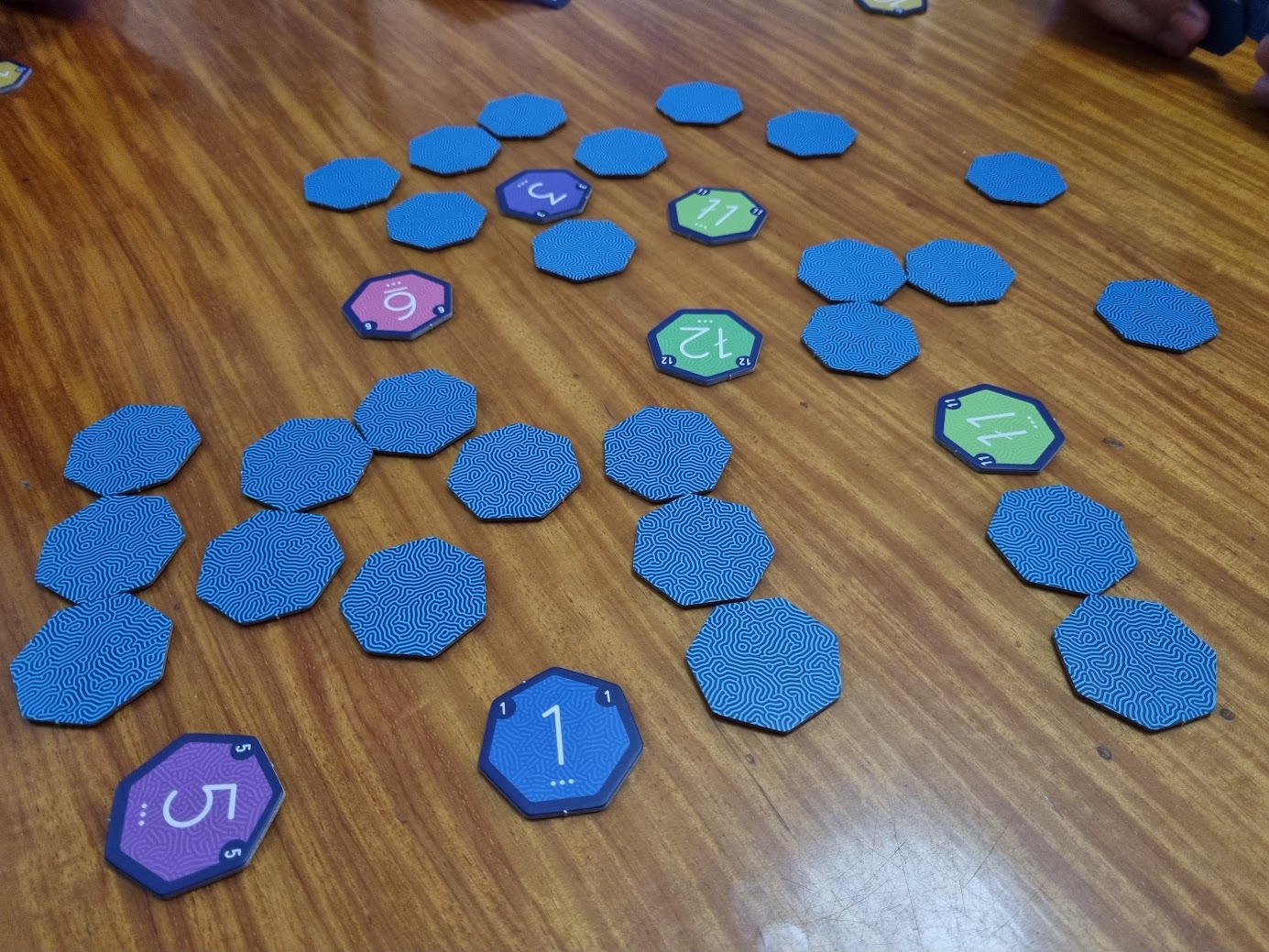
During the game, players draft tiles representing gems, aiming to create specific sets that will allow them to escape. However, while collecting gems for fuel, players are also trying to amass valuable sets to achieve the highest score. The challenge lies in balancing the need to escape with the desire to collect the most valuable combinations.
Troika is a game of risk management and set collection, where only those who successfully refuel their ship can win. If you fail to escape, your valuable gems are worthless. The game combines strategic drafting with a push-your-luck element, making each decision critical to both survival and victory.
Troika sits comfortably within the tradition of compact, quick-play set-collectors, drawing on the familiar tension of racing for specific combinations—in this case, elusive number triplets that double as both your ticket home and your scoring engine. Its enduring presence on shelves owes much to its solid table-time value: the game’s mechanical loop is approachable, and the risk-reward structure keeps even seasoned groups engaged for a round or two between heavier fare. As a veteran curator, I see its legacy status as a testament to its reliability as a secondary option—Troika rarely disappoints when called upon to fill a gap, even if it doesn’t anchor an evening.
Physically, Troika is a model of efficiency. The standard Oink box houses geometric tiles that favor clarity over embellishment, making setup and teardown nearly instantaneous. With a 20-minute session time and minimal table footprint, it’s an ideal candidate for those transitional moments—post-dinner, pre-main event, or as a reset between longer games. The components are straightforward, and the game’s structure means you won’t be managing a sprawling tableau or fiddly bits; it’s a clean, functional experience that respects both your time and your table space.
From a teaching perspective, Troika is refreshingly light. The core rule—secure at least one qualifying triplet or score nothing—lands quickly, and most groups are comfortable by the second round. The competitive drafting injects just enough tension to keep players invested, but the mental friction is modest: the main skill dividend is in risk assessment and opportunistic set-building, rather than deep calculation. This keeps the energy lively and the mood relaxed, making it easy for a host to step away or run multiple tables without concern. For groups seeking a low-commitment, interactive filler that rewards quick thinking over long-term planning, Troika remains a dependable choice.
Category
Casual & Filler
My score
7
Our Total Plays
2
Last PLayed
19 Jun 22
🏛️ Legacy
Player Count
2-5
Playtime
20 mins
Proficiency Perks
Strategic Planning
Check Amazon
As an Amazon Associate, I earn from qualifying purchases.
← ALL BOARD GAMe REVIEWS