Tiny Epic Quest
Official Description:
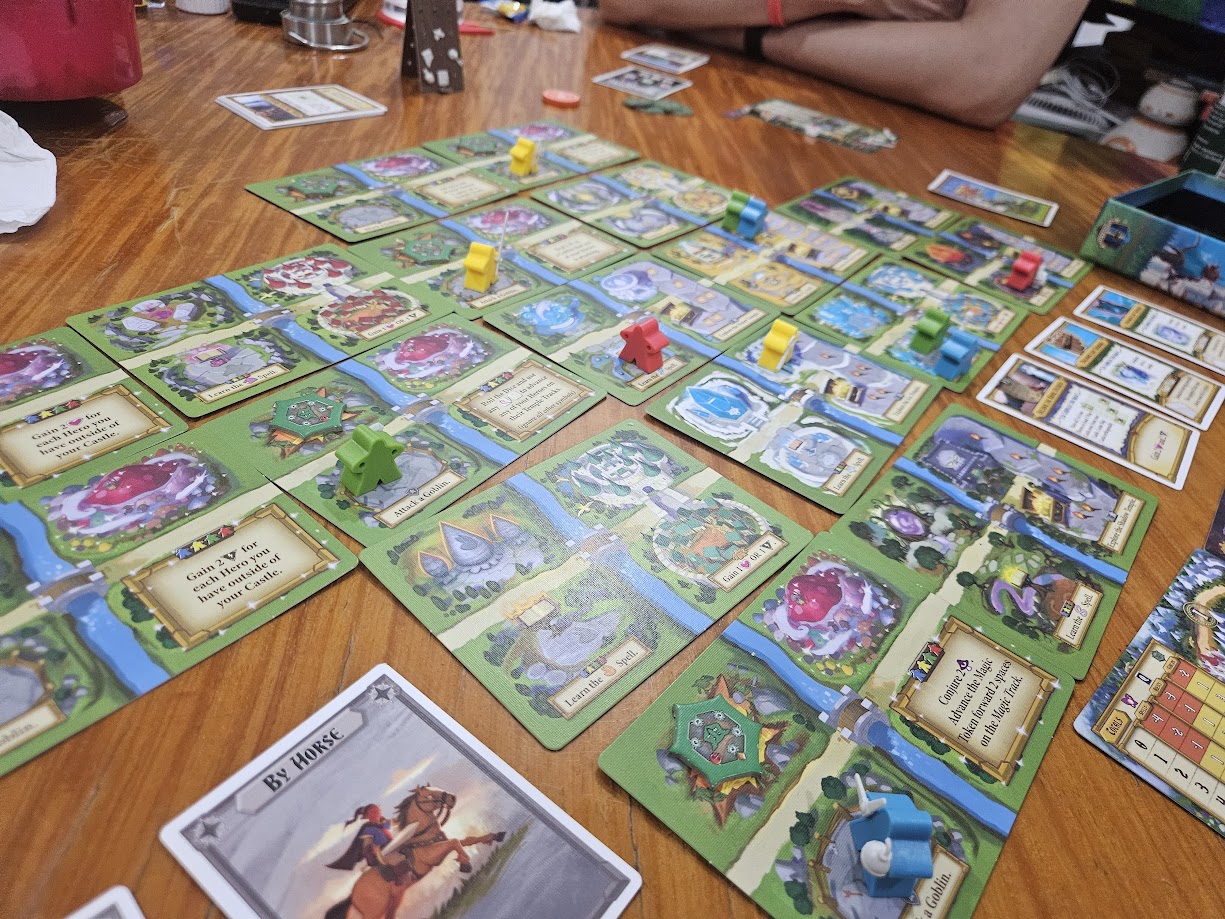
In Tiny Epic Quest, players embark on a sandbox adventure, each controlling a band of three elf heroes questing to save the world and the sacred mushroom folk from the intruding goblins. The game is set in a classic fantasy setting and features a modular map that changes with each play, providing a unique experience every time. Players will travel across the land, learn spells, complete quests, and acquire legendary items, all while managing their resources and facing various challenges.
The gameplay is divided into day and night phases. During the day, players move their heroes across the map using a unique movement system that allows for strategic planning and risk management. At night, players resolve adventures, fight goblins, explore temples, and attempt to complete quests. The game incorporates elements of push-your-luck and resource management, requiring players to balance risk and reward as they strive to achieve their objectives.
Victory is achieved by earning the most points through completing quests, learning spells, defeating goblins, and collecting legendary items. Tiny Epic Quest is designed for 1 to 4 players and offers a blend of adventure, strategy, and replayability in a compact package, making it accessible for both solo and group play.
Tiny Epic Quest delivers a concentrated adventure experience, channeling the spirit of classic fantasy questing into a modular card grid that changes every session. As a tactical descendant of sandbox adventure games, it stands out for its blend of push-your-luck dice mechanics and a movement system that demands forward planning across a shifting landscape. The debut of ITEMeeples—meeples that physically equip gear—adds a tactile layer to the strategic race for spells, goblin trophies, and legendary items. The game’s high operational reliability is evident in its ability to reward multitasking and risk management, making it a frequent table request among seasoned groups. Its current momentum is no accident: the system’s replayability and layered objectives keep it in active rotation, with significant long-term shelf retention for curators who value compact, high-yield designs.
From a logistics standpoint, Tiny Epic Quest is a masterclass in maximizing content per square inch. The box is densely packed, and the production quality is notable—plastic items snap onto meeples, and the modular map cards keep the table footprint modest despite the game’s ambitious scope. However, the abundance of tiny gear pieces demands disciplined storage and setup; losing a component can disrupt the experience. With a 60-minute session time and a setup that fits comfortably within a quarter-hour, it’s best positioned as a main event for smaller groups or a robust closer for a focused game night. The physical management is manageable but not trivial—expect to spend a few minutes post-game ensuring every piece is accounted for.
Teaching Tiny Epic Quest is a procedural affair, typically requiring a structured walkthrough of the day/night cycle and the three-pronged scoring system. The grid-based movement across map cards introduces a layer of mental friction, as players must visualize routes and optimize their actions under pressure. The competitive dynamic keeps the table engaged, with indirect blocking and racing for objectives fueling a steady energy in the room. Once the system clicks, the game largely runs itself, allowing the host to step back and observe as players navigate the interplay of risk, resource management, and tactical positioning. The skill dividend here is substantial: players sharpen their ability to juggle multiple objectives, adapt to shifting opportunities, and make calculated gambles—all within a tightly organized, travel-friendly package.
Category
Tactical & Strategy
My score
8
Our Total Plays
10
Last PLayed
20 Feb 26
🔥 In Rotation
Player Count
1-4
Playtime
60 mins
Proficiency Perks
Strategic Planning
Systems & Logic
Spatial Reasoning
Check Amazon
As an Amazon Associate, I earn from qualifying purchases.
← ALL BOARD GAMe REVIEWS


