Square One
Official Description:
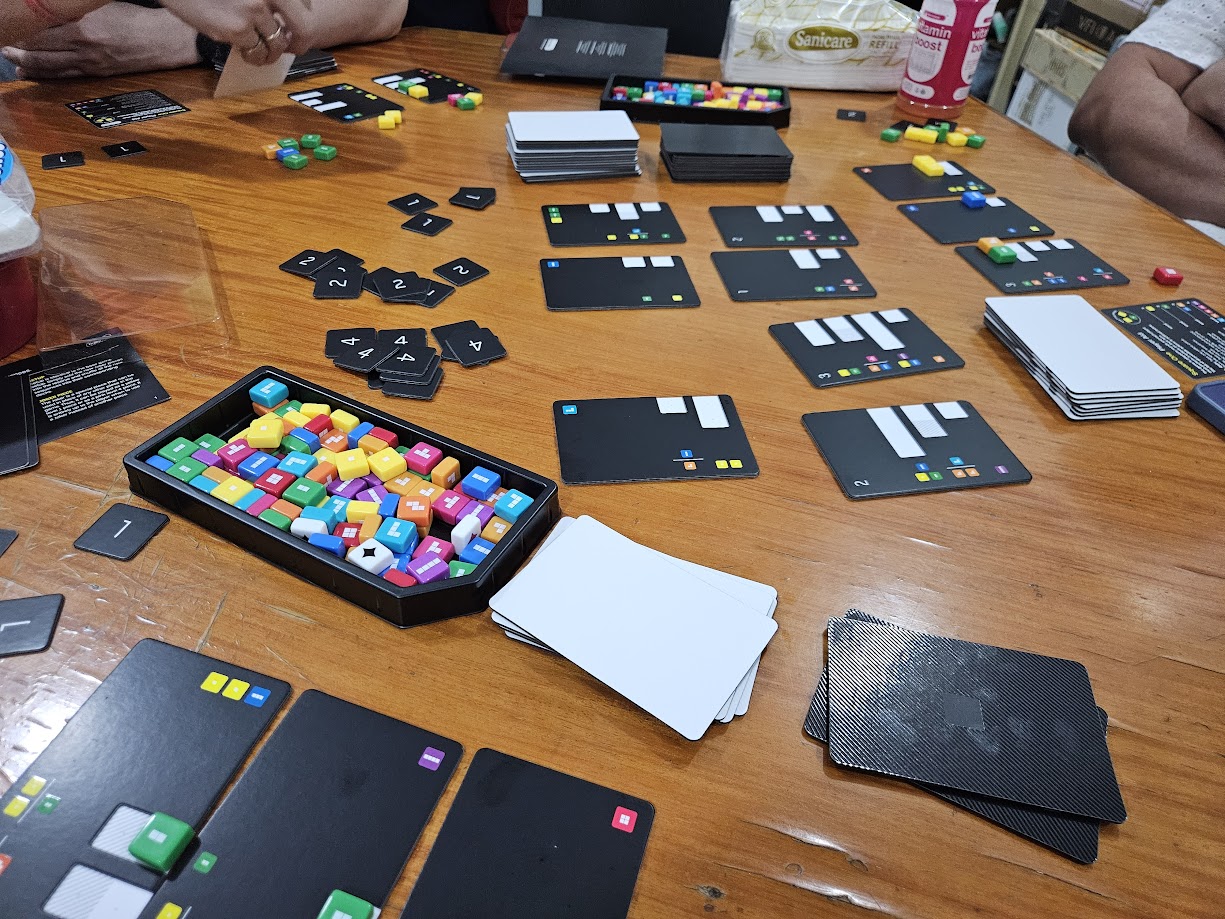
Square One is an engine-building strategy game that builds upon the foundation of its predecessor, Project L. The game features easy-to-learn yet challenging mechanics, offering high replayability for players. In Square One, players use colorful squares to complete sequences at the right moment, gaining new tiles and maximizing victory points.
The gameplay revolves around sequencing pieces onto tiles for optimal payouts. Players must carefully plan their actions, as learning how to play is straightforward with a set of clear actions laid out on a helpful player aid. The dual-layered boards and slotting tiles add a tactile and strategic element to the experience.
Square One is designed for 1-4 players and emphasizes both accessibility and depth. Its streamlined rules and engaging engine-building mechanics make it suitable for a wide range of players, from newcomers to experienced board gamers, ensuring each session is both strategic and rewarding.
Square One positions itself as a modern evolution within the engine-building family, shifting from the familiar polyomino logic of its predecessor to a more abstract, sequence-driven puzzle using uniform square tiles. The system’s core challenge lies in the precise sequencing of colored tiles for optimal payouts, demanding a sharper audit of spatial visualization than the original. For a collection in its early adoption phase, Square One offers consistent mechanical performance—its current value is in providing a fresh, reliable secondary option for groups seeking a new take on engine-building without abandoning the genre’s strategic dividend. For curators, its status as a recent addition means it’s still under evaluation for long-term shelf retention, but its approachable complexity and tactile engagement make it a strong candidate for regular rotation.
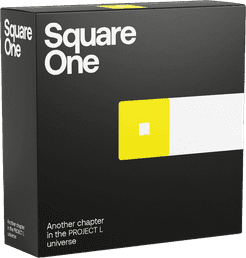
Physically, Square One arrives in a collector-style box with custom storage trays, ensuring that setup and teardown remain efficient despite the game’s component density. The uniformity of the square tiles streamlines both storage and play, and the dual-layered boards add a satisfying tactile element. With a typical session clocking in at around 50 minutes and setup that fits comfortably within a quarter-hour, it’s well-suited as a main event for a focused group or as a substantial anchor in a multi-game evening. The box’s organization supports quick deployment, but hosts should expect to spend a few minutes orienting new players to the tile system, especially if they’re transitioning from more traditional polyomino games.
From a teaching perspective, Square One’s ruleset is accessible enough that most players will be comfortable by the second round, but the underlying logic—especially the advanced spatial sequencing—requires a deliberate introduction. The parallel play structure keeps interaction indirect, so the room’s energy remains focused and contemplative rather than competitive. The primary skill dividend here is the mental friction generated by optimizing tile placement and sequencing, rewarding players who can visualize and plan several moves ahead. Once the initial teach is complete, the system is stable enough for the host to step back, allowing the table to self-manage while still delivering a satisfying strategic arc.
Category
Tactical & Strategy
My score
7
Our Total Plays
2
Last PLayed
02 Jan 26
🔥 In Rotation
Player Count
1-4
Playtime
50 mins
Proficiency Perks
Strategic Planning
Spatial Reasoning
Check Amazon
As an Amazon Associate, I earn from qualifying purchases.