
Splendor
Official Description:
Splendor is a game of chip-collecting and card development. Players are merchants of the Renaissance trying to buy gem mines, means of transportation, shops—all in order to acquire the most prestige points. If you are wealthy enough, you might even receive a visit from a noble at some point, which will further increase your prestige.
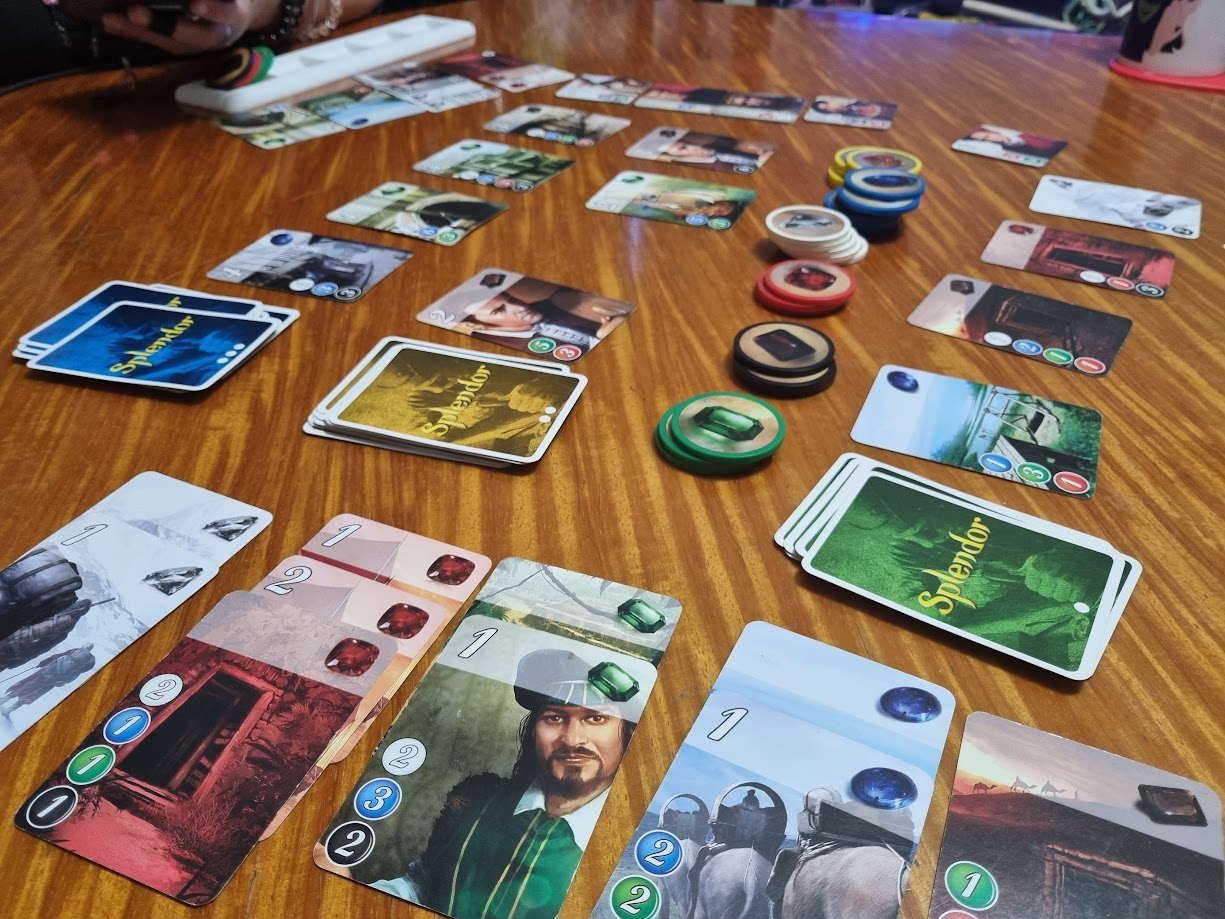
On your turn, you may (1) collect chips (gems), (2) buy and build a card, or (3) reserve one card. If you collect chips, you take either three different types of chips or two chips of the same type. If you buy a card, you pay its price in chips and add it to your play area. To reserve a card—if you want to make sure you get it, or if you want to keep others from getting it—you place it in front of you, face down, and draw a gold chip (joker), which acts as any gem.
All of the cards you buy increase your wealth as they give you a permanent gem bonus for future purchases; some also give you prestige points. The first player to reach 15 prestige points wins the game.
Splendor operates as a Renaissance-era engine-builder, leveraging a tactile chip system that delivers a satisfying physical feedback loop for both new and returning players. The game’s lineage is rooted in streamlined resource conversion, with each turn presenting a clear, single-action structure that keeps the pace brisk and the mental friction manageable. Nobles function as passive milestones rather than active objectives, reinforcing the game’s focus on incremental progress over direct confrontation. Its high operational reliability is evident in its continued presence on active tables, even as newer, flashier re-themes circulate. For a curator, Splendor’s significant long-term shelf retention is a direct result of its approachable depth and the enduring appeal of its core mechanics.
From a logistics standpoint, Splendor’s box is notorious for its inefficient insert, especially once expansions enter the mix. The base game’s components—primarily cards and hefty chips—are robust, but the storage solution is subpar, often prompting a move to a travel case or custom organizer. Setup and teardown are straightforward, fitting comfortably within a 15-minute prep window, making it a reliable choice for filling a 30-minute session slot. It’s best deployed as a main event for lighter nights or as a dependable anchor between heavier games, though its footprint demands a bit more shelf space than its playtime might suggest.
Teaching Splendor is a procedural affair: expect a 20-minute rules overview, with most players comfortable by the end of the first round. The one-action-per-turn limit and the passive nature of noble visits are key clarifications that prevent confusion. The parallel play structure means you can step away from the table without derailing the session, as player turns rarely interfere with one another. The primary skill dividend is in resource forecasting and incremental planning, rewarding those who can map out efficient acquisition paths. Interaction is minimal, so the room’s energy remains focused and contemplative rather than competitive, making it ideal for groups that prefer a quieter, thinky experience.
Category
Tactical & Strategy
My score
9
Our Total Plays
86
Last PLayed
27 Apr 25
🏛️ Legacy
Player Count
2-4
Playtime
30 mins
Proficiency Perks
Strategic Planning
👑 PREMIUM
Play on BGA
Check Amazon
As an Amazon Associate, I earn from qualifying purchases.
← ALL BOARD GAMe REVIEWS