
Smash Up
Official Description:
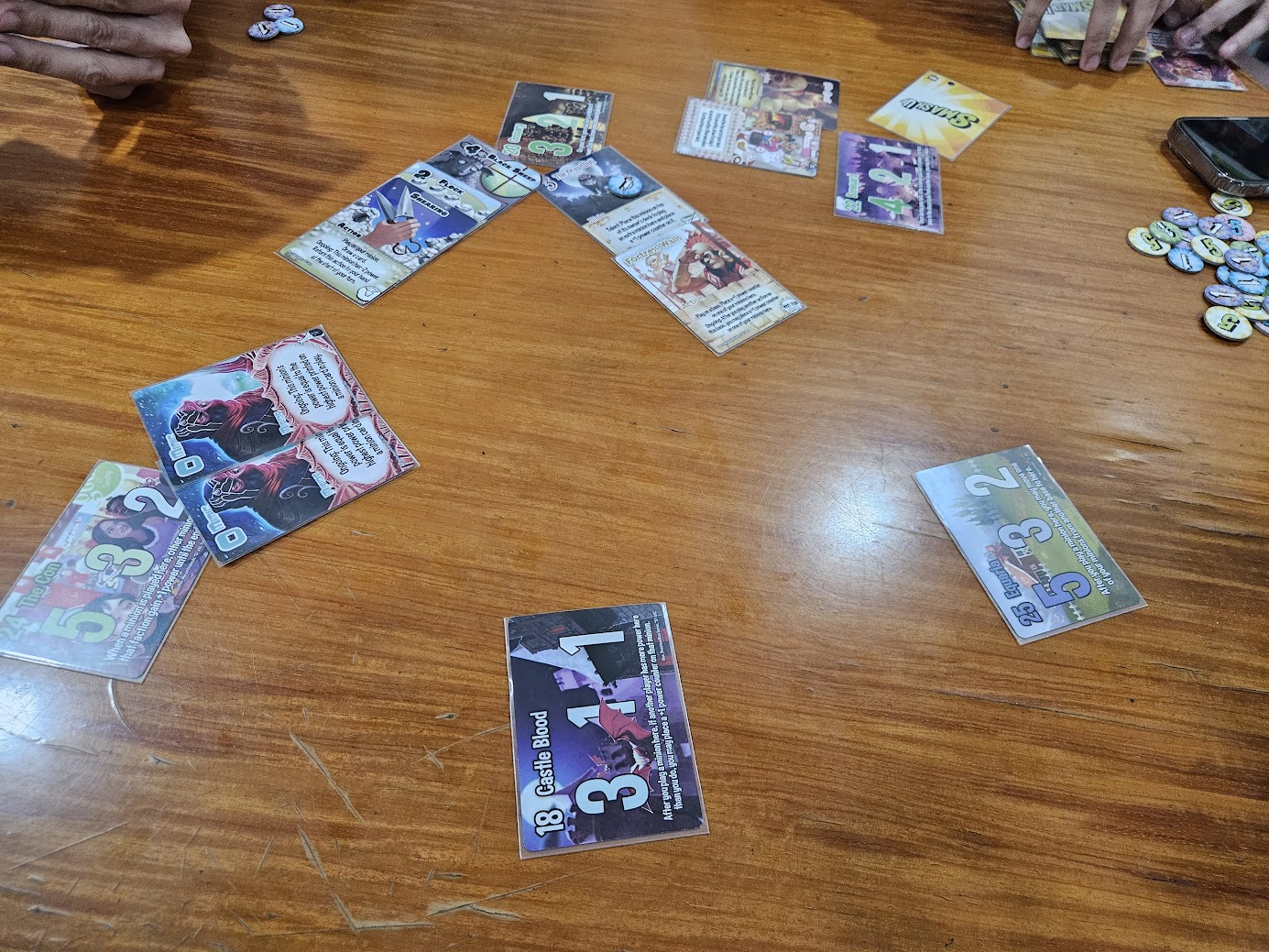
Smash Up is a "shufflebuilding" card game in which players take the 20-card decks of two different factions and shuffle them together to form a unique 40-card deck. Each faction, such as pirates, ninjas, robots, zombies, and more, has its own distinct abilities and play style. Players use their combined decks to compete for control of various bases, deploying minions and playing actions to outmaneuver their opponents.
The objective of the game is to score points by breaking bases, which is achieved by having the most power at a base when its total power threshold is reached. Each base provides different point rewards and may have special effects that influence gameplay. Players must strategically use their faction abilities and cards to maximize their influence on the bases and disrupt their opponents' plans.
Smash Up is designed for 2 to 4 players and offers high replayability due to the numerous faction combinations and interactions. The game emphasizes tactical decision-making, adaptability, and creative use of card effects, making each session unique and engaging.
Smash Up’s shufflebuilding engine—pairing two distinct 20-card faction decks into a single hybrid—delivers a top-tier strategic dividend for groups seeking variety without sacrificing tactical depth. The modular faction system, with each deck offering unique mechanics, keeps the game fresh even after repeated plays. This high operational reliability is why it remains a frequent table pick among veteran groups. Its roots in competitive, card-driven skirmish design are clear: every session is a contest of timing, disruption, and creative combo-building, with the mental friction coming from adapting to unpredictable faction synergies and counterplays. The game’s significant long-term shelf retention is a direct result of this replayability and the constant demand for “just one more round” among experienced players.
From a logistics perspective, Smash Up’s compact box is a practical asset—base game and expansions slot together efficiently, and setup is straightforward: select factions, shuffle, and distribute bases. The 45-minute session time is accurate for most groups, though four-player games can stretch longer as combos and base effects stack up. It’s best positioned as a main event for a mid-length game night or as a reliable anchor between heavier titles. The physical footprint is modest, making it easy to deploy even in tighter spaces, and the card-only component list means teardown is quick. For hosts, the game’s flexibility and storage efficiency are strong selling points, especially when managing multiple tables or rotating in new expansions.
Teaching Smash Up is a procedural affair—expect a 20-minute rules brief, especially when clarifying how faction abilities interact and how mixed decks can produce unexpected card effects. The system rewards players who can quickly parse new combos and adapt their tactics, offering a clear skill dividend in terms of tactical flexibility and reading the table’s shifting power dynamics. High friction is built into the DNA: direct conflict over bases and the constant threat of disruption keep the room’s energy high and engagement levels up. Once the first round is underway, a veteran can step back, but new players will benefit from ongoing reminders about faction-specific triggers and timing nuances. The game’s interactive tempo ensures that even quieter tables stay lively, with plenty of opportunities for dramatic swings and clever plays.
Category
Tactical & Strategy
My score
8
Our Total Plays
18
Last PLayed
24 Apr 26
🔥 In Rotation
Player Count
2-4
Playtime
45 mins
Proficiency Perks
Strategic Planning
Check Amazon
As an Amazon Associate, I earn from qualifying purchases.
← ALL BOARD GAMe REVIEWS


