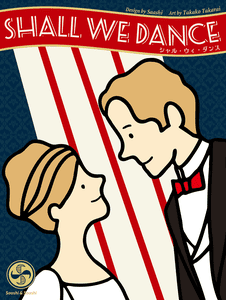
Shall We Dance
Official Description:
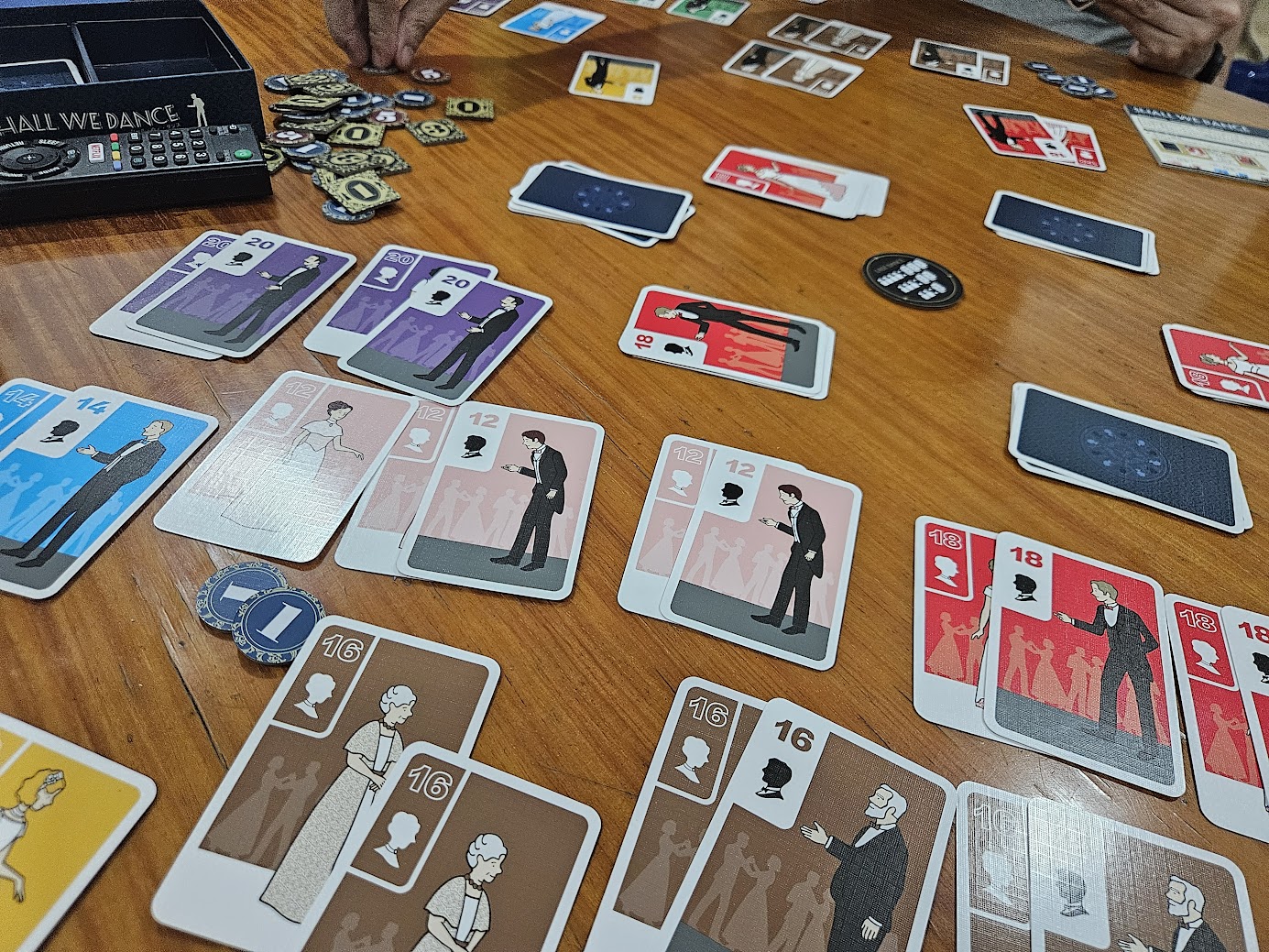
Gentlemen and ladies take to the floor in Shall We Dance, with players attempting to pair them off while also specializing in certain types of dancers. The game features seven colors of dancers, with each color having ladies on half of the cards and gentlemen on the other half. On a turn, players play cards to the dance floor, aiming to create pairs and collect sets.
Players must strategically decide which dancers to pair and when to specialize in particular dance styles, as this impacts their ability to score points. The challenge lies in balancing the creation of pairs with the pursuit of specialization, as both contribute to a player's final score.
Ultimately, Shall We Dance is a set collection game that rewards careful planning and timing. Players compete to find dance partners for every card they play, with the goal of maximizing their points through both pairing and specialization in dance styles.
Shall We Dance sits comfortably within the casual and filler tradition, offering a dance hall theme with a clever twist on set collection and pairing mechanics. The core challenge—matching dancers by color and gender while managing multiple requests—delivers consistent mechanical performance, making it a reliable secondary option for groups seeking a quick but thoughtful session. Its current status as a new addition means it’s still earning its place, but early sessions show promise for solid table-time value, especially for hosts looking to refresh their filler lineup with something that rewards timing and planning.
From a logistics standpoint, Shall We Dance is a host’s friend: the compact box and minimal footprint mean it’s easy to slot into any session without crowding the table. Saachi’s artwork adds visual appeal without overwhelming the play area, and setup is straightforward—expect to be ready in under fifteen minutes. With a 20-minute playtime, it’s best deployed as a transition game between heavier titles or as a warm-up for mixed-experience groups. The physical components (cards) are easy to manage, and the game’s footprint ensures it won’t disrupt the flow of a multi-table event.
Teaching Shall We Dance requires a procedural approach; the rules around unique color requirements and multiple dance requests need clear explanation, but once the first round is underway, most players find their rhythm. The competitive structure keeps everyone engaged, with indirect blocking and tactical timing driving the room’s energy. The main skill dividend here is in mental friction—players must balance immediate pairing opportunities with long-term specialization, sharpening their planning and adaptability. While the system doesn’t quite allow a facilitator to step away entirely on the first play, by the second session, most tables can self-manage, making it a practical addition for experienced hosts.
Category
Casual & Filler
My score
7.5
Our Total Plays
3
Last PLayed
25 Apr 26
🔥 In Rotation
Player Count
2-4
Playtime
20 mins
Proficiency Perks
Strategic Planning
Check Amazon
As an Amazon Associate, I earn from qualifying purchases.
← ALL BOARD GAMe REVIEWS