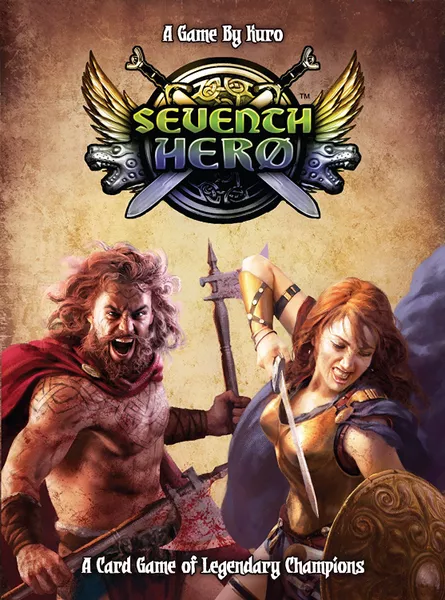
Seventh Hero
Official Description:
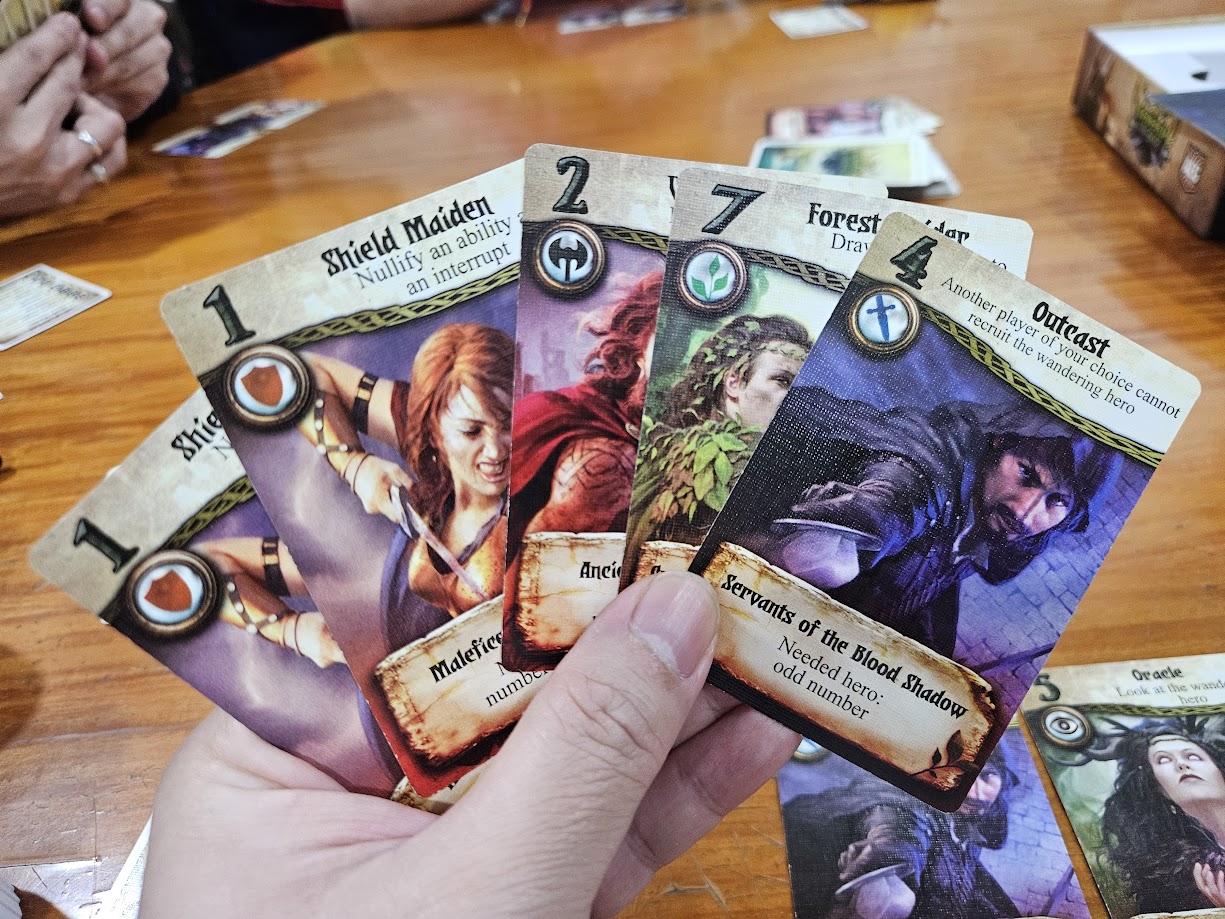
The card deck of Seventh Hero consists of 77 cards, each representing one of seven different heroes. Players begin the game with two random heroes and, on each turn, send a card from their hand face down to the next player. The receiving player can choose to take the card or pass it on. If the player takes the card and already has that hero, both cards are discarded. Each round imposes specific limitations, such as requiring the card to be odd or to fall above or below a certain number.
Before passing a hero, players must adhere to the current round's restrictions. The game continues with players strategically deciding whether to accept or pass cards, aiming to build a unique collection of heroes. Each hero also possesses a special power that can be activated once during the game.
Victory is achieved by being the first player to collect six of the seven unique heroes. The game combines elements of deduction, risk management, and hand management, offering a dynamic and engaging experience for all participants.
Seventh Hero operates in the tradition of compact, deduction-driven card games, leveraging a fantasy motif to deliver a streamlined, competitive experience. The core system—passing hero cards under shifting restrictions and managing unique hero powers—demands a steady hand in risk assessment and deduction, but never bogs down in procedural overhead. Its current high table presence is a direct result of this blend: the game’s significant long-term shelf retention comes from its ability to offer engaging, repeatable play without overstaying its welcome. For a curator, this is a title that justifies its space by consistently delivering a reliable, lightweight contest that rewards quick thinking and sharp observation.
From a logistics standpoint, Seventh Hero is a model of efficiency. The modest box and minimal table footprint mean it’s ready to deploy at a moment’s notice, making it ideal for filling gaps between heavier games or as a spontaneous opener. Setup is nearly instantaneous—open the box, shuffle the deck, and you’re underway. This portability and ease of use make it a strong candidate for travel, conventions, or any setting where table space and time are at a premium. It’s not a centerpiece for the evening, but it excels as a flexible, low-commitment option that keeps the energy up between longer sessions.
Teaching Seventh Hero is straightforward—most groups are comfortable by the second round, and the competitive structure keeps everyone invested. The main teaching hurdle is clarifying the distinction between the wandering hero mechanic and standard recruitment, as well as ensuring players track their hero counts accurately. Once underway, the game’s mental friction comes from reading opponents and timing the use of hero powers, offering a skill dividend in deduction and hand management. The indirect competition and frequent decision points keep the room lively, making it a dependable choice for groups that enjoy interactive, fast-paced card play without heavy rules overhead.
Category
Tactical & Strategy
My score
6
Our Total Plays
9
Last PLayed
23 Jan 26
🔥 In Rotation
Player Count
3-5
Playtime
30 mins
Proficiency Perks
Strategic Planning
Check Amazon
As an Amazon Associate, I earn from qualifying purchases.
← ALL BOARD GAMe REVIEWS