
Prêt-à-Porter
Official Description:
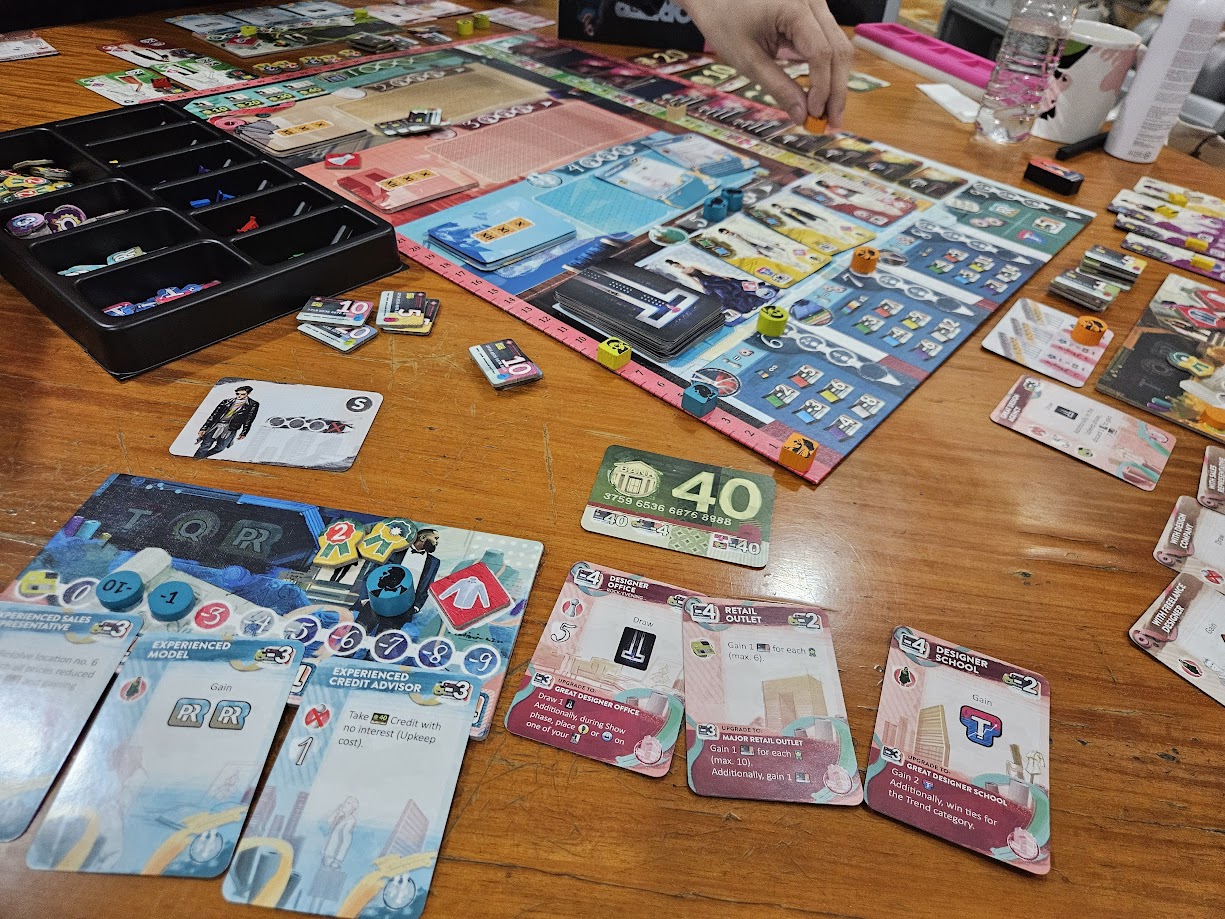
Prêt-à-Porter is an economic strategy game set in the world of fashion. Players take on the roles of managers of clothing companies, competing to achieve dominance in the industry through a series of fashion shows. The game challenges players to balance the demands of running a business, such as hiring staff, opening new branches, and signing contracts, while also preparing for the critical fashion shows that determine their success.
Throughout the game, players must make strategic decisions about resource management, investments, and timing. Each round represents a month in the fashion industry, with players acquiring resources, developing their companies, and preparing collections. The fashion shows, held at regular intervals, are the main events where players present their collections and earn prestige and income based on their performance.
Success in Prêt-à-Porter requires careful planning, efficient use of resources, and the ability to adapt to changing circumstances. The game combines economic management with competitive elements, offering a challenging experience for players who enjoy strategy and business-themed board games.
Prêt-à-Porter operates as a ruthless economic engine, camouflaged in haute couture. Within the context of modern Euro-style worker placement, it stands out for its relentless focus on cash flow, expense management, and the razor-thin margins that define each round. The fashion show income cycle forces players to plan several turns ahead, with every contract, staff hire, and branch expansion scrutinized under the pressure of mandatory upkeep. This is not a forgiving system—mistakes compound, and the table’s tension ratchets up as the next show approaches. Its high operational reliability and significant long-term shelf retention stem from how it rewards sharp, adaptive play and punishes complacency. After years of managing tables, I keep this one in regular circulation because it never loses its edge; every session feels like a fresh audit of your business instincts.
Setup is refreshingly direct for a game of this depth: shuffle the core decks, set aside the final round cards, and you’re ready to brief the table. With a 90-minute session time, Prêt-à-Porter is best positioned as the main event of an evening—there’s too much at stake for it to serve as a warm-up or filler. The components are straightforward, and the box contents don’t sprawl, but the game’s economic puzzle demands focus from the outset. Once the table is set, downtime is minimal; the system’s pace and the looming deadlines keep everyone engaged and invested.
Teaching Prêt-à-Porter requires a technical approach. The rules are not opaque, but the interplay of income timing, expense cycles, and contract synergies means new players need a guided walkthrough of the first round. This is not a system you can leave on autopilot—expect to field questions and clarify edge cases as the game unfolds. The Skill Dividend here is substantial: players leave with a sharpened sense of timing, resource allocation, and risk assessment. The high friction of the interaction—blocking key actions, racing for contracts, and squeezing opponents out of critical opportunities—keeps the room’s energy taut. For groups that thrive on direct competition and economic brinkmanship, Prêt-à-Porter delivers a consistently charged experience.
Category
Tactical & Strategy
My score
9
Our Total Plays
28
Last PLayed
01 Nov 25
🔥 In Rotation
Player Count
2-4
Playtime
90 mins
Proficiency Perks
Strategic Planning
Check Amazon
As an Amazon Associate, I earn from qualifying purchases.
← ALL BOARD GAMe REVIEWS